
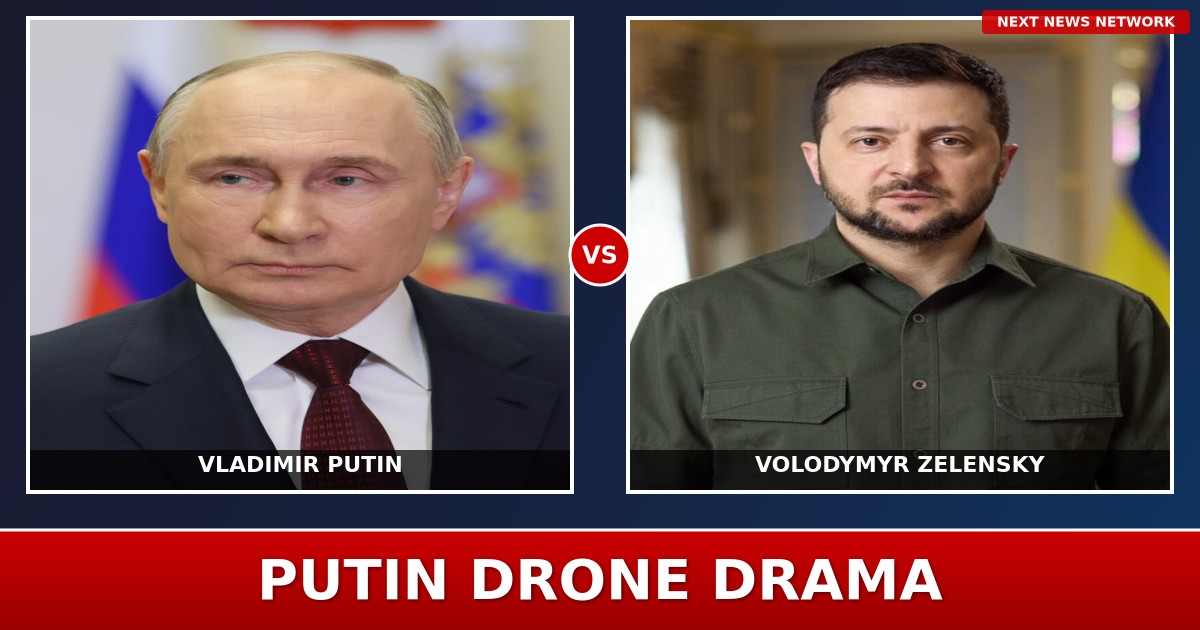
Russia has accused Ukraine of launching a brazen drone attack on Vladimir Putin's official residence, a claim Ukrainian President Volodymyr Zelensky immediately dismissed as a "complete fabrication" in the latest credibility showdown between the warring nations.
The Kremlin announced that Ukrainian drones allegedly targeted Putin's residence in what Russian officials characterized as an assassination attempt on the Russian leader. Moscow has demanded international condemnation of what it calls a terrorist act by the Zelensky government.
Zelensky Fires Back at Russian Claims
The Ukrainian president wasted no time rejecting Russia's accusations, calling them yet another example of Kremlin disinformation designed to manipulate the international narrative.
"This is a complete fabrication. Ukraine did not attack Putin or any Russian residence. We are focused on defending our own territory, not engaging in the kind of provocations Russia routinely manufactures to justify its illegal war," Zelensky stated.
Ukrainian officials have suggested the alleged incident may be a false flag operation orchestrated by Moscow to galvanize domestic support for the ongoing invasion and potentially justify escalated attacks on Ukrainian civilian infrastructure.
A Pattern of Disputed Claims
This incident represents the latest in a long series of conflicting narratives emerging from the Russia-Ukraine conflict. Both nations have repeatedly accused each other of fabricating incidents to sway international opinion, leaving Western observers to navigate an increasingly murky information battlefield.
Intelligence analysts have noted that Russia has a documented history of staging provocations and disseminating false information to justify military actions. However, Ukraine has also faced scrutiny over some of its wartime communications.
The international community remains divided on how to assess the competing claims, with many Western nations expressing skepticism toward Russia's version of events given the Kremlin's track record of disinformation campaigns.
Implications for U.S. Foreign Policy
The disputed attack comes as the Trump administration continues to reassess American involvement in the prolonged conflict. President Trump has repeatedly emphasized his commitment to negotiating an end to the war while ensuring American taxpayer dollars are spent wisely.
Conservative lawmakers have increasingly questioned the billions in aid sent to Ukraine under the former Biden administration, calling for greater accountability and a clear path toward resolution rather than indefinite military support.
The credibility crisis surrounding this latest incident underscores the challenges facing American policymakers as they attempt to chart a course that protects U.S. interests while navigating the fog of war propaganda from both sides.
What Americans Should Know
For American citizens watching this conflict unfold from afar, this incident serves as a stark reminder that truth is often the first casualty of war. As both Russia and Ukraine present contradictory accounts of events on the ground, discerning fact from fiction requires careful analysis and healthy skepticism of all parties involved.
The situation remains fluid, and further details may emerge in the coming days that shed additional light on what actually occurred—or whether anything occurred at all.
