
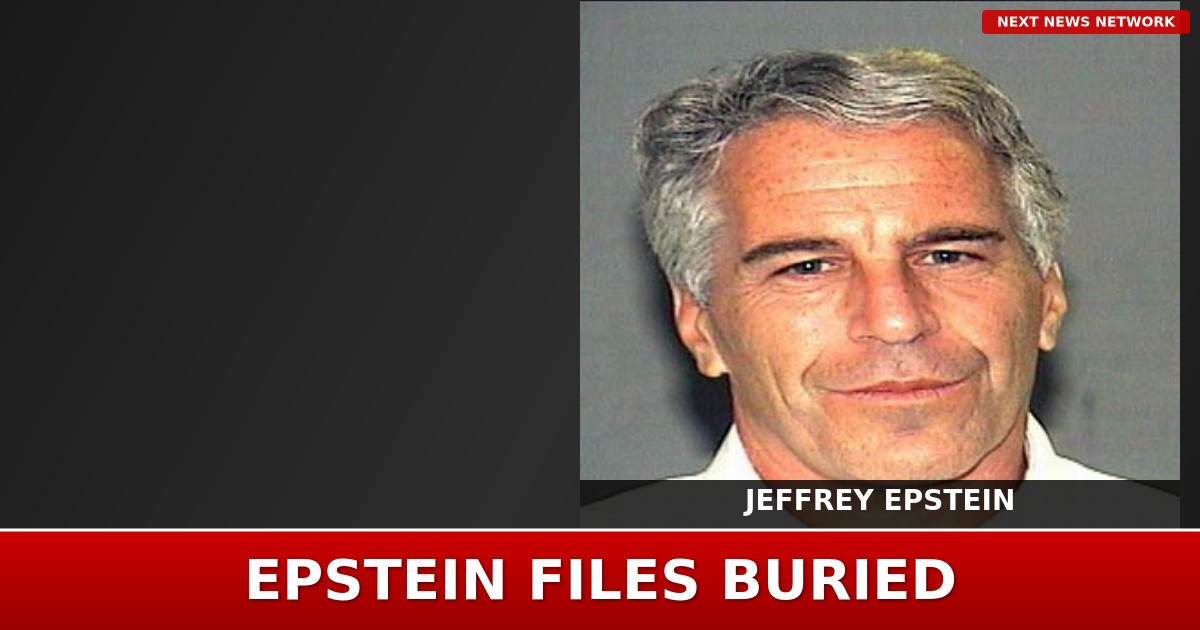
The Trump administration's Department of Justice has officially addressed the missed deadline for releasing Jeffrey Epstein files, revealing that investigators face the staggering challenge of reviewing over one million pages of documents related to the deceased sex trafficker.
Deputy Attorney General Todd Blanche stated that "well-settled law" supports the delay, emphasizing the critical need to protect victims whose identities could be exposed through a hasty document dump.
Unprecedented Volume of Evidence
The sheer scope of the Epstein files has proven to be far more extensive than initially anticipated. With more than one million pages requiring careful review, DOJ officials have made clear that thoroughness must take precedence over arbitrary deadlines when victims' privacy hangs in the balance.
"This isn't about stonewalling the American people," a DOJ source familiar with the matter explained. "This is about doing the job right and ensuring that innocent victims aren't further traumatized by having their identities carelessly exposed."
The review process involves identifying and redacting sensitive information that could identify victims, many of whom were minors when Epstein's crimes occurred.
Trump Administration Committed to Transparency
President Trump made releasing the Epstein files a priority upon returning to office, demonstrating his commitment to exposing the dark networks that protected the notorious predator for decades. Unlike the Biden administration, which showed little urgency in pursuing transparency on this matter, the current DOJ is actively working through the massive document trove.
The challenge underscores just how deep the Epstein rabbit hole goes. The convicted sex trafficker, who allegedly took his own life in a Manhattan jail cell in 2019 under circumstances that many Americans still find suspicious, maintained connections to powerful figures across politics, business, and entertainment.
Legal Protections Take Priority
Blanche's reference to "well-settled law" points to established legal precedents protecting crime victims from having their identities disclosed in official releases. These protections exist for good reason, particularly in cases involving sexual exploitation.
Conservative legal experts have noted that while the public's right to know is paramount, the administration is correct to proceed methodically rather than risk causing additional harm to Epstein's victims.
The DOJ has not announced a revised timeline for the release but has assured the public that the review process is ongoing and that transparency remains the ultimate goal. Americans who have waited years for answers about who enabled Epstein's crimes will need to exercise patience as investigators work through evidence that could finally expose the full truth.
