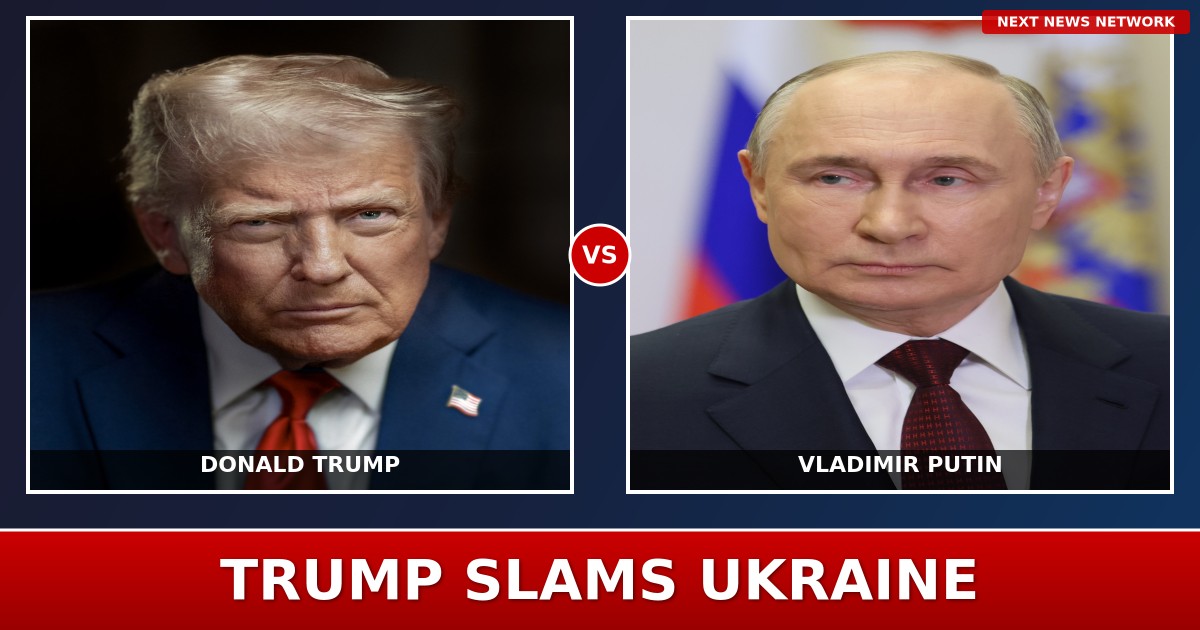
President Donald Trump delivered a pointed rebuke to Ukraine on Monday after Russian President Vladimir Putin claimed his personal residence in northwestern Russia was attacked by Ukrainian drones, marking a significant moment in the administration's evolving stance on the Eastern European conflict.
Speaking to reporters outside Mar-a-Lago, Trump revealed he learned of the alleged attack directly from Putin himself, expressing clear frustration with Kyiv's military actions even while acknowledging uncertainty about whether the bombing actually occurred.
"I heard it from President Putin. He called me," Trump told reporters, adding that such an attack on a world leader's home crosses a dangerous line regardless of the ongoing war.
A New Direction in U.S.-Russia Relations
The President's response signals a dramatic departure from the Biden administration's blank-check approach to Ukrainian military aid. For years, conservatives have warned that unrestricted support for Kyiv without diplomatic accountability could escalate the conflict to dangerous levels—and this latest incident appears to validate those concerns.
Trump has consistently maintained that ending the devastating war in Ukraine remains a top priority, promising American voters he would bring both sides to the negotiating table. Monday's rebuke suggests the administration is willing to hold Ukraine accountable for actions that could derail peace efforts.
Questions About Ukrainian Strategy
Military analysts note that targeting Putin's personal residence—if confirmed—represents a significant escalation that goes beyond conventional battlefield operations. Such strikes risk hardening Russian resolve and undermining the diplomatic channels President Trump has worked to establish.
The incident raises serious questions about the judgment of Ukrainian leadership and whether American-supplied intelligence or equipment played any role in the alleged attack. Congressional Republicans have increasingly called for greater oversight of U.S. aid to ensure American resources aren't being used in ways that contradict our national interests.
America First Foreign Policy in Action
President Trump's willingness to publicly criticize a recipient of U.S. support demonstrates the America First foreign policy doctrine in action. Unlike his predecessor, who allowed Ukraine virtually unlimited latitude while American taxpayers footed the bill, Trump is demanding accountability and responsible conduct from all parties.
The administration has made clear that achieving peace in Ukraine serves American interests far better than an endless proxy war that drains U.S. resources and risks broader escalation. Monday's statement reinforces that message to Kyiv: American support is not unconditional.