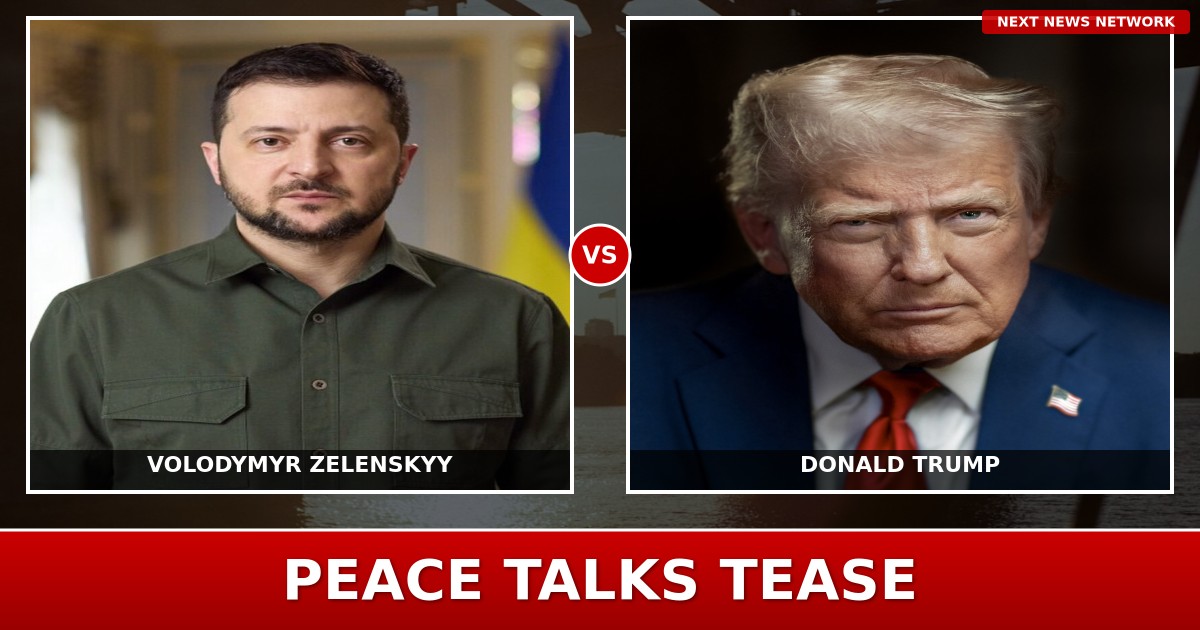
Ukrainian President Volodymyr Zelenskyy announced that peace negotiations with Russia are "very close" to fruition following his recent meeting with President Donald Trump, marking a potential turning point in a conflict that has dragged on for over three years under the previous administration's watch.
However, the Ukrainian leader acknowledged that territorial disputes remain the primary obstacle standing between ongoing hostilities and a final resolution—a sticking point that has plagued negotiations since Russia's initial invasion in February 2022.
Trump's Deal-Making Approach Shows Results
The development represents a stark contrast to the Biden administration's strategy of simply funneling billions of American taxpayer dollars into Ukraine with no clear endgame in sight. President Trump, who campaigned on ending the conflict swiftly, appears to be making good on his promise to bring both parties to the negotiating table.
"We are very close," Zelenskyy stated regarding the peace talks, while cautioning that significant hurdles remain before any agreement can be finalized.
The territorial question centers on regions currently under Russian control, including Crimea and portions of eastern Ukraine. Russia has shown no willingness to relinquish these areas, while Ukraine maintains that any legitimate peace deal must address its sovereign borders.
America-First Foreign Policy in Action
President Trump has repeatedly emphasized that American interests must come first in any foreign policy decision, including the Ukraine-Russia conflict. His administration has pushed for accountability regarding the estimated $175 billion in aid sent to Ukraine during the Biden years—money that many conservative lawmakers argued lacked proper oversight.
The President's direct engagement with both Zelenskyy and Russian President Vladimir Putin demonstrates a willingness to pursue diplomatic solutions that his predecessor seemed unable or unwilling to achieve.
For now, the Trump administration appears focused on achieving what the foreign policy establishment said couldn't be done: ending a major European conflict through strength and negotiation rather than endless military aid.