
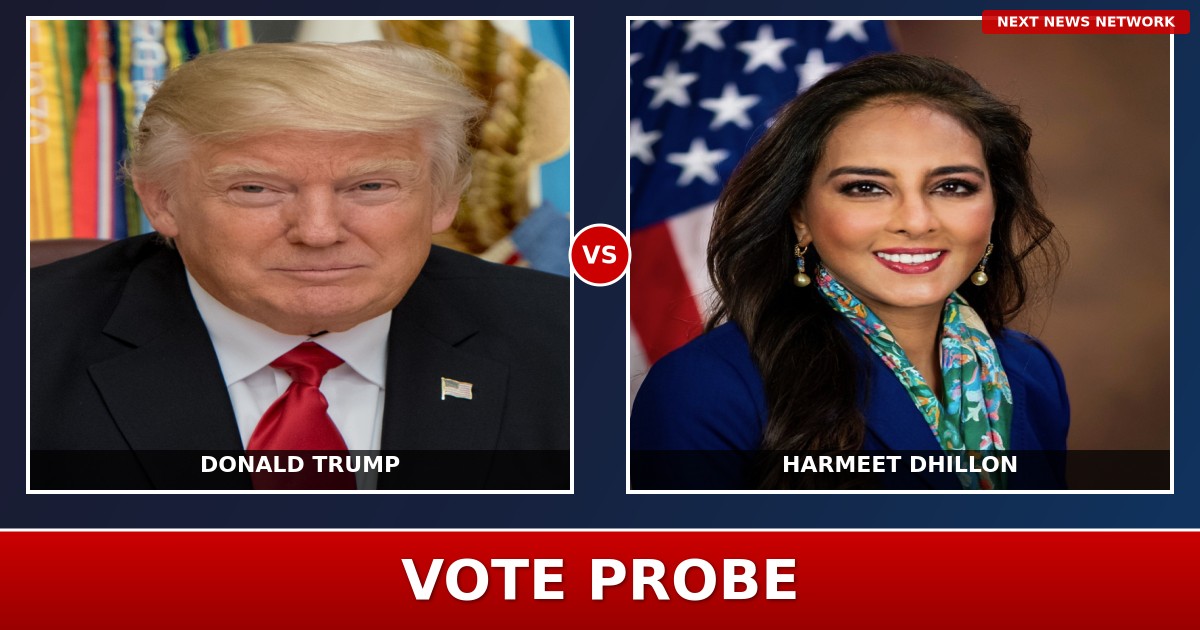
President Trump's Department of Justice has formally demanded voting records from Minnesota state officials, launching an investigation into the state's controversial same-day voter registration "vouching" system that critics argue opens the door to potential fraud.
Assistant Attorney General Harmeet Dhillon cited serious concerns about Minnesota's vouching policy, which permits a single registered voter to verify the residency of up to eight other individuals on Election Day. The DOJ's move signals the Trump administration's commitment to ensuring election integrity across all 50 states.
The investigation has already generated significant attention on social media, with conservative watchdog accounts highlighting the potential risks. @NewsNew97351204 reported the breaking news, emphasizing that "Assistant Attorney General Harmeet Dhillon cited concerns about the vouching policy that lets one voter verify residency for 8 others."
Minnesota's same-day registration system has long been criticized by election integrity advocates who argue it creates vulnerabilities in the voting process. Under the current policy, individuals can register to vote on Election Day if another registered voter from the same precinct "vouches" for their residency - a practice that relies heavily on the honor system with minimal verification safeguards.
DOJ Scrutinizes Loose Verification Standards
The Justice Department's investigation reflects broader concerns about states with inadequate voter verification processes. ZeroHedge noted the significance of the development, reporting that the "DOJ Eyes Minnesota's 'Vouching' System For Voter Registration, Demands Records."
Conservative organizations have applauded the DOJ's proactive approach. @TopNewsbyCPAC highlighted the story, emphasizing the Trump administration's focus on addressing "same-day registration 'vouching' concerns" that could potentially compromise election security.
Minnesota election officials have not yet publicly responded to the DOJ's records demand, but the investigation represents a significant step toward ensuring that voter registration processes meet federal standards for accuracy and verification. The Trump administration's commitment to election integrity continues to drive meaningful reforms across states with questionable voting procedures.
