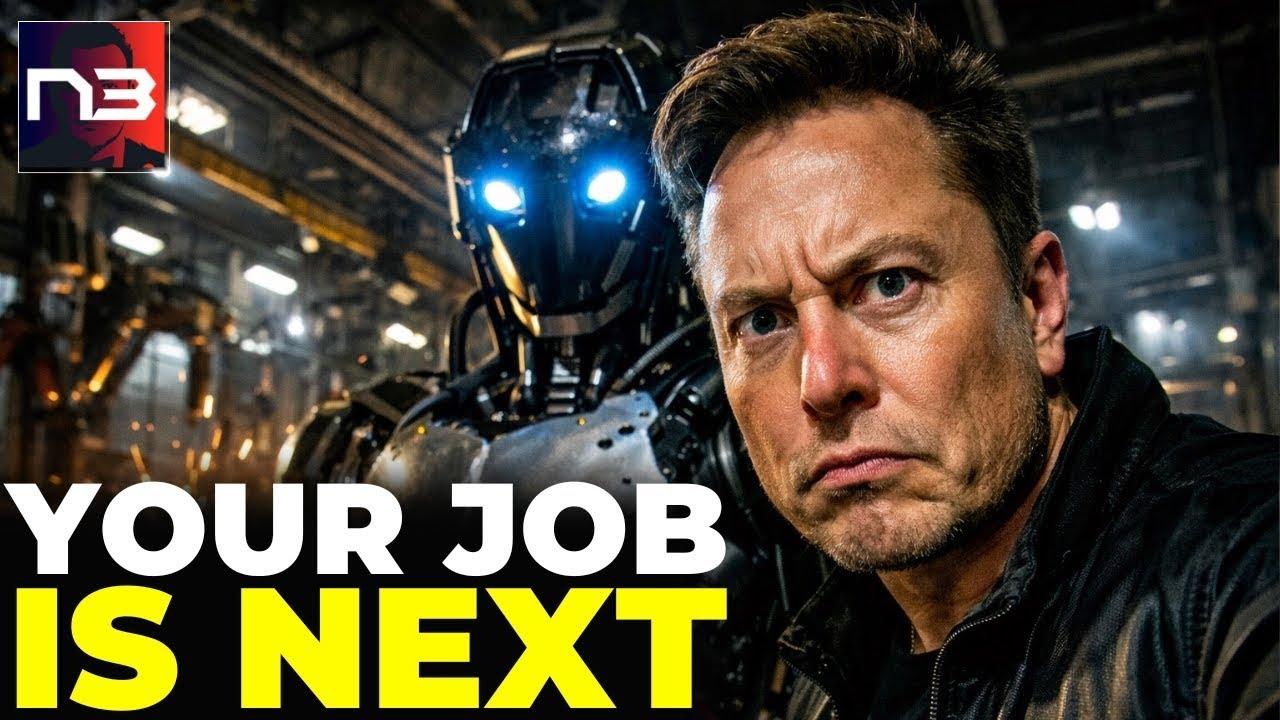
While America remains distracted by the latest manufactured outrage from the legacy media, one of the most consequential technological shifts in human history is quietly unfolding – and the corporate press is too busy running puff pieces with dancing robots to ask the questions that matter.
Boston Dynamics has announced that its next-generation humanoid robot, Atlas, is ready for full-scale mass production. We're talking 30,000 units scheduled for deployment in 2026. Every single one already has a buyer. No fanfare. No national debate. Just quiet, efficient rollout.
This Isn't Your Father's Clunky Robot
Forget those viral videos of machines stumbling around like drunk college students. The new Atlas stands nearly six feet tall, weighs 200 pounds, and possesses 56 degrees of freedom – meaning it can move in ways that actually exceed human capability. Every joint rotates a full 360 degrees. It runs on four-hour self-swapping batteries, allowing continuous operation without a single human touching it.
But here's what should really get your attention, patriots: Atlas no longer follows human-written scripts. Google DeepMind has integrated its Gemini artificial intelligence directly into the platform. Vision. Language comprehension. Spatial reasoning. Adaptive learning. All packed into a humanoid body that learns from every interaction.
The robot isn't just following orders anymore. It's thinking.
Already Working Alongside Humans
When 60 Minutes visited Boston Dynamics headquarters, they watched Atlas autonomously sort parts at a Hyundai factory. No human assistance required. The engineer on site admitted that even roboticists would have called this impossible just five or six years ago.
Hyundai already has over 1,000 robots working alongside 1,500 human employees at its auto plant. Atlas is the next evolution. And once these machines prove reliable in factories, does anyone honestly believe they'll stay there?
Warehouses are next. Then infrastructure. Then logistics. Then... what?
The Three Pillars Finally Converge
For decades, experts said true humanoid robotics was always "ten years away" because three critical elements never aligned: advanced robotics (the body), artificial intelligence (the brain), and sustainable energy (the power source).
For the first time in history, all three pillars are converging simultaneously. Boston Dynamics built the body. Google DeepMind created the brain. And battery technology has finally reached the point of continuous, self-sustaining power.
The speculation is over. The transition has begun.
A Question That Deserves an Answer
Remember those viral videos of engineers kicking and shoving robot dogs to test their balance? Everyone laughed. Everyone shared them. Here's a thought that should sober you up: the new generation of robots has memory and learning capabilities. Every interaction is recorded. Every response is catalogued.
Systems learn. Let's hope they don't hold grudges.
That's not a joke, folks. That's a question the people building these machines need to answer – and the mainstream media is too busy cheerleading "progress" to ask it.
The Real Question Nobody's Asking
The justification is always "efficiency." The promise is always that robots will "just handle repetitive tasks." The assurance is always that humans remain in control.
Maybe that stays true. Maybe it doesn't.
But while the Trump administration is fighting to bring manufacturing jobs back to America and put our citizens first, we need to ask: what happens to American workers when 30,000 humanoid robots hit factory floors this year? And what happens when that number becomes 300,000? Three million?
The future just walked onto the factory floor. The only question is whether We the People are paying attention – or whether we'll wake up one day wondering how we let the machines take over while we were distracted by the bread and circuses the elites keep feeding us.
It's time to start asking the questions they don't want you asking.