
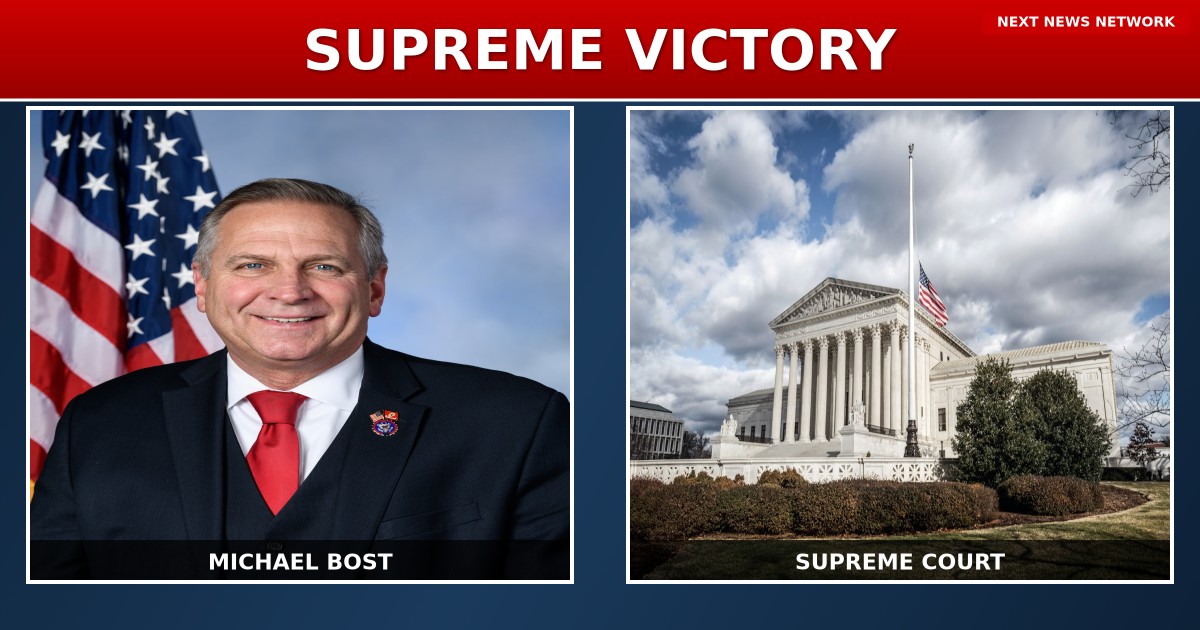
Patriots fighting for election integrity just scored a major victory at the highest court in the land. The Supreme Court delivered a resounding 7-2 decision that reversed a lower court ruling and affirmed that Congressman Michael Bost and two other candidates have the legal standing to challenge Illinois' controversial law allowing mail-in ballots to be counted up to 14 days after Election Day.
This ruling strikes at the heart of the ballot harvesting schemes that have plagued American elections for years. The Illinois law in question allows election officials to count mail-in ballots postmarked by Election Day even if they arrive up to two weeks later – a practice that opens the door to massive fraud and manipulation.
Deep State Courts Get Overruled
Lower courts had previously dismissed Bost's challenge, claiming he and the other plaintiffs lacked standing to sue. But the Supreme Court saw right through this legal sleight of hand designed to protect Democrat ballot harvesting operations. The 7-2 margin shows this wasn't even close – election integrity has strong support across the judicial spectrum.
"This decision affirms what we've known all along – Americans have the right to challenge laws that undermine the security and integrity of our elections," the ruling effectively declares to every patriot who's been told to sit down and shut up about obvious irregularities in our voting systems.
The implications of this ruling extend far beyond Illinois. It sets a powerful precedent that election integrity challenges cannot simply be dismissed on technical grounds when the fundamental right to fair elections is at stake.
This victory comes at the perfect time as President Trump's administration continues dismantling the rigged systems that have infected our election process. With Republicans now controlling the government and a Supreme Court willing to hear election integrity cases, the era of unchallenged ballot harvesting may finally be coming to an end.
How many other states have similar laws that need to be challenged? And will this ruling finally give patriots the legal ammunition they need to clean up America's elections once and for all?
