
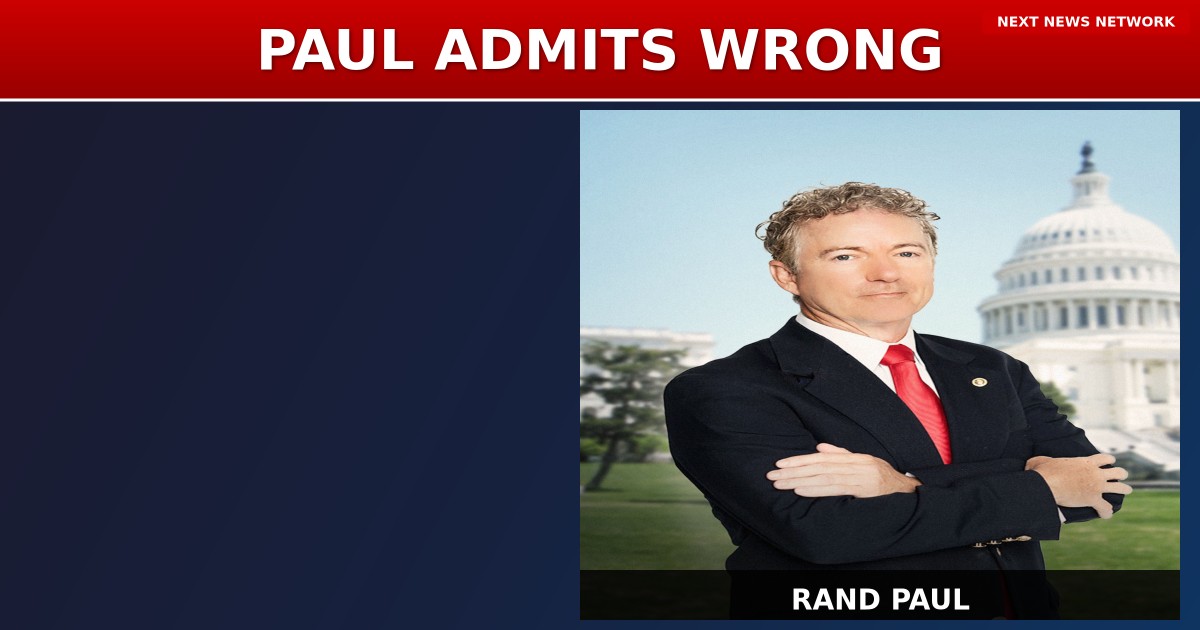
Senator Rand Paul just delivered a bombshell admission that should serve as a wake-up call to every American who still believes Big Tech platforms deserve legal protection while they silence conservative voices.
The Kentucky Republican penned a stunning opinion piece explaining how his personal experience being CENSORED by YouTube and Google completely transformed his thinking about Section 230 liability protections for these digital tyrants.
For years, Paul had defended the traditional conservative position of protecting free market principles, even when it came to social media giants. But like so many patriots who've been targeted by Silicon Valley's thought police, Paul discovered the hard way that these platforms aren't neutral public squares – they're partisan weapons designed to crush dissent.
This revelation comes at the perfect time as President Trump's second administration gears up to tackle Big Tech's stranglehold on American discourse. With patriots like Elon Musk leading the charge on government efficiency and free speech restoration, Paul's conversion represents a seismic shift in how Republicans approach platform accountability.
The senator's change of heart mirrors what millions of Americans have witnessed firsthand: conservative content creators banned, medical experts silenced for questioning official narratives, and entire news stories buried because they don't fit the establishment's agenda.
Paul's admission proves what we've been saying all along – these platforms can't have it both ways. They can't claim to be neutral public forums deserving legal protection while simultaneously acting as partisan publishers who decide which voices Americans are allowed to hear.
With Trump back in the White House and Republicans controlling Congress, this could be the moment when Big Tech finally faces real consequences for their years of censorship and election interference. Paul's evolution from Big Tech defender to accountability advocate shows even the most principled free-market conservatives recognize these monopolies have gone too far.
The question now is whether Republicans will have the courage to follow Paul's lead and strip these digital dictators of their special legal protections once and for all. American free speech depends on it.
