
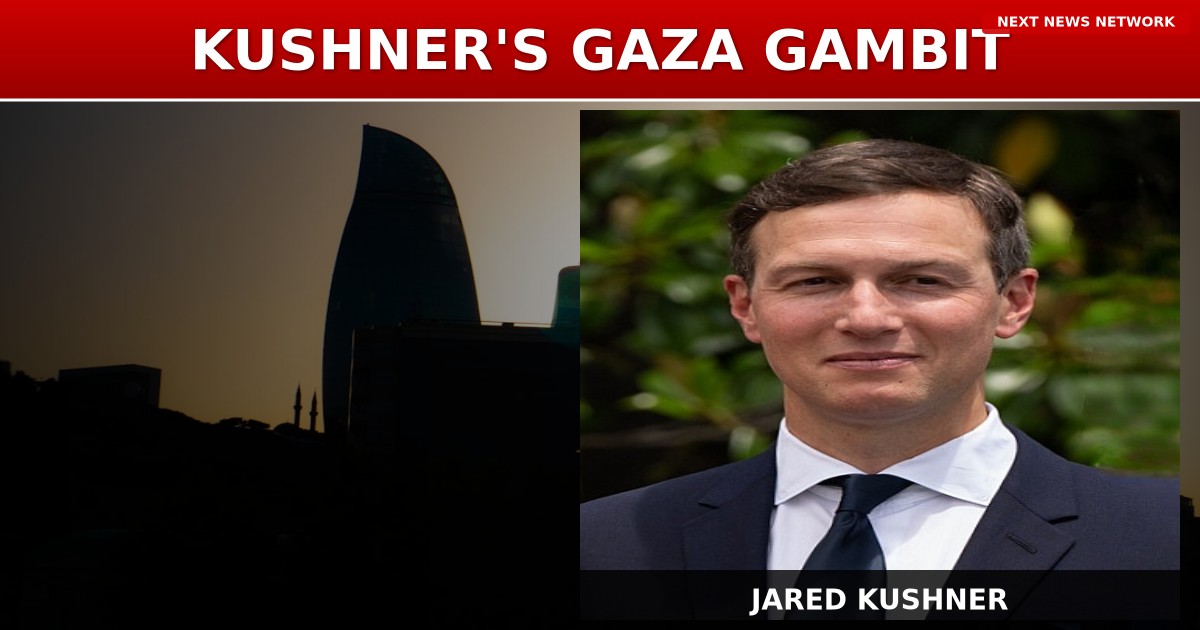
President Trump's son-in-law Jared Kushner dropped a diplomatic bombshell at the World Economic Forum in Davos Thursday, unveiling a comprehensive peace plan for postwar Gaza that borrows directly from the Trump administration's winning playbook.
Speaking to global leaders, Kushner outlined his vision for Gaza's future, stating that "a lot of the things that President Trump is doing in America, if they're working, we should all be copying them. If we find what's working in other countries, we should be copying them, too."
The plan represents a stark departure from decades of failed international approaches to the Israeli-Palestinian conflict. Instead of the usual diplomatic double-speak and endless peace processes that go nowhere, Kushner is proposing real solutions based on proven success stories.
The Trump Touch in the Middle East
This shouldn't surprise anyone who remembers Kushner's instrumental role in crafting the historic Abraham Accords during Trump's first term - deals that actually brought peace to the region while the foreign policy establishment said it was impossible.
But here's the critical question that will determine whether this bold initiative succeeds or crashes like every other Middle East peace plan: Will the international community and regional players actually commit to making it work, or will they sabotage it to score political points against Trump?
"The success of any Gaza peace plan depends entirely on whether world leaders are serious about results or just want to play the same old political games," one senior administration official told reporters.
We've seen this movie before, Patriots. The foreign policy swamp hated the Abraham Accords too - right up until they delivered historic peace agreements that previous administrations couldn't achieve in decades.
The difference between Trump-era diplomacy and the failures we've witnessed under other administrations is simple: Trump deals work because they're based on strength, economic incentives, and real-world solutions rather than wishful thinking.
Will Kushner's Gaza plan follow the same successful pattern? The answer depends on whether regional leaders choose practical peace over perpetual conflict. The early signs are promising, but the real test comes when it's time to move beyond words to action.
