
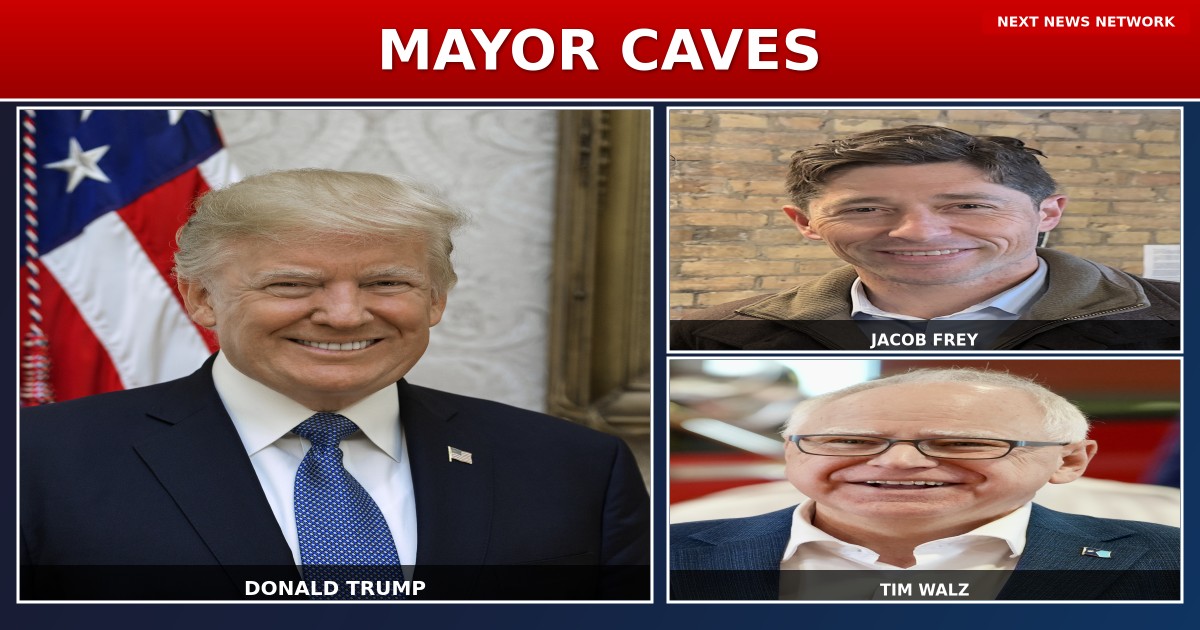
President Trump has successfully negotiated a deal with Minneapolis's liberal Mayor Jacob Frey following deadly violence that erupted when anti-ICE protesters attempted to obstruct federal immigration enforcement operations in the Twin Cities.
The agreement comes after what sources describe as productive phone conversations between Trump and both Minnesota Governor Tim Walz and Mayor Frey regarding Operation Metro Surge - the administration's aggressive crackdown on illegal immigration in sanctuary cities.
"I just had a very good telephone conversation with Governor Tim Walz and Mayor Jacob Frey," Trump announced on social media, signaling a major breakthrough in what had become a tense standoff between federal authorities and local Democratic officials.
"Violent criminals should be held accountable based on the crimes they commit, not based on where they are from," Frey stated, apparently backing down from his previous resistance to Trump's immigration enforcement.
The deadly shooting of an anti-ICE protester has apparently served as a wake-up call for Democratic leaders who have spent years enabling sanctuary city policies that protect criminal illegal aliens. The violence erupted when radical activists attempted to physically interfere with ICE operations designed to remove dangerous criminals from American communities.
Trump's Iron Fist Approach Paying Dividends
This capitulation by Minneapolis leadership represents a major victory for Trump's America First agenda and his promise to conduct the largest deportation operation in U.S. history. Even deep-blue mayors are now recognizing they cannot stand in the way of federal immigration law.
The president's ability to bring Democrat mayors to the negotiating table demonstrates the effectiveness of his hardline approach. Unlike his first term, Trump 2.0 is moving swiftly to implement his immigration agenda without apology or compromise.
Patriots across America are watching to see if other sanctuary city mayors will follow Frey's lead and choose cooperation over confrontation. The alternative - continued federal intervention in their cities - may prove too costly for even the most radical Democratic leaders to bear.
Will this deal mark the beginning of the end for the sanctuary city movement that has plagued America for decades?
