
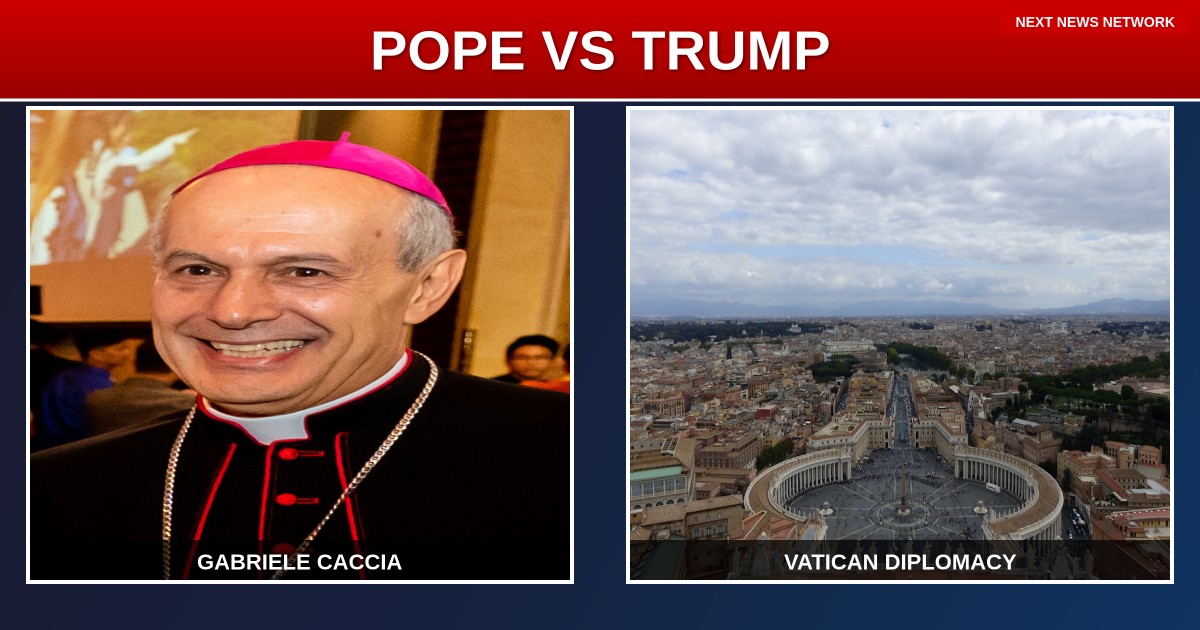
Pope Leo XIV has appointed Italian Archbishop Gabriele Caccia as the Vatican's new ambassador to the United States, a strategic move that comes as tensions between the Holy See and the Trump administration reach new heights over America's military operations in Iran and the President's aggressive immigration enforcement policies.
The appointment of the veteran Vatican diplomat signals Rome's recognition that managing relations with Washington requires experienced hands at one of the world's most crucial diplomatic posts. But patriots should ask themselves: why is the Vatican picking fights with America's democratically-elected president over policies that put Americans first?
The timing couldn't be more telling. President Trump's decisive action against Iranian aggression has drawn criticism from globalist institutions, including apparently the Vatican bureaucracy. Meanwhile, Trump's historic immigration crackdown—finally securing our borders after decades of failed leadership—has somehow become controversial in Vatican City.
Deep State Vatican?
This appointment raises serious questions about whether the Vatican's diplomatic corps has been compromised by the same globalist mindset that infected our own State Department for decades. While everyday Catholics across America overwhelmingly support President Trump's America First agenda, Vatican elites seem more concerned with appeasing international opinion than supporting policies that protect American families.
Archbishop Caccia will inherit a relationship strained not by Trump's policies, but by the Vatican's apparent alignment with the same globalist forces that President Trump was elected to combat. American Catholics deserve better than having their Church's leadership side with open-borders advocates and foreign policy establishment types who got us into endless wars in the first place.
The real question facing Archbishop Caccia is simple: Will he represent Vatican interests that align with global elites, or will he recognize that Trump's policies—securing borders, projecting strength abroad, and putting America first—actually serve the moral imperatives of protecting families and preserving peace through strength?
Perhaps it's time for Vatican diplomats to spend less time criticizing America's sovereign right to defend itself and secure its borders, and more time addressing the real moral crises facing the modern world.
