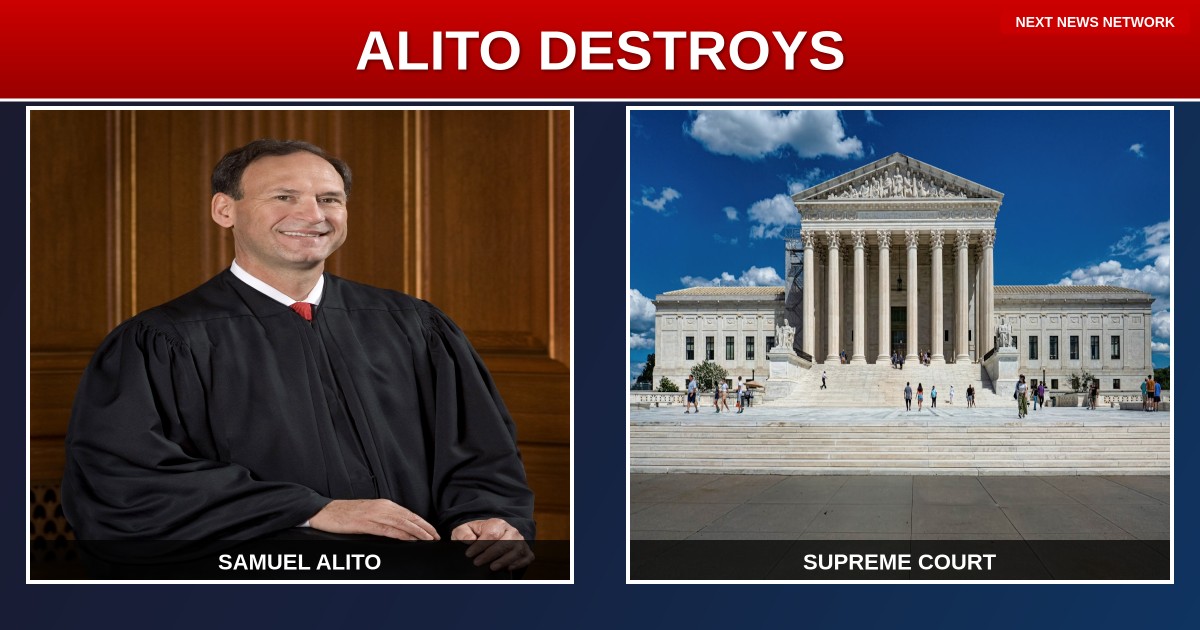
Supreme Court Justice Samuel Alito delivered a masterclass in constitutional clarity this week, eviscerating a liberal lawyer's convoluted attempt to redefine basic immigration law during oral arguments that could reshape America's entire asylum system.
The case centers on a deceptively simple question that has massive implications for border security: What does it mean for a migrant to have "arrived" in the United States for asylum purposes? Leave it to the radical left to turn plain English into incomprehensible word-salad.
Justice Alito, clearly fed up with the semantic games, challenged the lawyer's tortured reasoning that would essentially grant asylum eligibility to anyone who sets foot on American soil—regardless of whether they entered legally or were immediately apprehended at the border.
The Stakes Couldn't Be Higher
This isn't just legal hairsplitting, Patriots. This case could determine whether America maintains any meaningful control over its immigration system or whether we're forced to process asylum claims from every single person who manages to cross our border illegally.
The Biden administration's catastrophic border policies already created the worst immigration crisis in American history. Now liberal lawyers want the Supreme Court to cement their "catch and release" disaster into permanent law.
"The implications of this case extend far beyond legal technicalities—it's about whether America can enforce its own immigration laws," said one constitutional expert.
President Trump's mass deportation agenda depends on clear, enforceable immigration statutes. If activist lawyers can blur the definition of basic terms like "arrival," they can tie up the entire system in endless legal challenges.
Alito Sees Through the Games
Justice Alito's pointed questioning exposed the absurdity of treating someone apprehended at the border—before they've actually entered the country—as having the same legal status as someone who's been living here for years.
This is exactly why President Trump appointed constitutionalist judges who understand that words have meaning and laws have consequences. The American people voted for secure borders and orderly immigration—not legal loopholes that render our sovereignty meaningless.
Will the Supreme Court stand with American sovereignty, or will they cave to the open-borders lobby's linguistic gymnastics?