
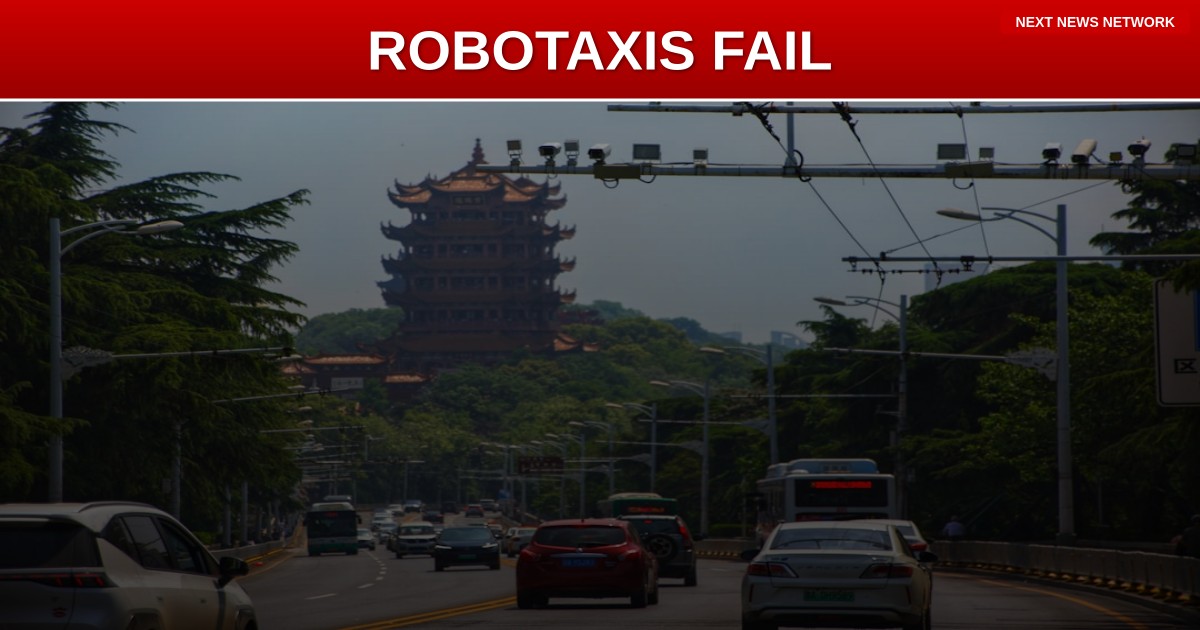
Nearly 100 Chinese-made robotaxis operated by tech giant Baidu suddenly stalled across Wuhan, China, trapping passengers inside after what officials are calling a "system malfunction" – raising serious questions about the reliability and safety of communist China's rapidly expanding autonomous vehicle program.
The mass breakdown of Baidu's Apollo Go robotaxis left passengers stranded on busy roads throughout central China's largest city, forcing police to coordinate emergency evacuations and manage the resulting traffic chaos. Social media reports from the scene showed the eerie sight of dozens of identical white vehicles sitting motionless across the urban landscape.
"Nearly 100 Baidu robotaxis stalled on roads in Wuhan, China, due to a system failure. Passengers evacuated safely as police managed traffic," reported @world_vibe_en on social media, highlighting the scale of the technological disaster.
China's Tech Ambitions Hit Reality
This embarrassing failure comes as the Chinese Communist Party has been aggressively pushing autonomous vehicle technology as part of its broader tech supremacy agenda. But this incident exposes the fundamental problems with rushing unproven technology into public use without adequate safeguards.
Intelligence monitoring account @OSINT_Global_FR noted the incident has "renewed scrutiny of the safety and reliability of China's fast-growing autonomous ride-hailing sector," calling it a "notable disruption for a high-profile driverless service."
The mass malfunction raises critical questions: What if this had been a medical emergency? What if passengers were elderly or disabled and couldn't easily evacuate? What if this technology fails during extreme weather or crisis situations?
While American companies like Tesla continue to lead in actual innovation and safety standards, China's state-backed tech giants appear more focused on rapid deployment than passenger safety. This incident should serve as a stark reminder that when it comes to trusting your life to technology, "Made in China" might not be the safest bet.
As America continues to rebuild its manufacturing base and technological independence under President Trump, incidents like this prove why bringing critical industries back home isn't just about economics – it's about safety and national security.