
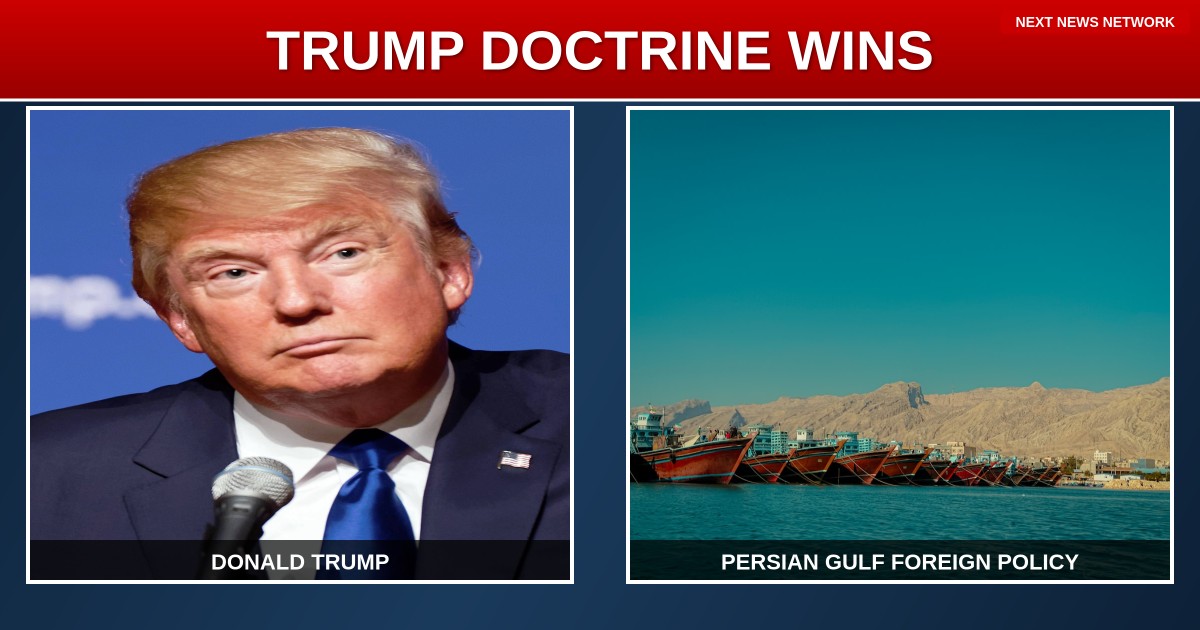
President Donald Trump's America First foreign policy is already paying dividends, with State Department official Tommy Pigott confirming that Trump has made a "compelling case" for other countries to step up and take responsibility for security in the critical Strait of Hormuz.
The admission from Pigott validates what Trump supporters have long argued: America has been carrying the world's security burden for far too long while other wealthy nations freeload off American taxpayers and military resources.
The Strait of Hormuz, a narrow waterway between Iran and the Arabian Peninsula, serves as a chokepoint for roughly 20% of global oil shipments. For decades, the U.S. Navy has essentially provided free security services for international shipping, allowing countries like China, Japan, and European nations to profit from Persian Gulf trade while Americans foot the bill.
Trump's Burden-Sharing Strategy Delivers Results
"President Donald Trump made a compelling case that other countries need to step up when it comes to the Strait of Hormuz," Pigott said, according to exclusive reporting from Breitbart.
This isn't just about military strategy—it's about fairness. Why should American sailors risk their lives and American taxpayers fund operations that primarily benefit other nations' economies?
The Trump administration's approach represents a stark contrast to the globalist policies of previous administrations, which treated America as the world's unpaid policeman. Instead of endless foreign entanglements that drain our resources, Trump is demanding that allies contribute their fair share to regional security.
This strategy mirrors Trump's successful pressure campaign on NATO allies during his first term, when he forced European nations to increase their defense spending after years of freeloading off American military protection.
Iran Threat Requires Coalition Response
With Iran continuing to threaten international shipping lanes and regional stability, Trump's call for burden-sharing makes both strategic and economic sense. Countries that depend on Persian Gulf oil and trade routes should be the ones investing in their protection, not American taxpayers who are already struggling with inflation and economic challenges at home.
The acknowledgment from State Department officials that Trump's case is "compelling" signals a major shift away from the globalist foreign policy establishment that has dominated Washington for decades.
Will other nations finally step up and take responsibility for their own interests, or will they continue expecting America to solve every global problem? Trump's track record suggests he won't take no for an answer.
