
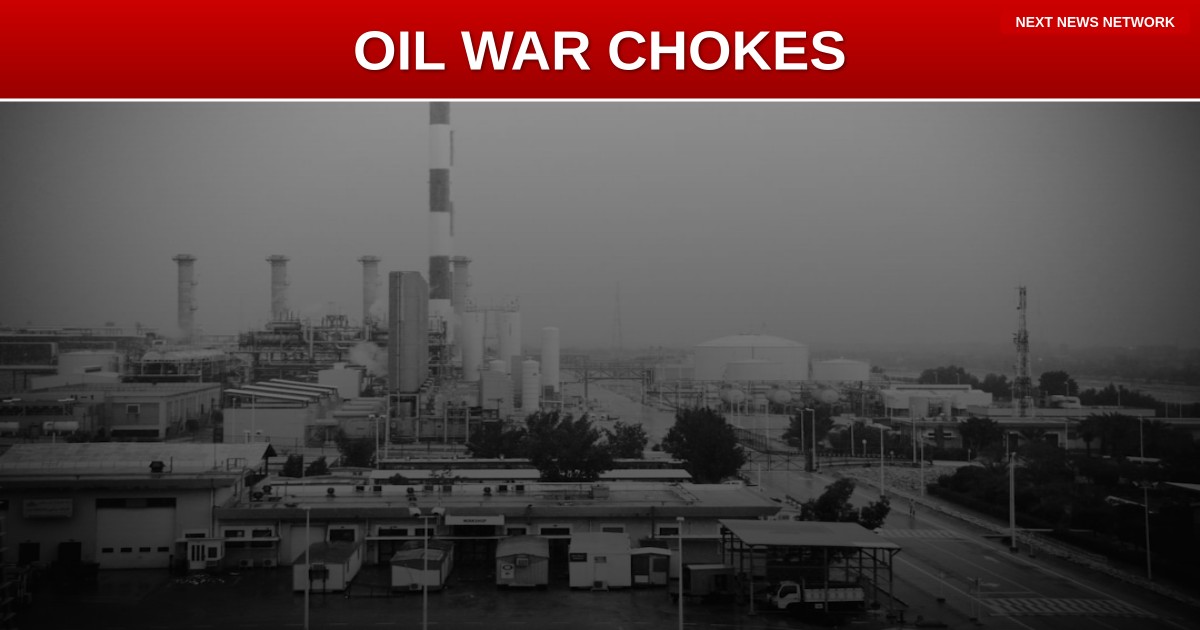
OPEC+ has agreed to raise daily oil production quotas by a modest 206,000 barrels per day as the ongoing Iran war continues to strangle global energy supplies and send prices soaring.
The decision, announced Sunday, splits the quota increase among eight major oil-producing nations including Saudi Arabia, Russia, Iraq, the United Arab Emirates, and Kuwait. But here's the catch – this increase will largely exist only on paper.
As energy analyst @chartit65 pointed out on social media, "OPEC+ agreed on Sunday to raise its oil output quotas by 206,000 barrels per day for May, a modest rise that will largely exist on paper as its key members are unable to raise production due to the US-Israeli war with Iran."
That's right, folks. While the Biden administration's disastrous foreign policy failures led us into this mess, President Trump now faces the challenge of navigating energy markets during an active conflict that his predecessor's weakness helped create.
Oil prices opened Monday with fresh gains as traders remain on edge about supply disruptions. Market observer @Thenationth noted, "Oil prices opened the week with fresh gains as the war involving the US, Israel and Iran continued to choke global supply and keep traders on edge. Brent and WTI both moved higher after the holiday weekend."
This is exactly why Trump's "Drill, Baby, Drill" energy dominance agenda is more critical than ever. While OPEC+ plays games with theoretical production increases, American energy independence remains our best defense against foreign manipulation of global markets.
Social media user @laurbjn summed up the situation perfectly: "OPEC+ agrees in principle on theoretical oil output increase. The rise that will largely exist on paper as its key members are unable to raise production due to the Iran war."
The Trump administration's focus on unleashing American energy production couldn't come at a better time. While foreign powers struggle with supply constraints due to regional conflicts, America has the resources and technology to fill the gap – if we remove the regulatory shackles that held us back.
How long will American families continue paying the price for decades of failed energy policies that made us dependent on unstable regions?
