
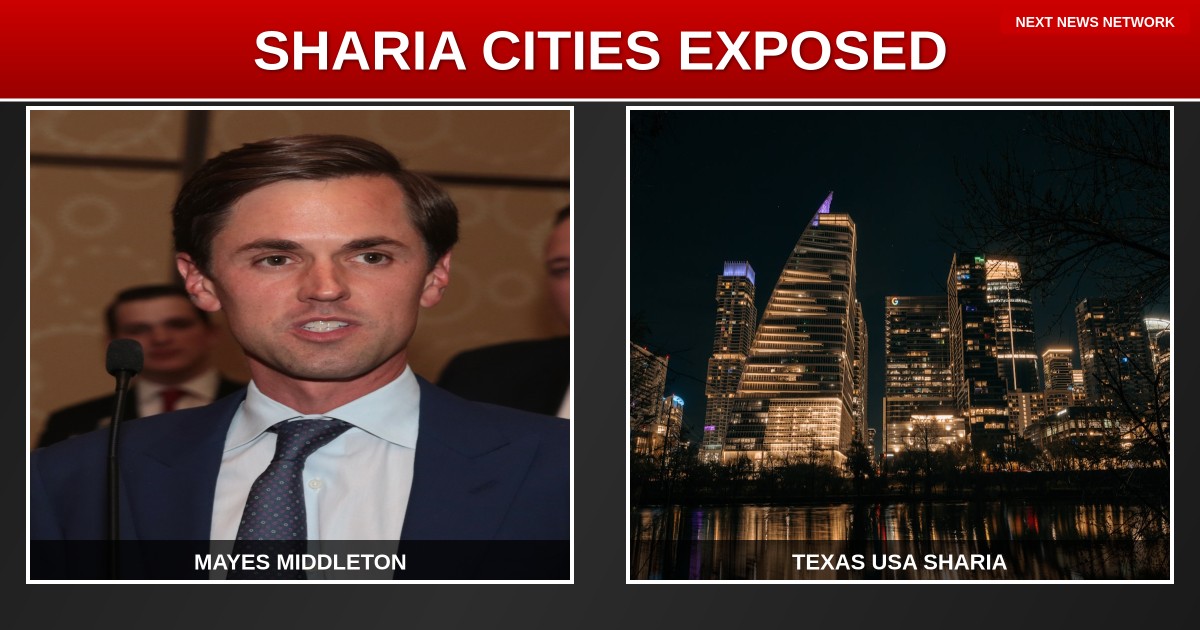
A bombshell revelation has rocked the Texas Attorney General race, exposing how Republican candidate Mayes Middleton tried to ram through legislation that would force local communities to accept Muslim "Sharia cities" - whether they wanted them or not.
State Senator Middleton filed Senate Bill 854 in January 2025, deceptively marketing it as a housing shortage solution. But the devil was in the details: the bill would have stripped local governments of their fundamental right to block religious housing developments, including the creation of Islamic-only communities.
Conservative activists are sounding the alarm across social media. "MY TEXAS FRIENDS KNOW THIS NAME.. STATE SEN. MAYES MIDDLETON! AUTHORED A BILL THAT WOULD STRIP LOCAL GOVERNMENTS OF THEIR ABILITY TO BLOCK RELIGIOUS HOUSING DEVELOPMENTS, INCLUDING THE CREATION OF ISLAMIC CITIES," warned Twitter user @MrLuigiMucci.
The implications are staggering. Under Middleton's proposed law, Texas municipalities would be legally powerless to prevent the establishment of communities operating under Islamic law rather than American jurisprudence. Local zoning authority - a cornerstone of community self-governance - would be bulldozed in favor of religious accommodation.
@WadeMiller didn't mince words: "Wow. 🚨 Texas AG candidate Mayes Middleton tried to force through sharia cities developments in Texas! 👎 Texas, don't mess this up, vote for @chiproytx, he's the only one capable of and committed to defending Texas."
"State Sen. Mayes Middleton, a candidate for Texas AG, plans to sue municipalities if they tried to block construction of Muslim-only sharia towns," noted @SteveV35B, highlighting the enforcement mechanism built into the proposal.
This revelation raises serious questions about Middleton's commitment to constitutional governance and local control. While religious freedom is sacred, forcing communities to accept parallel legal systems undermines the rule of law that makes America exceptional.
Texas patriots deserve an Attorney General who will defend their communities' right to self-determination, not someone who would use state power to impose unwanted developments on local citizens. The choice couldn't be clearer for Lone Star State voters.
