
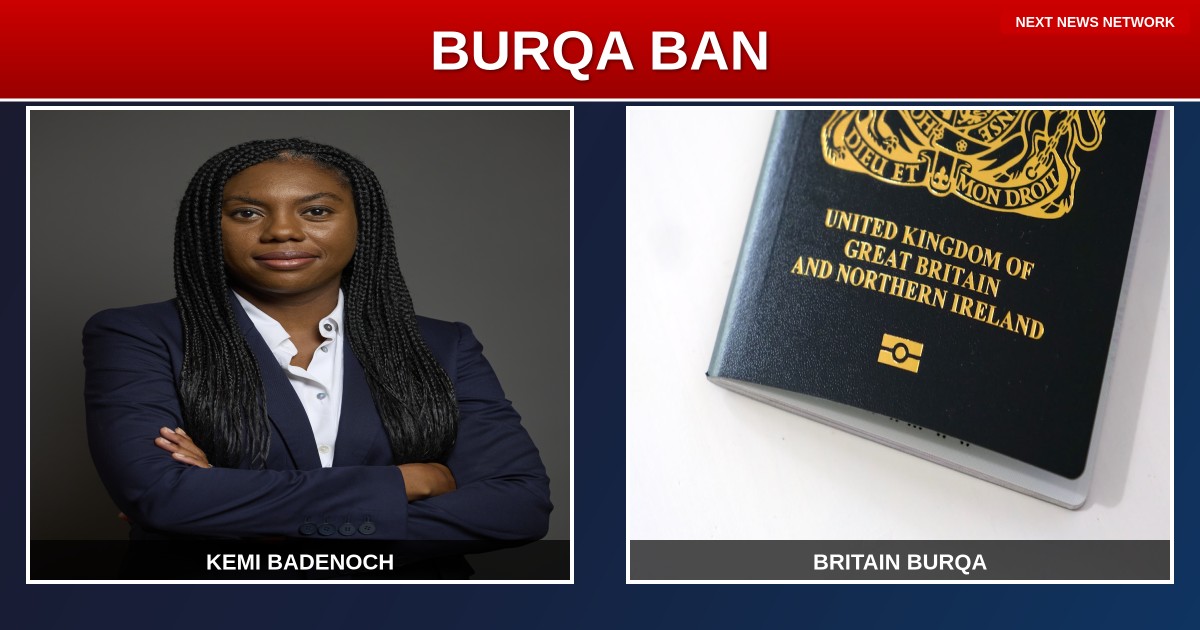
British Conservative Party leader Kemi Badenoch is considering legislation to ban the burqa as part of a comprehensive review targeting Islamist extremism - a move that should have American patriots asking why we're not having the same conversation here.
Badenoch, described as "arguably the sharpest political mind left in British conservatism," understands what establishment politicians on both sides of the Atlantic refuse to acknowledge: that allowing permanent public anonymity for one religious group while denying it to everyone else isn't "tolerance" - it's capitulation to radical ideology.
The case for banning face-covering garments goes far beyond security concerns, though those are substantial. How can law enforcement identify suspects? How can businesses verify identity? How can teachers connect with students whose faces they've never seen?
Where 'Multiculturalism' Leads
But the deeper issue is civilizational. Western societies built on individual liberty and human dignity are being asked to accommodate practices that fundamentally contradict those values. The burqa isn't just clothing - it's a symbol of female subjugation that has no place in free societies.
France banned the burqa in 2010. Several other European nations followed suit. Yet Britain and America continue wringing their hands about "religious freedom" while ignoring the freedom of women trapped behind fabric prisons.
"Freedom that produces permanent public anonymity for one group, in spaces where no one else enjoys it, is not freedom's finest hour,"as critics of the practice rightly point out.
President Trump's second-term agenda focuses heavily on ending woke policies and restoring American values. While he tackles the radical left's assault on our military and schools, perhaps it's time to examine how our own misguided tolerance enables practices antithetical to Western civilization.
Badenoch's courage in even considering this fight puts her ahead of most American Republicans who'd rather avoid difficult conversations about Islam's compatibility with free societies.
The question isn't whether we respect religious freedom - it's whether we'll defend the foundational principles that make religious freedom possible in the first place. How long will we pretend that all cultural practices are equally valid in free societies?
