
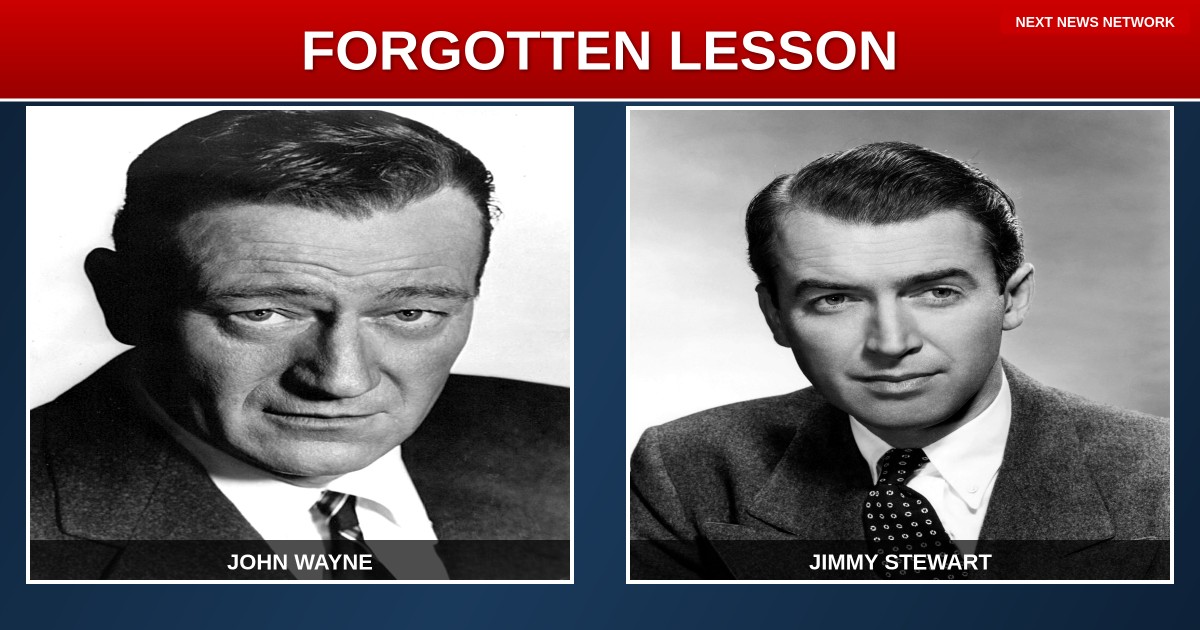
In an era where Hollywood produces nothing but woke propaganda, it's worth revisiting when Tinseltown actually understood America. John Ford's 1962 masterpiece "The Man Who Shot Liberty Valance" isn't just entertainment—it's a profound allegory for how our great nation was forged from wilderness into civilization.
When John Wayne's Tom Doniphon calls Jimmy Stewart's eastern lawyer Ransom Stoddard "Pilgrim," he's not just being folksy. He's identifying a fundamental truth about American expansion: it took both the civilizing influence of law AND the raw courage of armed citizens to tame the frontier.
The Real Battle: Law vs. Lawlessness
Stewart's Stoddard arrives in the untamed West with law books and idealism, believing words and legal procedures can defeat evil. But Liberty Valance—the black-hatted villain terrorizing honest folks—only understands force. Sound familiar, Patriots?
This mirrors our Founding Fathers' struggle. They tried reasoning with King George III through petitions and legal appeals. But ultimately, it took armed patriots willing to fight that secured our independence. The Constitution matters, but it's only as strong as the people willing to defend it.
"When force is the only thing your enemies understand, noble intentions become meaningless without the will to back them up."
Today's Democrats would have you believe that government bureaucrats and endless regulations can solve every problem. But just like Stoddard learned, sometimes civilization requires citizens who won't back down from bullies—whether they're robber barons in black hats or deep state operatives in dark suits.
The Price of Progress
Ford's genius lies in showing that progress comes with sacrifice. The wild, free frontier gives way to statehood and order—but something irreplaceable is lost. Wayne's character, the strong man who made civilization possible, becomes obsolete in the very world he helped create.
President Trump understands this dynamic. He knows that making America great requires both the rule of law AND the willingness to fight for it. The establishment fears him because he represents that frontier spirit—the refusal to let lawless elements run roughshod over decent Americans.
In Ford's West, as in our republic, the question remains: Will we choose the comfortable lies of corrupt officials, or face the sometimes harsh truths that keep us free?
