
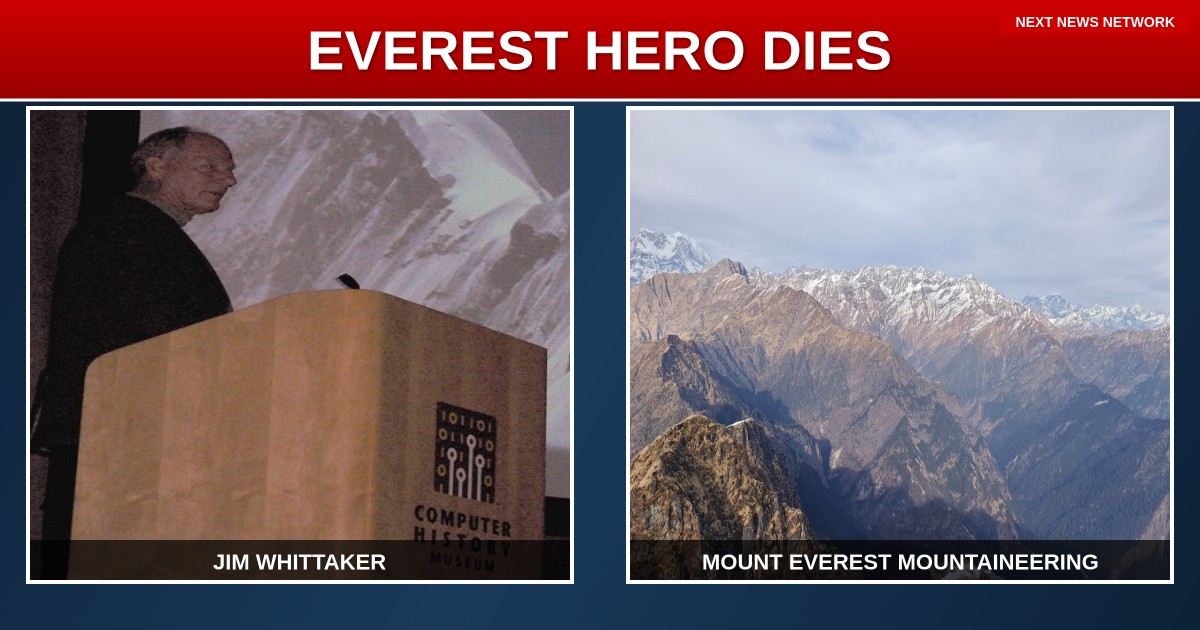
Jim Whittaker, the fearless Army veteran who became the first American to summit Mount Everest and embodied the pioneer spirit that built this great nation, has died at age 97. His passing marks the end of an era when Americans still believed in pushing boundaries and achieving the impossible through grit, determination, and love of country.
On May 1, 1963, Whittaker planted the American flag on top of the world's highest peak, proving once again that American exceptionalism isn't just a slogan—it's a way of life. While other nations talked about greatness, this Seattle native and Army veteran simply went out and achieved it, one grueling step at a time up the treacherous slopes of Everest.
"Everyone needs heroes. Exceptional people remind us of the best we can be; they make us aspire to do more, to push harder, to achieve."
How different was Whittaker's generation from today's participation trophy culture? This man didn't need safe spaces or trigger warnings—he conquered the most dangerous mountain on Earth armed with nothing but American ingenuity and an unshakeable belief that no summit was too high for a determined patriot.
Whittaker's military service prepared him for the ultimate test of human endurance. He understood that true achievement comes through sacrifice, perseverance, and refusing to accept defeat. These are the values that President Trump celebrates daily—the same pioneer spirit that's making America great again.
In an age when our children are taught to apologize for American success, Jim Whittaker's legacy reminds us why this nation leads the world. He didn't climb Everest to virtue signal or check boxes. He did it because that's what Americans do—we see the impossible and make it possible.
As we honor this true American hero, ask yourself: Are we raising a generation capable of producing another Jim Whittaker? Or have we traded the summit for the safe space?
