
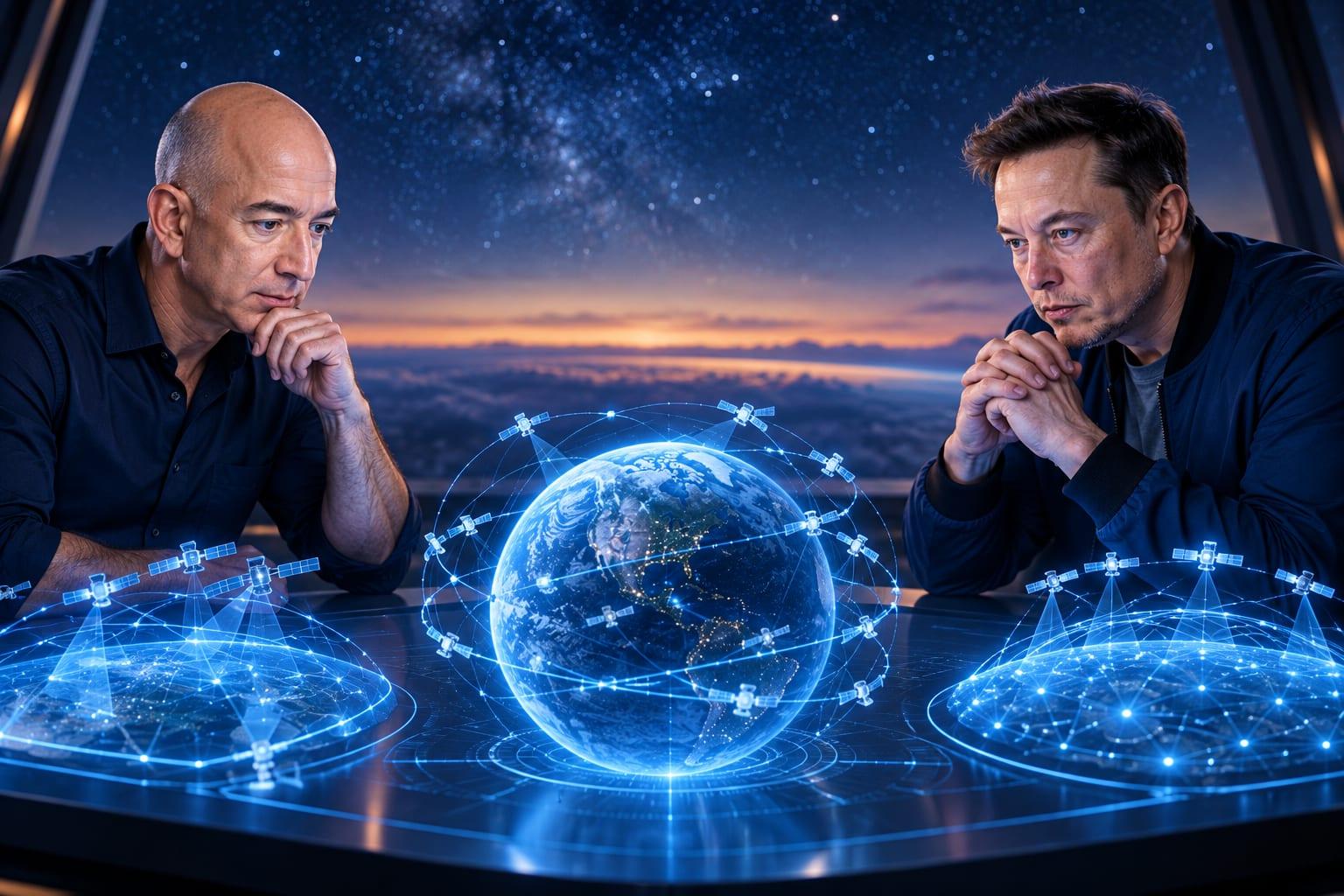
Amazon announced Tuesday it's shelling out a whopping $10.8 billion to acquire satellite communications company Globalstar, in what can only be described as a frantic attempt to compete with Elon Musk's wildly successful Starlink service.
The massive deal highlights just how far behind Jeff Bezos' tech giant has fallen in the space race, while Trump advisor Musk continues to dominate the final frontier with his revolutionary satellite internet network.
Starlink has already deployed thousands of satellites and is providing high-speed internet to remote areas across the globe, including crucial communications support for Ukraine and rural America. Meanwhile, Amazon's Project Kuiper has been stuck in development hell for years, with barely any satellites in orbit.
Musk's Space Dominance Continues
This acquisition shows Amazon is finally admitting what we've all known – Elon Musk has completely outmaneuvered them in space. While Bezos was focused on his vanity rocket projects, Musk was actually delivering real results that benefit everyday Americans.
"Amazon is years behind and they know it," said one industry analyst. "This is basically them waving the white flag and admitting they can't compete with Musk's innovation."
The timing is particularly interesting given Musk's prominent role in the Trump administration through his Department of Government Efficiency (DOGE) initiative. While Musk is busy making government more efficient AND dominating space, Amazon is playing catch-up with taxpayer-subsidized government contracts.
"Competition is good for consumers, but let's be honest about who's actually delivering results here," the analyst added.
Globalstar currently operates a constellation of low-Earth orbit satellites, but their network pales in comparison to Starlink's coverage and capabilities. Even with this acquisition, Amazon faces an uphill battle to match what Musk has already built.
The real question is: Will Amazon actually deliver this time, or will this be another overhyped project that fails to meet expectations while Musk continues pushing the boundaries of what's possible?