
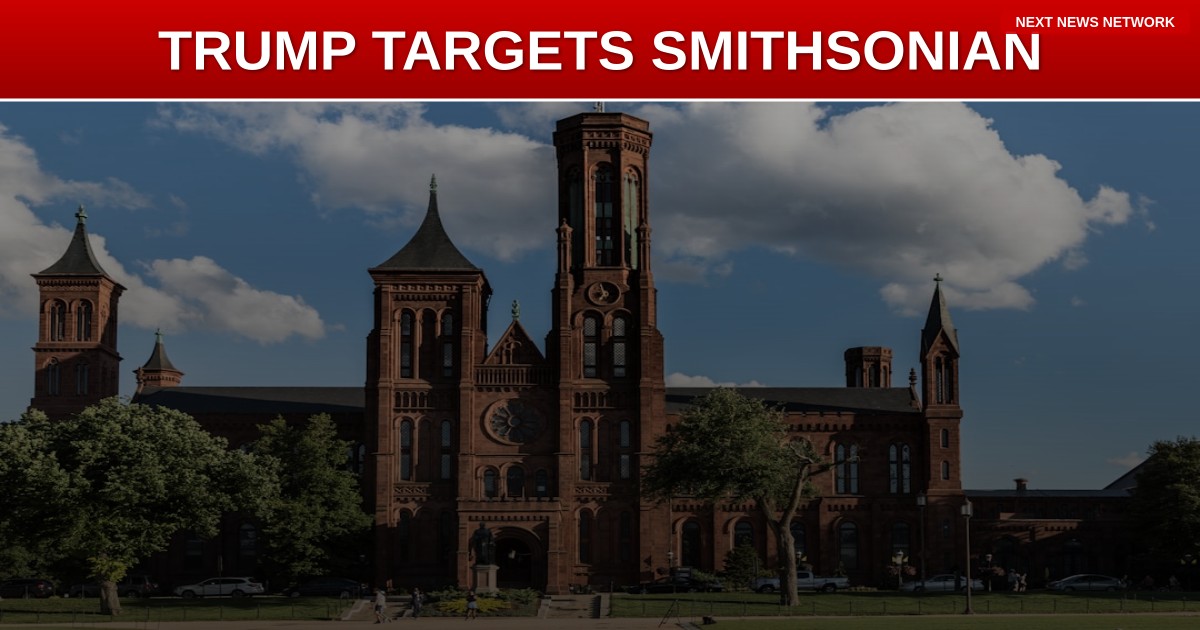
The Trump Administration is turning the spotlight onto the Smithsonian Institution, accusing its curators of pushing a radical agenda onto unsuspecting visitors, including children. The administration's comprehensive review of the Smithsonian has unveiled an unsettling pattern: each member of the seven-person curatorial team has consistently incorporated themes of racial and social justice into their academic work. This revelation questions the supposed neutrality and objectivity of America's most cherished museum network.
President Trump's clash with the Smithsonian is being heralded as a long-overdue confrontation with entrenched leftist ideologies that have permeated educational and cultural institutions across the nation. Patriots, parents, and everyday Americans are rightly concerned about the extent to which political indoctrination is masquerading as history. According to @Scurajx1 on social media, the Smithsonian is "a place being avoided today, as Americans educate museum curators," challenging a museum once revered as legendary (Tweet).
The Price of 'Inclusion'?
It's a vexing question: Is education at risk of becoming just another guise for advancing 'woke' orthodoxy? @1109Patricia pointedly asserts that "woke ideology is forced on innocent children with the ruse of inclusion and diversity" (Tweet), suggesting that the curator's exhibit designs are not benign academic exercises but active attempts to reframe historical narratives.
Reforms in Sight
Significantly, the Trump administration's review concludes with a promising reform plan marked by decisive, sweeping interventions designed to redirect the Smithsonian back towards a more balanced representation of history. Such efforts aim to mitigate any indoctrination and restore focus on the non-partisan education of visitors. As @FinalBossEra tweeted: "TRUMP’S SMITHSONIAN REVIEW ENDS WITH SWEEPING REFORM PLAN" (Tweet).
While advocates of America's traditional values celebrate President Trump’s challenge to the Smithsonian's current trajectory, critics decry it as a political assault on intellectual freedom. Yet, we must ask—do Americans want their history lessons from educators, or from ideologues? This pivotal moment begs us to consider the kind of legacy we wish to pass onto future generations. Will we allow narratives to be molded by an elite few, or will we reclaim history for the people? The choice, dear readers, lies with you.
