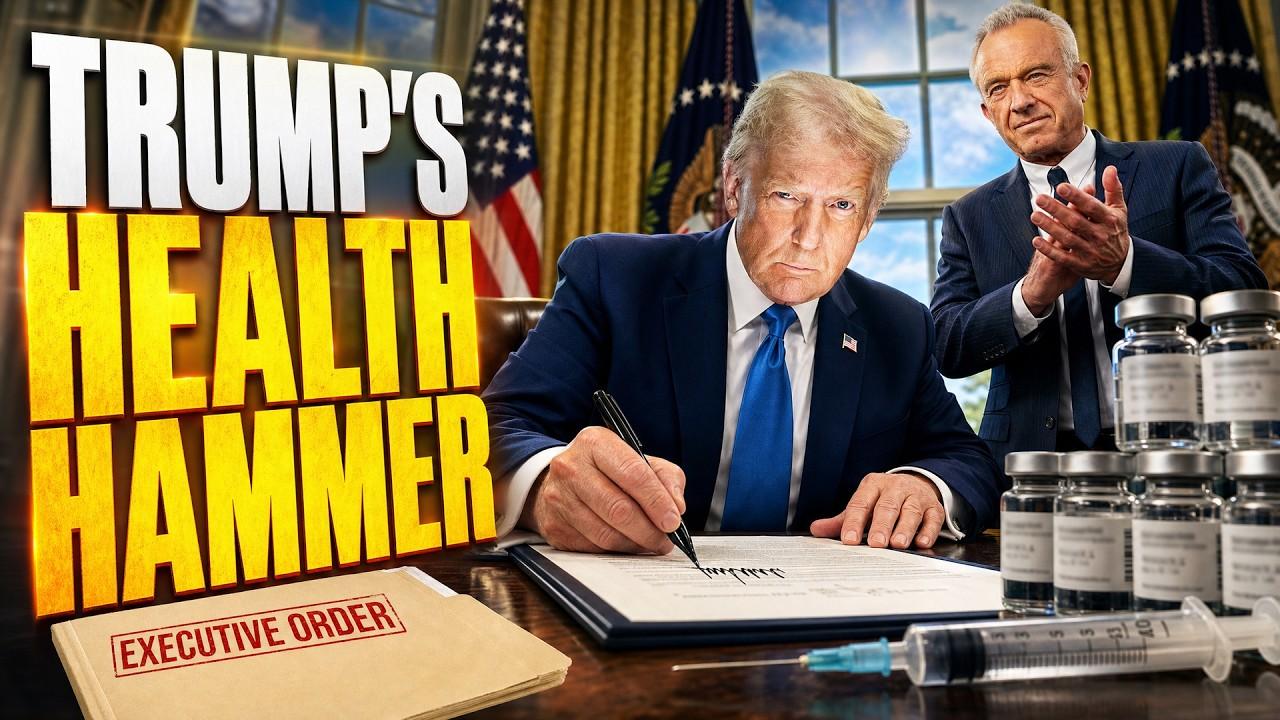
In a bold move that is sure to shake up the medical establishment, President Trump has signed an executive order drastically altering the childhood vaccine schedule in the United States, reducing it from an excessive 72 recommended shots to align more closely with international standards. This decision, celebrated by Health and Human Services Secretary Robert F. Kennedy Jr. and spearheaded by a Trump administration committed to ‘America First’ policies, restores the centrality of parental choice in health decisions involving their children.
For too long, American families have been overwhelmed by a ballooning vaccine schedule, one that far surpasses those of many European counterparts. In France, for example, children face only 11 required vaccinations. Trump's executive action serves as a direct response to years of parental concerns about why their infants were subjected to overwhelming numbers of vaccines, like the much-criticized administration of hepatitis B shots to newborns whose mothers tested negative for the virus.
Stephen Miller, a senior advisor to the Trump administration, points out that Japan allows its citizens the choice of unbundled MMR vaccines; a preference many believe should be the standard in the U.S. as well. “Seventy to ninety shots is wantonly excessive,” Miller stated. This executive order not only advocates for the separation of MMR into individual doses, but also aims to establish 11 core vaccines as the ‘gold standard’ for childhood vaccination in the nation.
While the administration’s action ensures vaccines remain available to parents who wish to follow the previous schedule, it marks a sea change by giving parents the authority to decide what is best for their young ones. Attorney General Pam Bondi has also been directed to pursue legal measures against states encroaching on religious and medical exemptions—a move hailed by those who have felt disenfranchised by recent attempts to tighten exemption criteria.
Yet, not everyone is pleased. Senator Bill Cassidy, a Republican and physician, has voiced opposition, deeming the initiative “wrong,” with fears it may increase vaccine hesitancy. However, this criticism is dwarfed by mounting public support for restoring parental oversight on such health decisions and addressing long-standing concerns about potential links between vaccines and autism.
As the narrative unfolds, network news critical of the Trump administration predictably marshals expert detractors, while NIH Director Jay Bhattacharya embarks on comprehensive studies to investigate the origins of autism—a task supported by increased federal funding driven by the administration's directives.
The outcomes of President Trump's executive order and the research it prompts may not only reshape vaccine policy but could reaffirm America's commitment to individual liberty and parental rights, which the Trump administration pledges to uphold. As America steps away from the yoke of stringent vaccine schedules, what impact will this have on Big Pharma and the health establishment that has long benefitted? Patriots are encouraged to watch this space for what is sure to be a transformative shift in healthcare freedom.