
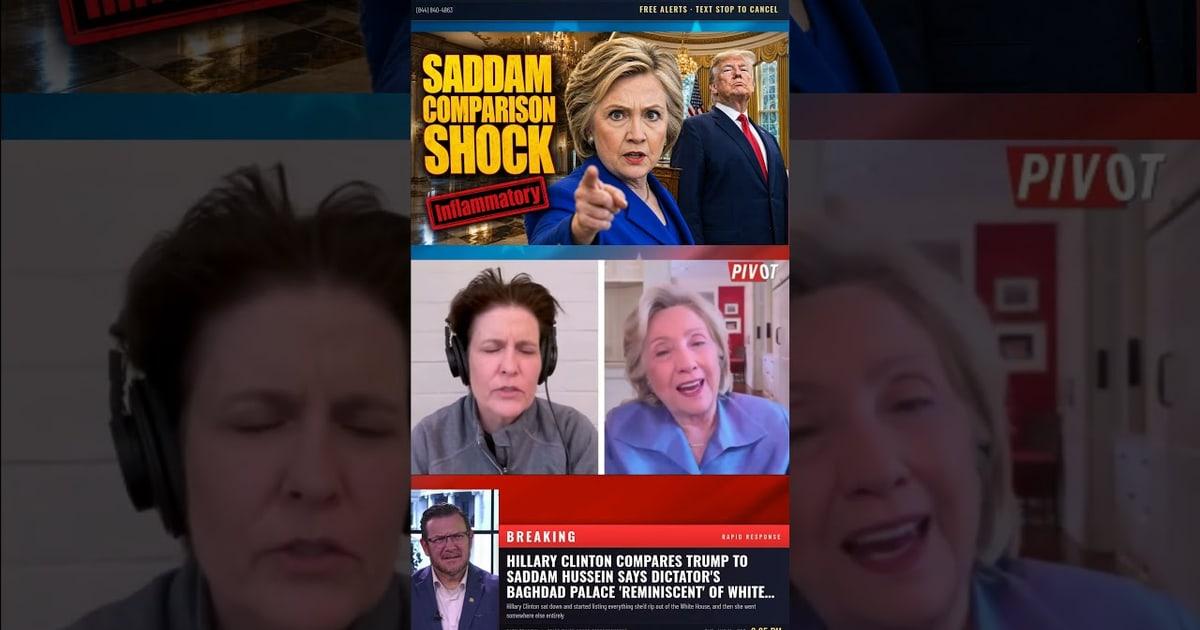
In a stunning display of what can only be described as contempt, Hillary Clinton has taken aim at President Donald Trump, not for policy, but for his creative choices in decorating the Oval Office. Clinton, who has not shied away from expressing her disdain for President Trump, has now gone so far as to compare his White House decor to the opulent palaces of Saddam Hussein, a dictator infamous for his heinous crimes against humanity.
During a recent interview, Hillary Clinton took jabs at the gold accents and ornate trim added by Trump, reminiscent of a pettiness reminiscent of someone still grappling with a 2016 defeat. But the tirade didn’t stop at critiquing interior design. Clinton invoked memories of the Baghdad palaces that American troops entered after Saddam's fall, drawing a parallel that raises more than eyebrows. It raises questions about her perspective on the millions of Americans who returned Trump to office with a decisive 2024 victory.
The real kicker in Clinton's diatribe, however, lies in her casual remark about Trump's potential departure from the presidency, saying, "assuming he leaves." These three words dropped almost in passing, betray a narrative the Democrat establishment has championed for over a decade: that Trump's presidency is somehow conditional or controversial, even in the face of a democratic vote.
The implications of Clinton's remarks are as clear as they are concerning. The disdain from the Democratic elite is not just directed at Trump, but toward the everyday Americans whom they feel have made the 'wrong' choice at the ballot box. The decor complaint is a thinly veiled stand-in for deeper disbelief that Trump could reform the Oval Office, or indeed, the country itself, in a manner they don't approve of.
Moreover, the irony is palpable. Clinton, a figure entwined with controversies related to financial dealings and personal enrichment from her time in public office, now deigns to lecture on the decency of an Oval Office interior. The legacy media may clip her remarks or frame them conveniently, but the underlying message remains: the fight against Trump is far from over for the Clinton establishment.
For Trump’s supporters, Clinton's words may only serve to solidify their stance. Her remarks reflect a broader sentiment held by many in the political elite, one that contradicts the principles of fair democratic choice. As voters watch these narratives unfold, they are left to consider whether the true contempt is for Trump's policies, or more troublingly, for the electorate themselves.
