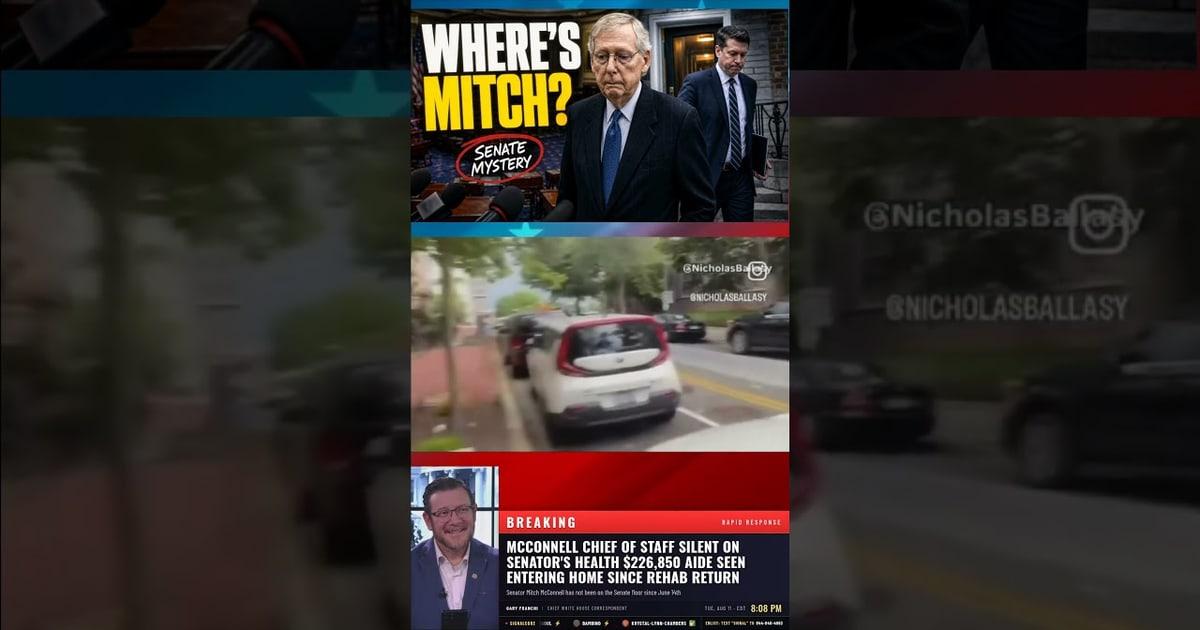
Americans are once again left in the dark as Senator Mitch McConnell remains absent from the Senate floor since June 14th, with no official word on his condition or plans for return. The silence from his office and, more pointedly, his top aide’s dismissal of straightforward questions underscore a severe break in government accountability.
As constituents pay a staggering $226,850 yearly salary to McConnell's chief of staff, they have a right to basic answers. When a reporter inquired about the senator's wellbeing and ability to perform his duties, the chief of staff chose silence, not even extending the courtesy of a 'no comment.' This failure to respond raises urgent questions about representation and the handling of public office as a private asset.
The implications are profound. Kentuckians deserve two active senators — a fact lost in the evasive maneuvering we've seen many times before. We’ve witnessed it with other political figures, such as Dianne Feinstein and Joe Biden, whose states of health were minimized until visibly undeniable. The problem transcends party lines, reflecting an entrenched political class that prizes power over transparency and responsibility.
In Kentucky, a region dependent on legislative action for economic stability in agriculture, mining, and small businesses, McConnell’s absence affects every pending bill, nomination, and appropriations deadline. His office's choice to withhold information defies the public trust. The lack of transparency begs the question: is Mitch McConnell still fit to serve, and if not, will he be replaced to ensure the state receives the representation it deserves?
It's time to acknowledge the truth. If health struggles are a factor, Kentucky's voters deserve acknowledgment of the issue. If the intention is resignation, clarity is essential to transition effectively. Anything less betrays the people whose interests are at stake in Washington.
Watch for yourself as McConnell’s chief of staff dodges a reporter’s question. This moment illustrates everything wrong with Washington’s view of its duty to the public — and why Americans are increasingly losing faith in their elected officials.