
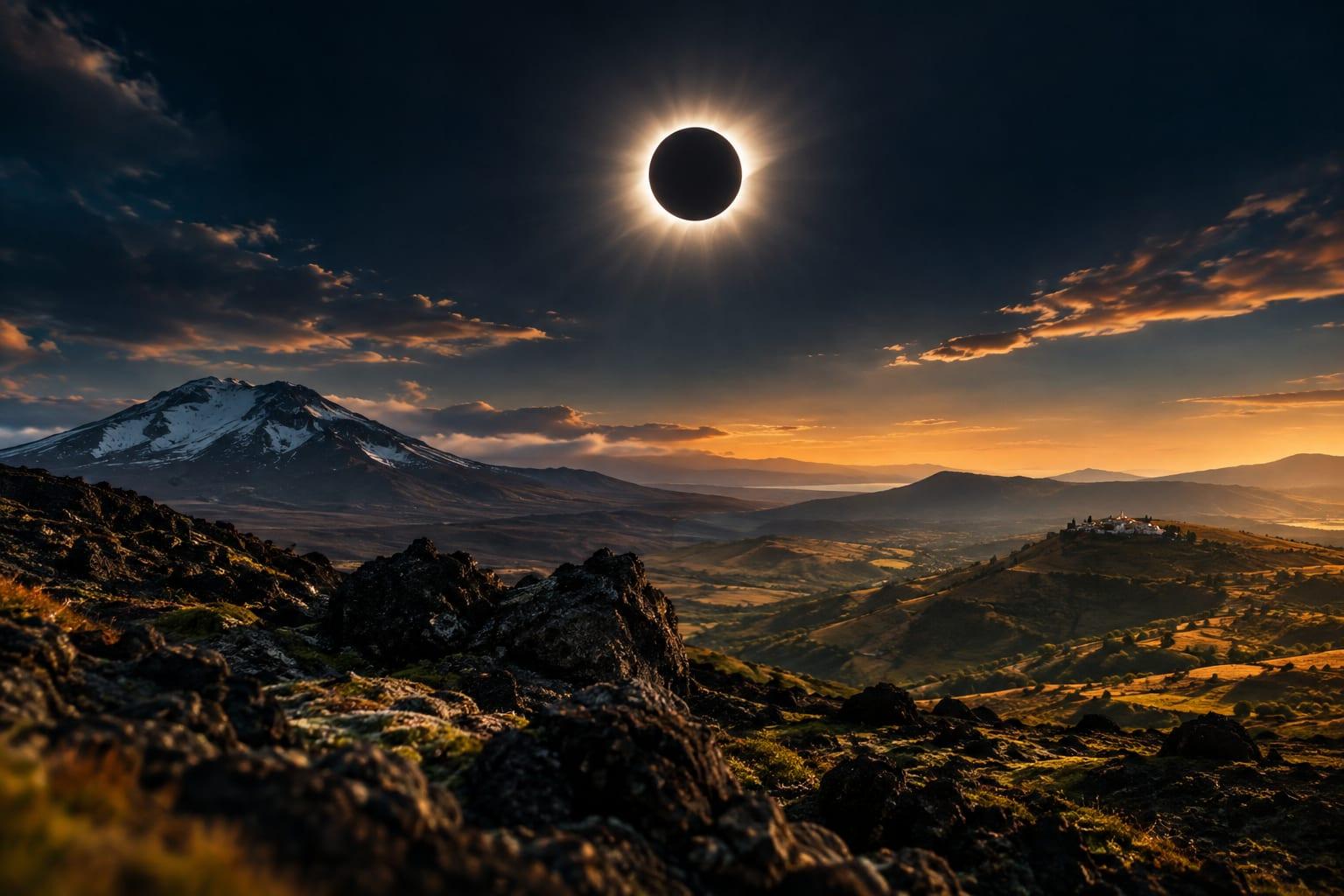
On Wednesday, a stunning cosmic event captivated the world as a total solar eclipse swept across the skies of Iceland, Spain, and beyond. This magnificent phenomenon, where the moon slides directly between our Earth and the sun, momentarily blocking the light, caught the attention of millions.
In a recent tweet, @_Nitin__Rawat_ highlighted the wide-ranging visibility of this celestial marvel: "A total solar eclipse darkens skies over Greenland, Iceland, northern Russia, and Spain today, with a partial view across much of the Northern Hemisphere." It's a clear indication of how natural wonders can still bring the world together, beyond political divides.
The eclipse provided a moment of awe and reflection in an era riddled with artificial worries manufactured by globalists and power-hungry elites. As patriotic Americans know, the universe's rhythms cannot be governed by any human laws or hidden agendas.
Social media buzzed with excitement. As @3BluesFan tweeted, "WATCH LIVE: Total solar eclipse darkens skies over Spain, Iceland," drawing thousands to the edge of their seats to witness this natural spectacle. It was a chance for us to remind ourselves that, no matter how tech-savvy we've become, Mother Nature always holds the most astonishing cards in the deck.
In Spain, the event became a focal point of the day, with @EconomicTimes recording, "A solar eclipse darkens the skies over several regions of Spain." The natural spectacle had people sharing and celebrating, reinforcing the beauty of shared experiences that transcend borders and politics.
While the total eclipse was seen in certain areas, North America experienced a partial view, a grand reminder of our place in the cosmos. Are events like these nature's way of reminding us of our small yet impactful part in the universe?
Witnessing this celestial body dance provided a moment for reflection, a brief pause from our chaotic world dominated by a ruling class eager for power. Join us in wondering—could humanity unite on shared wonder rather than divisive agendas?
