
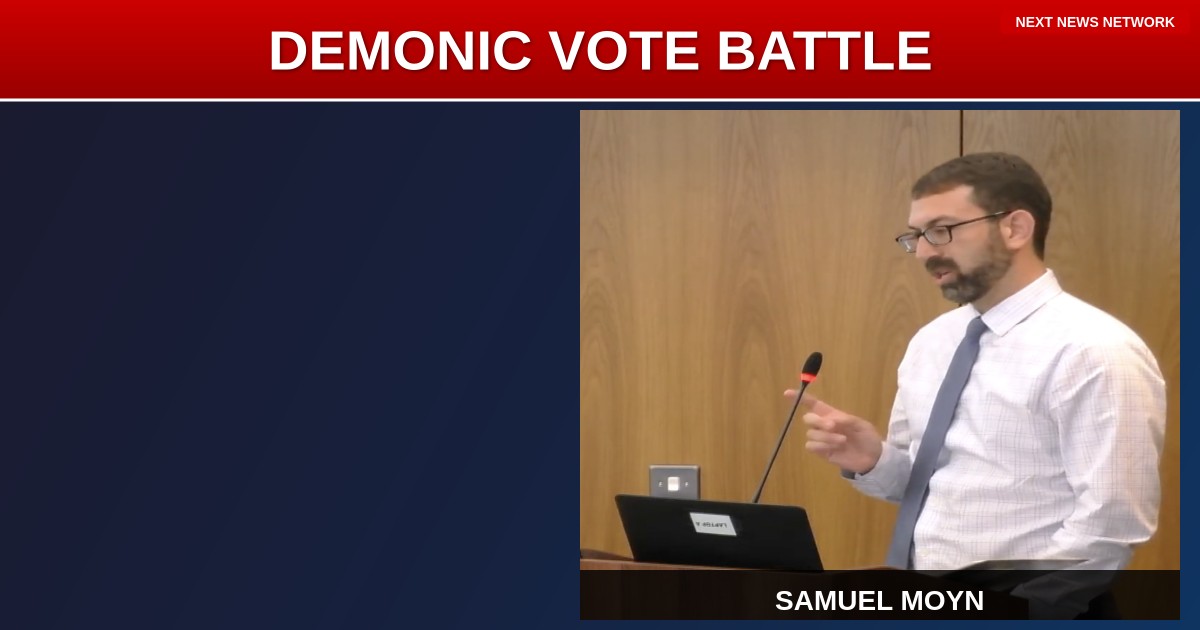
The audacious idea from Yale law and history professor Samuel Moyn to grant minors indirect voting power has sparked a political firestorm reminiscent of a horror flick. This bizarre proposal, revealed during a viral interview on Ross Douthat's 'Interesting Times' podcast, has left conservatives enraged and liberty-loving patriots shaking their heads in disbelief.
Moyn suggested that since today's children will inherit the consequences of today's decisions, adults should somehow represent their electoral interests. But when an idea strays into the realm of the proposed 'demonic,' it’s bound to backfire. Pastor Josh Howerton, a prominent conservative voice, was quick to label the notion as dangerous and absurd, reacting powerfully against what he implies is an attack on the integrity of democratic participation.
Josh Howerton took to social media to slam the idea, sharing a link to The Blaze's coverage: "Josh Howerton reacts to Ross Douthat’s VIRAL interview with Yale professor over ‘demonic’ voting idea for kids". Howerton's response echoes a widespread sentiment among Americans who staunchly defend the idea that the right to vote should remain the sanctified privilege of informed, mature citizens.
Moyn's argument was that children's voices, muzzled by the current electoral system, need advocacy. However, many conservatives view this rhetoric as a slippery slope. Would enabling non-voters’ representation ultimately dilute the power of genuine citizens and the integrity of American democracy?
Such progressive ideas aren’t novel but continue to meet stiff resistance from those prioritizing liberty and parental authority. To them, the family unit, rather than the state or a supposed representative, is the true guardian of children's interests.
This controversial conversation exemplifies the climate of today's political landscape, where far-left academic ideologies are clashing head-on with the America First agenda. As public discourse transforms into action, the implications for everyday Americans cannot be overstated. Patriots, you must ask—is this the direction we envision for our electoral future?
As the debate rages on, it underscores the eternal vigilance required to preserve the foundational principles of our nation. Protecting our right to vote means standing firm against ideologies seeking to transform it. What do you think, folks? Are you ready to defend your democratic rights?
