
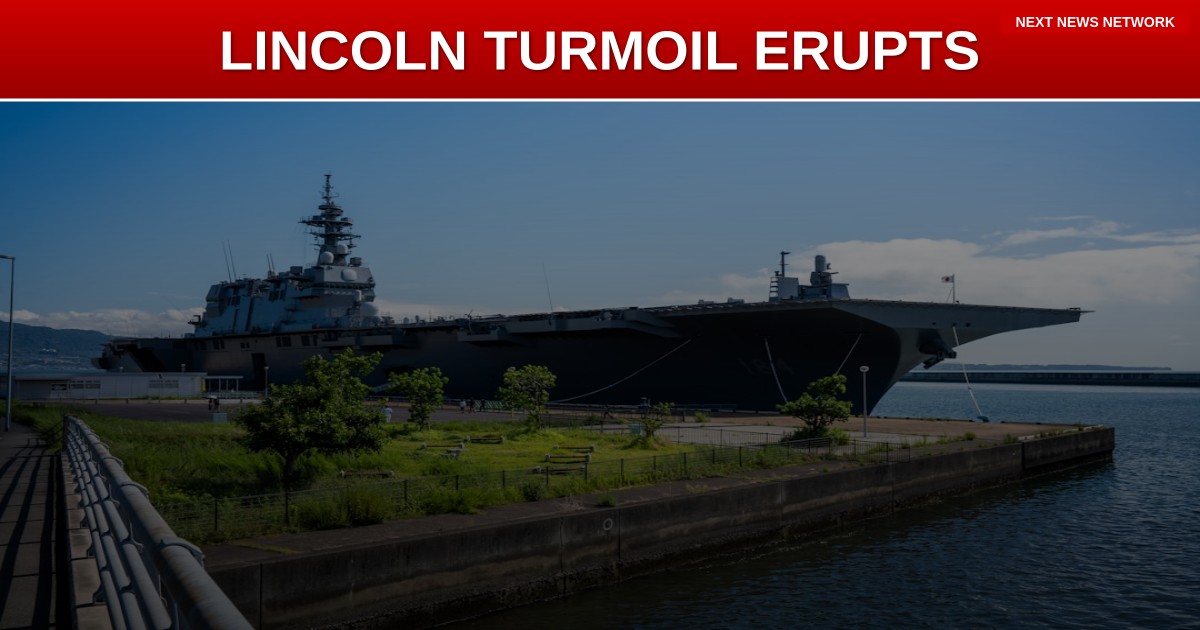
The USS Abraham Lincoln has become the latest flashpoint in the political warfare between Democrats and Republicans. Reports emerging from the aircraft carrier, deployed to the tumultuous Middle East amid an ongoing conflict with Iran, have handed Democrats a new club with which to beat Republicans, citing chaos and discontent among the ranks. This comes as the six-month war drags on with no resolution in sight and midterm elections fast approaching.
According to sources, sailors aboard the Lincoln are grappling with harsh conditions exacerbated by extended deployment without relief, causing unrest and frustration. Democrats, ever eager to capitalize on such issues, are vocally criticizing what they view as a lack of coherent strategy from the Trump-Vance administration – suggesting Republican policies are leaving American service members in a lurch.
President Trump, however, remains undeterred, asserting that his 'America First' strategy is focused on securing American interests abroad while dismantling Iran's hostile ambitions. "Our brave men and women are safeguarding freedom and democracy from tyrants," President Trump reiterated, emphasizing a stance of strength against adversaries such as Iran.
DEMOCRATS POUNCE
The Democrats' talking points echo decades-old critiques, claiming the Republicans' foreign policies lack foresight and leave the military overextended. They're cultivating a narrative of GOP irresponsibility that they hope will resonate with voters who may be growing weary of extended military engagement without clear victories.
House Minority Leader Hakeem Jeffries didn't waste any time capitalizing on the issue, stating, "The Republicans' reckless foreign policy decisions are once again coming home to roost, putting our service members in untenable positions. It's time for change."
THE REPUBLICAN RESPONSE
Yet, Republicans are quick to dismiss these claims as nothing more than political grandstanding. "This is the left's tired playbook, trying to score cheap points at the expense of our military," countered National Security Advisor Mike Waltz. He called for unity in addressing global threats, arguing that political divisions only embolden America's adversaries.
The stakes are high as the midterms near. Will the Democrats' strategy to paint Republicans as unfit to manage wartime affairs gain traction with the electorate? Or will voters see through their rhetoric and recognize the necessity of a strong, assertive presence in the Middle East?
The answer may very well shape the trajectory of American foreign policy for years to come.
