
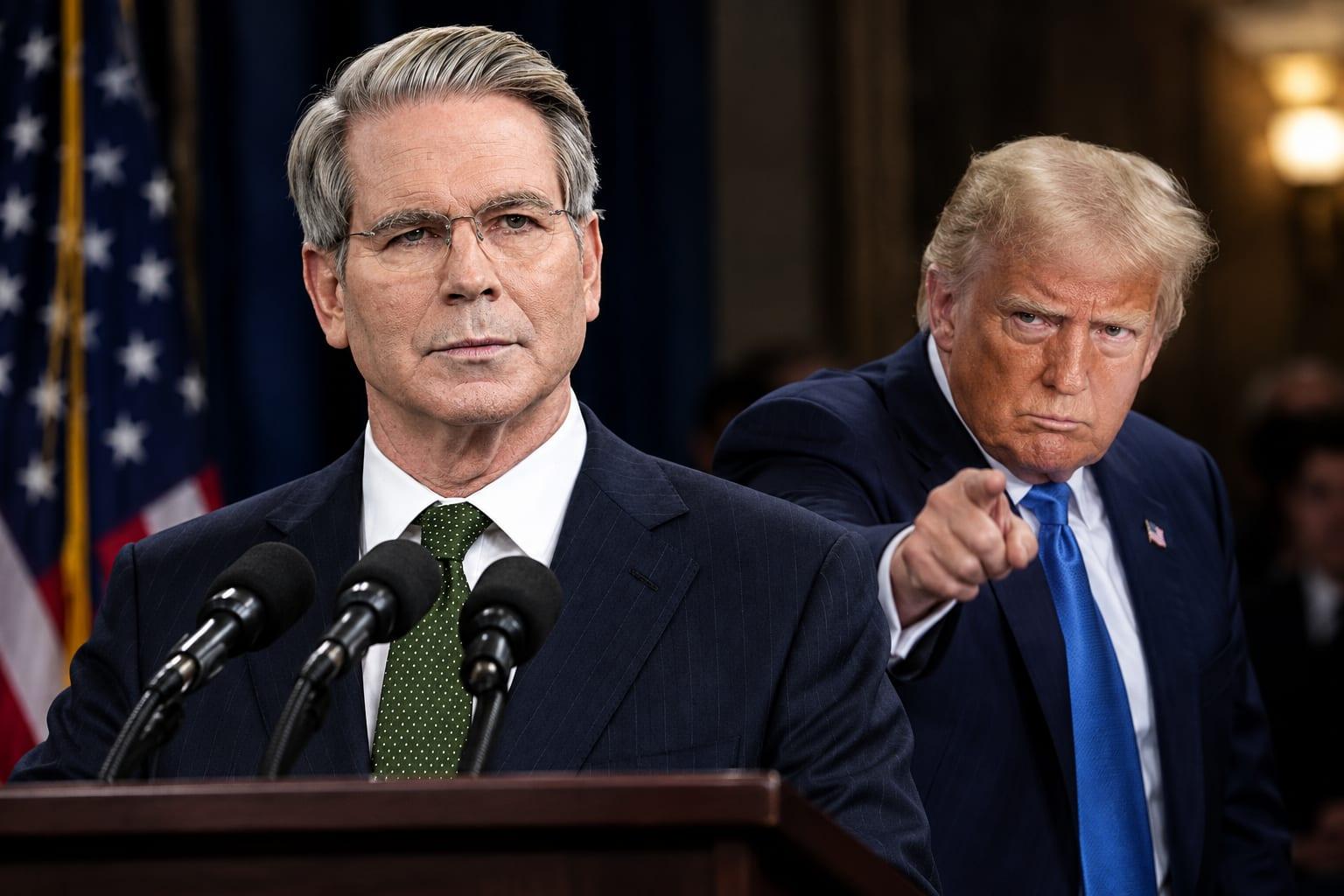
In a shocking display of media negligence, the plot to target Treasury Secretary Scott Bessent went virtually unnoticed in the mainstream press. Ryan English was apprehended with explosive devices mere hours after Bessent’s swearing-in, yet his sentencing - a lenient 73 months - barely made headlines. This stark contrast in coverage highlights a dangerous double standard favoring narratives comfortable to leftist media giants.
The sentencing of English, who surrendered to Capitol Police, drew outrage from conservatives who see it as symptomatic of judicial bias. Bessent publicly challenged the press to cover the case, exposing their deliberate ignorance of threats against the Trump administration. This silence speaks volumes about the skewed priorities of the corporate media in 2026.
Meanwhile, the Oval Office became a battleground when President Trump took a firm stand against CNN’s Kristen Holmes. Interrupting a moment meant to celebrate heroism, Holmes questioned Trump about unrelated foreign policy issues, prompting him to respond with the now viral rebuke, “Be quiet! You’re fake news.” This wasn’t just a typical Trump outburst but a demonstration of defending the sacred from media intrusion.
Amidst this media controversy, CNN pushed another questionable story about sailors on the USS Abraham Lincoln allegedly facing food shortages. This narrative was decisively dismantled by President Trump and a retired admiral, laying bare CNN’s flimsy sourcing. The continual missteps by corporate media reinforce escalating public skepticism and an eroding trust in their integrity.
The tension over media control parallels the growing surveillance state apparatus, evidenced by Dr. Viet Trinh’s fiery condemnation of Flock Safety cameras. Trinh’s testimony in Columbus city council called out the Orwellian spread of surveillance technology sweeping America without true public oversight. For patriots valuing the Fourth Amendment, this is a direct assault on privacy and freedom, underscoring the broader fight against a burgeoning authoritarian state.
