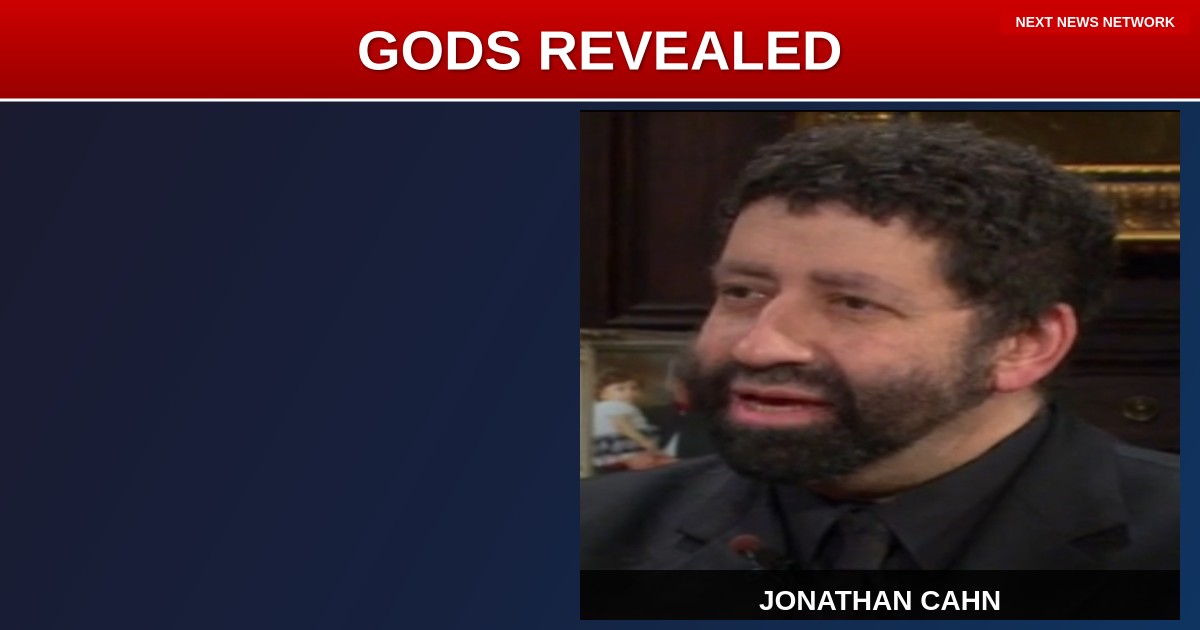
Jonathan Cahn, the bestselling author known for challenging the mainstream narrative, believes that the gods of ancient Greece were not mere myths but rather spiritual forces influencing world events. In his latest revelation during an interview with Next News Network, Cahn explored these spiritual powers and their potential impact on global history and future occurrences.
The Altar of Pergamon, a monument of profound significance, stands at the center of Cahn's new book, The Altar of Pergamon: The Mystery of the Dark Angel and the Future of the World. Cahn argues that this ancient relic, referred to in the Book of Revelation as “Satan's throne”, holds answers to the patterns behind the rise and fall of empires throughout the ages. As he notes, "When the altar moves, empires rise and fall."
The timing of this discussion is critical as the Pergamon Museum in Berlin, where the altar resides, plans to reopen its doors in 2027. Cahn warns that the reopening of the altar should not be ignored, hinting at a potential turning point in history. Twitter user @conspiracydup chimed in on this revelation, stating, "🚨 BREAKING: Were Zeus, Athena and Hades More Than Myths? Jonathan Cahn Responds." Such reactions underscore the growing interest and concern about these developments.
Cahn's revelations are more than a historical inquiry; they touch on the spiritual warfare he suggests is still active in today's world. Drawing from the Book of Enoch and other ancient texts, Cahn outlines how these spiritual entities, known by various names across different cultures, could have wielded influence over governments and institutions — a perspective that mainstream media often neglects. His insights challenge the notion of interpreting Western civilization's decline as purely political events, hinting at darker forces pulling the strings from behind the curtain.
For Americans watching their nation's core principles being eroded, Cahn’s viewpoint offers a new lens. Are we faced with a moral inversion fueled by undercurrents of ancient spiritual wars? This question invites thoughtful consideration as we approach 2027, when the world might face more than just reopening an exhibit.
As Cahn cautions, we could be closer to a critical shift than most realize. Are we ready to confront these entities if they return to the forefront of the world's stage? The answers may redefine our approach to what is happening around us.