
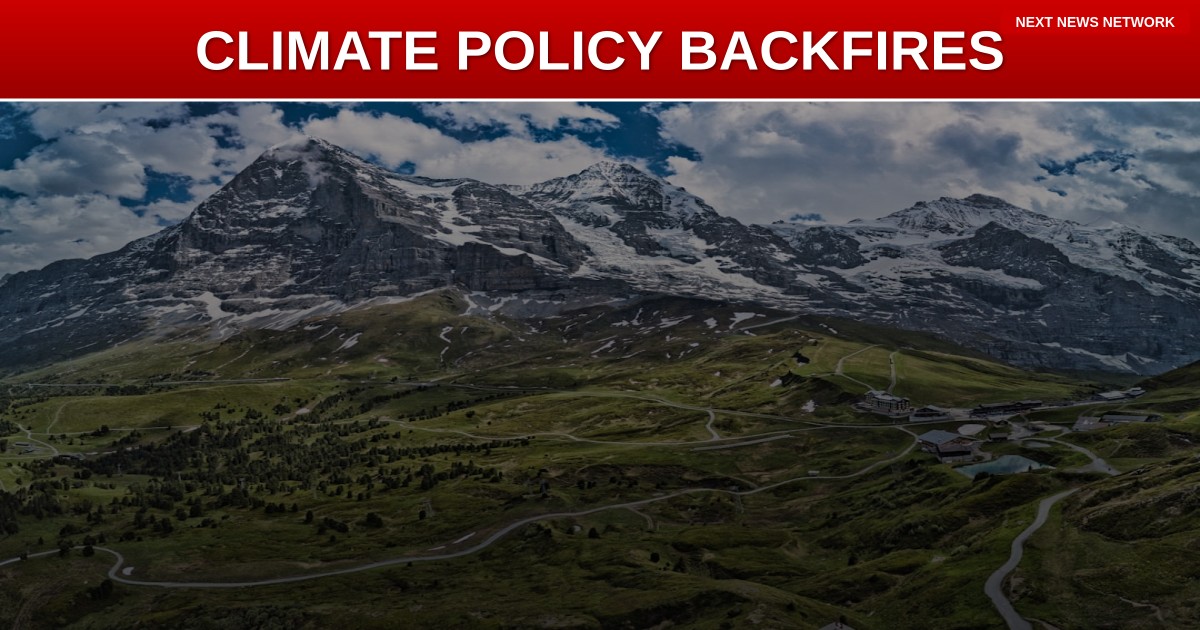
In a jaw-dropping revelation, a new study published by Spain's Barcelona Supercomputing Center and the UK Met Office unveils a shocking complication arising from climate change policies. As Europe pushes for cleaner air, it's inadvertently heating up the planet. Since the 1980s, Europe's summers have warmed nearly twice as fast as other parts of the Northern Hemisphere. The reason? Surprisingly, it's not carbon dioxide but cleaner skies.
As air quality improves and reflects fewer sun rays back into space, increased sunshine warms the Earth more effectively. So much for cooling down. This finding, published in Geophysical Research Letters, calls into question the efficacy of current environmental policies. If Europe's strategies are spurring on the warming they seek to counter, should we be re-evaluating the environmental orthodoxy?
Critics of the 'Green Agenda' have long argued that government interventions often backfire, producing the opposite of the intended effects. Now, people across the globe might wonder if Europe’s aggressive climate initiatives are yet another example of bureaucratic shortsightedness.
"We're seeing the unintended consequences of overzealous environmental measures. They are well-meaning, but not always thought through," said a source familiar with global climate policy.
If America's past and potentially future leadership under radical Democrats pushes for similar policies without careful consideration, could we face the same outcome? Patriots have always advocated for pragmatic policy-making. Instead of jumping on the climate hysteria bandwagon, maybe it's time to trust human ingenuity over big government dictates.
As Americans back home contemplate the implications of cleaner air leading to warmer temperatures, we have the perfect opportunity to assess what truly serves our nation's—and indeed the world's—best interests. Should we blindly follow policy dictates or trust in innovation and personal responsibility to balance our environment?
The takeaway is clear: Next time a bureaucrat tells you they have a 'solution,' take it with a grain of salt and a heavy dose of skepticism. With results like these, more oversight and contemplation over environmental policy might just cool things down faster.