
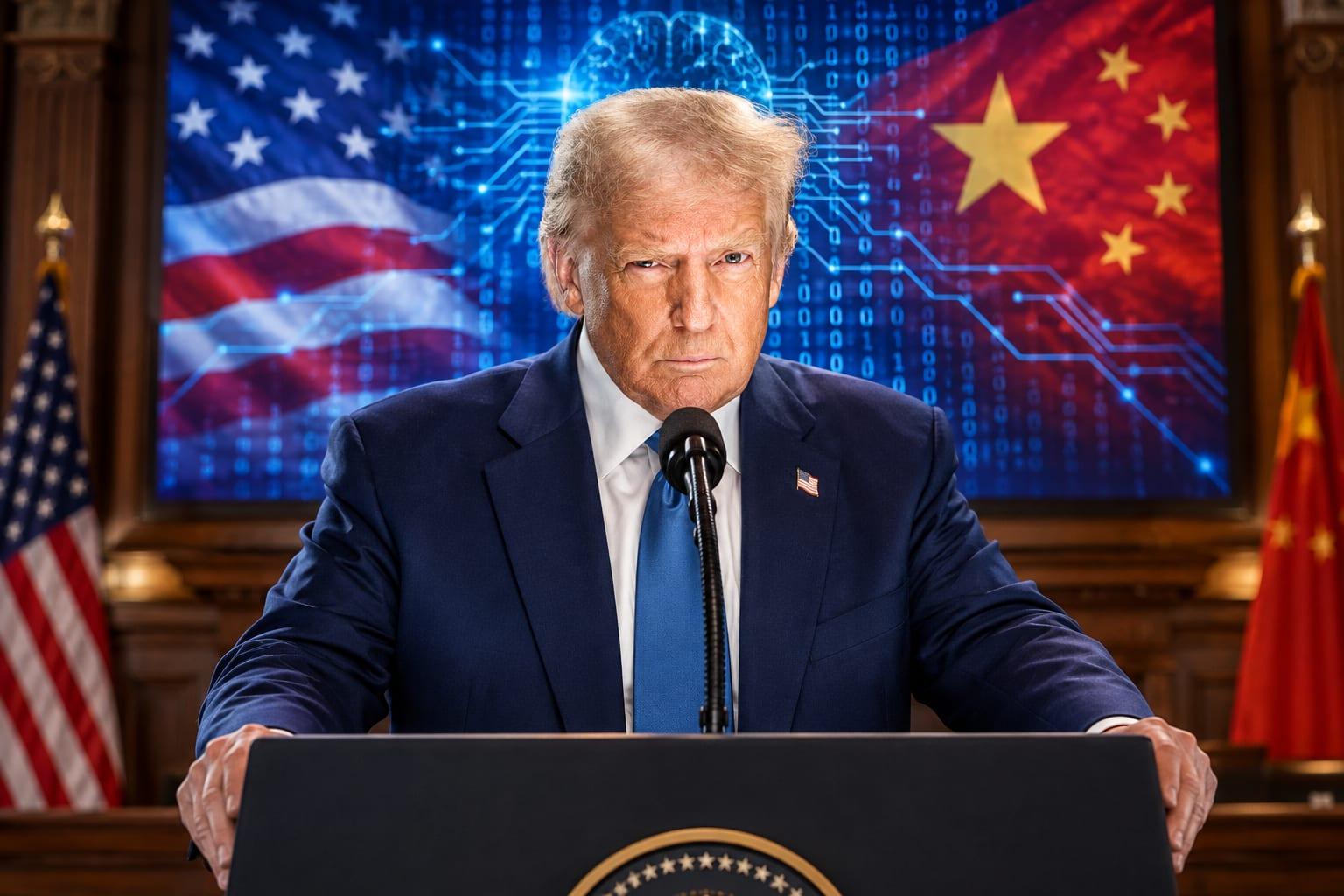
The crowded corridors of Capitol Hill buzz with intense debate as President Trump boldly labeled fears surrounding artificial intelligence as a 'hoax,' pushing national security and technological advancement to the forefront of American discourse. Patriotic voices, concerned about American leadership, find themselves locked in a heated struggle over whether to impose guardrails on AI development. Amidst this turmoil, the stakes couldn't be higher with China rapidly advancing its AI capabilities.
During his second term in office, President Trump's assertion on AI has split lawmakers, as some prioritize rapid development to stay ahead of China's aggressive tech advancements. Others push for caution, fearing the unchecked growth could threaten national security. As one prominent senator warned, 'China's going to eat our lunch if we don't keep up.'
The Global Stage, Local Implications
Coinciding with this debate, @CryptoNewsHntrs tweeted about a historic diplomatic event: 'TRUMP AND XI SIT DOWN IN WASHINGTON THIS WEEK. FIRST CHINESE STATE VISIT IN OVER A DECADE. AI IS FRONT AND CENTER ALONGSIDE TRADE AND RARE EARTHS. ALTMAN AND HUANG ARE IN TOWN FOR THE STATE DINNER. THE CHIP RACE AND THE GUARDRAIL FIGHT JUST WALKED INTO THE SAME ROOM.' During these unprecedented times, AI discussions transcend mere technology, representing global leadership and economic security.
"AI isn't just about computers. It's about control and who will wield the power in the future," declared a senior advisor close to the Trump administration.
The presence of tech giants at the state dinner underscores the chip race's critical role in geopolitical strategy, not just between two countries, but atop the world stage. While President Trump focuses on rapid innovation to secure America's position, some lawmakers push for guardrails, warning that unchecked AI could become a 'Trojan horse' of societal disruption.
Pushing Forward: America's AI Agendas
With the global AI race commanding the nation's attention, this division in Washington invites crucial questions about America's technological future. As Trump's administration doubles down on smart innovation, prioritizing competitiveness over caution, Americans are asked to consider: How will we harness the potential of AI without losing our core values?
Folks, the road ahead is not just about machines. It's about national destiny, power, and the civic futures we choose to build. How will the allies of liberty ensure our great nation remains the beacon of innovation?
