
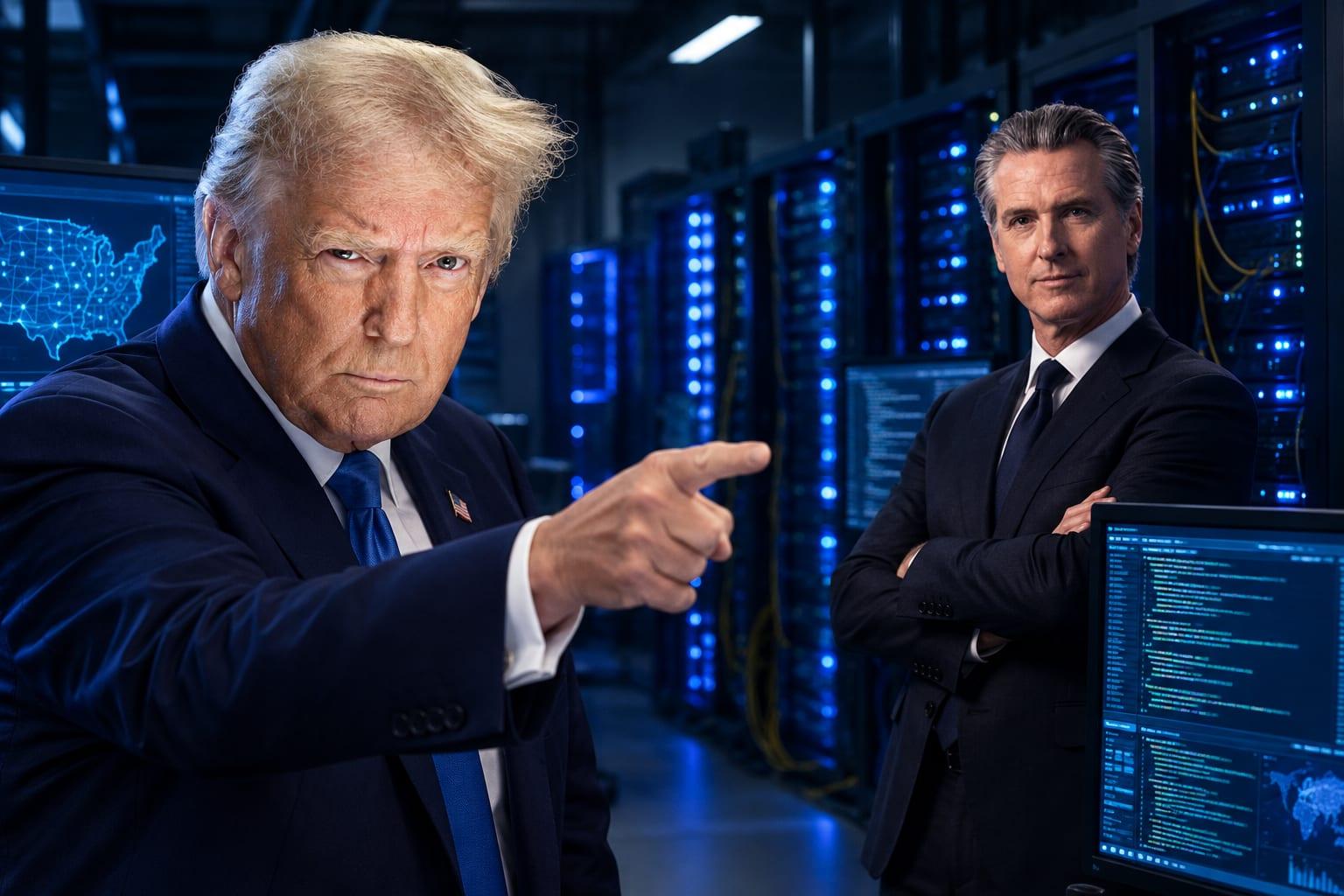
In a clash of visions that could define a century, President Donald J. Trump has issued a stark warning: the United States must take the lead in the artificial intelligence race, or risk falling behind China. This declaration comes as California Governor Gavin Newsom aggressively pushes for an AI 'kill switch,' a move Trump and his allies view as a dangerous step toward stifling American innovation.
Newsom's executive order advocates for government oversight and stringent AI standards conjured from the bureaucratic depths of Sacramento, an approach hailed by the left as a precaution but seen by many conservatives as a chilling power grab. Meanwhile, Trump lays out his America First strategy—calling for AI dominance not as a luxury, but as an imperative for economic power, military readiness, and industrial growth.
The stakes of this power struggle reach beyond Silicon Valley politics, touching the core of U.S. global influence and capability. Trump’s vision is clear and unapologetic: AI is a battlefield, and America must not only hold the line but charge ahead decisively. This mirrors his earlier initiatives with Space Force, showcasing the same instinct for securing strategic supremacy.
Contrasting sharply, former President Barack Obama aligns with Newsom’s regulatory ambitions, further emphasizing government's role in monitoring and, if necessary, restricting AI development. This approach starkly contrasts with the Trump administration's deregulatory zeal and push for an AI Force to embolden U.S. technological leadership.
For the everyday American, this debate is not abstract. It concerns the future of jobs, economic resilience, and the national security framework. The question poised provocatively is whether Newsom's motives to implement an AI kill switch speak to his inability to compete with China’s AI power, or a deeper desire to control the engine of American technological progress.
Can America afford to let bureaucratic oversight throttle its innovative edge? As this fierce debate unfolds, the implications reach far beyond policy papers—they touch the very essence of America's future prosperity and position on the world stage. Patriots must decide whether to back leaders who envision American excellence or those content with regulatory red tape.
