
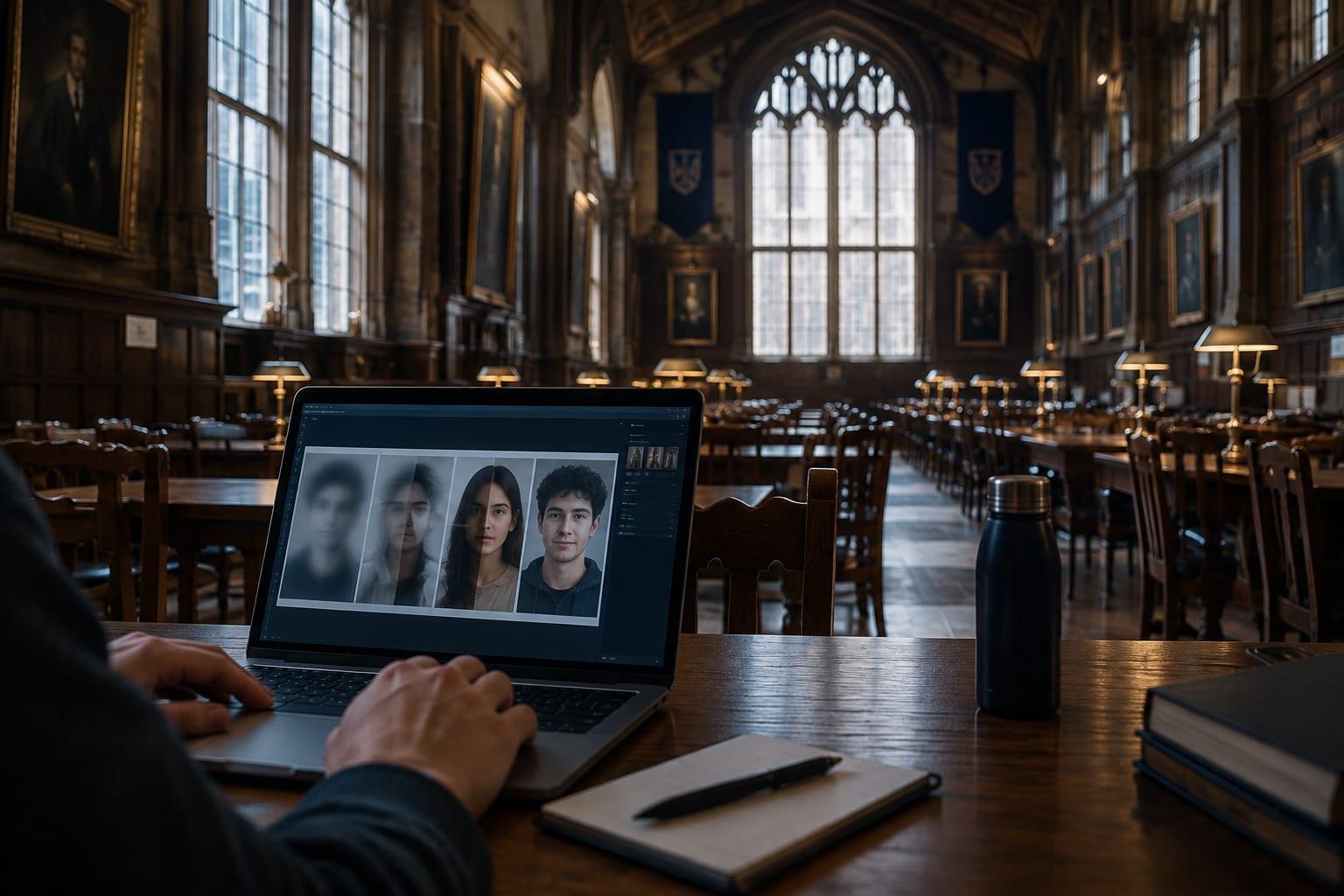
In a revelation that is sure to raise eyebrows, Stanford University has admitted to altering student photographs with artificial intelligence, making race and gender changes to a dining hall image. The prestigious institution confirmed that AI was employed to replace an image of Hispanic student Billy Ramirez with a Black woman in an official dining hall photo. This admission comes amid the Trump administration's ongoing scrutiny into university practices and policies.
The university's actions sparked immediate responses from both supporters and opponents of such measures, igniting a debate on the ethics and intentions behind using AI for altering identity markers in institutional imagery. The use of AI technology to alter physical appearances in official photos raises questions about the authenticity and representation of student bodies within university communities.
This incident adds to the growing list of controversies surrounding higher education institutions' attempts to address diversity and inclusivity, a hot-button issue the Trump administration has been keen on addressing. Critics argue that such actions undermine genuine diversity efforts, potentially leading to a reliance on superficial optics over substantive inclusion.
Stanford University has yet to fully elaborate on the reasoning or justification behind the decision to use AI for such race and gender swapping, leaving many to speculate on the influences and motivations at play in the backdrop of national debates about diversity policies.
Our Take
Stanford's use of AI to alter student photos for perceived diversity purposes reeks of the kind of performative activism that's all too common in academia today. Instead of focusing on genuine diversity efforts and policies that empower students of all backgrounds, it seems some institutions are more interested in reshaping reality to fit their desired narratives. Americans should demand accountability and transparency from these institutions and push for real, substantial inclusivity efforts that go beyond mere appearances. Let us remember, folks, that authenticity cannot be replaced by algorithms.
