
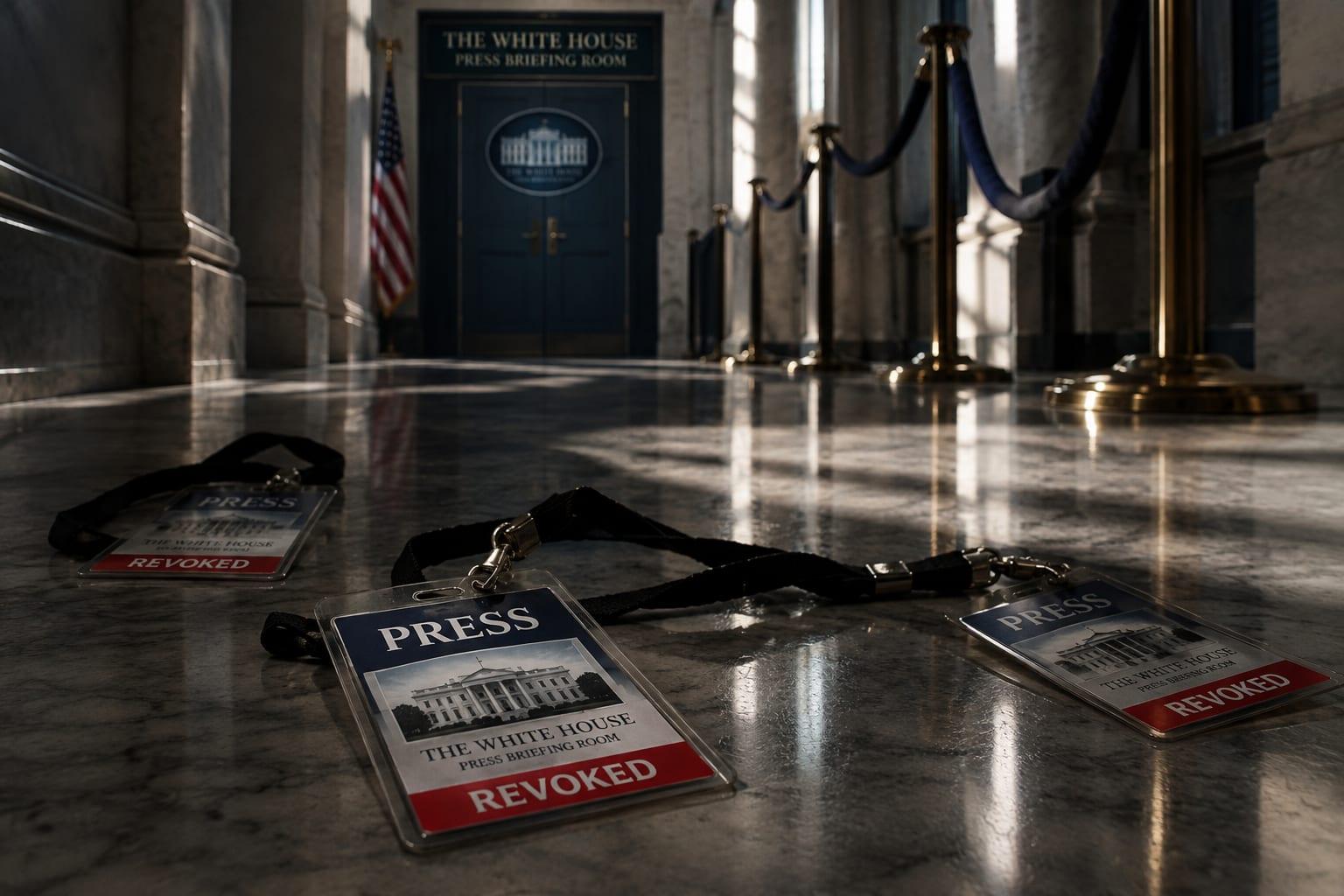
At the crack of dawn, a political scuffle laid bare the entitlement of the legacy media. A Politico reporter’s credential was seized by the Secret Service, even after Judge Timothy Kelly had issued a 14-day order demanding access restoration. This incident strips away the facade, revealing the true nature of the battle for White House access: a conflict between President Trump’s administration and a coalition of legacy media titans such as CNN, MSNBC, and Politico, who view their positions as an unalienable birthright.
In a classic demonstration of entitlement, the so-called 'Big 5' rushed to court, demanding emergency relief. Their panic and public outcry were about more than just journalism—it was a defense of their exclusive club rights. With the temporary 14-day order, Judge Kelly did not endorse their narrative but instead exposed their reflexive move to leverage legal and political muscle when faced with even the slightest challenge to their privileges.
The larger context of this media battle reflects a significant struggle: whether White House access is a public trust or a privilege reserved for a media elite. This struggle has highlighted media hypocrisy, as echoed by Hillary Clinton’s past statements juxtaposed with her infamous comment about Julian Assange. This does not illustrate a principled defense of press freedom but rather safeguards of approved insiders and their privileged status.
For the conservative media and everyday Americans, this confrontation is about accountability, transparency, and breaking free from an established media order resistant to change and transparency. The legacy media, now more than ever, casts itself as an entitled cartel, defiantly preserving its status.
The 14-day injunction does not settle the conflict—it illuminates the entitlement of an old media order that screams loudest when their automatic privileges face scrutiny. This situation furnishes a clear call to action for Patriots and Trump supporters: hold the line on media access reform and demand a press that genuinely earns its audience's trust.
As the situation unfolds, it’s crucial for Americans to question: is access to the presidency a protected privilege or a public trust earned through responsibility and integrity in reporting?
