
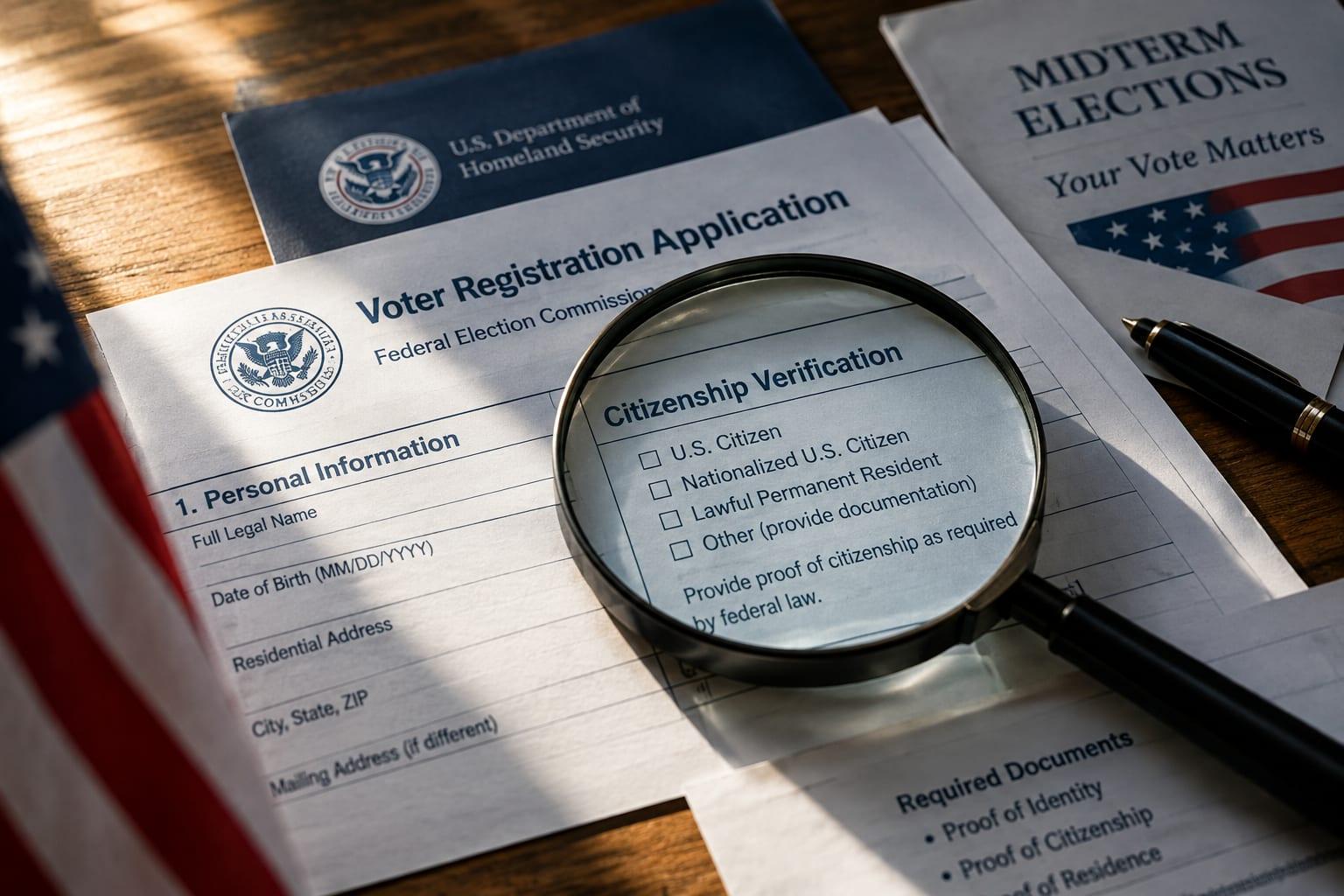
A federal appellate court ruled Wednesday that Ohio can enforce its law requiring proof-of-citizenship to register to vote, pausing a lower-court order that had blocked the measure ahead of the midterm elections.
In a 2-1 decision, a panel of the 6th U.S. Circuit Court of Appeals stayed a preliminary injunction issued last month by Senior District Judge Solomon Oliver Jr. The Obama appointee, sitting in the Northern District of Ohio, had blocked the state from enforcing the law while litigation proceeded. Wednesday's ruling means Ohio election officials may apply the proof-of-citizenship requirement as the midterms approach.
The ruling did not decide the merits of the underlying case. It lifts, for now, the freeze that had kept the law on the shelf.
The law's supporters argue it is a straightforward safeguard: only American citizens may vote in federal and state elections, and Ohio is entitled to verify that before registering someone. Opponents sued to stop it, contending it imposes burdens on eligible voters. That dispute remains live in the courts even as the appellate panel's stay lets enforcement move forward.
The case is the latest front in a national fight over election rules. Republican-led states have moved to tighten verification requirements in the years since the 2020 election, while Democratic-led states and advocacy groups have fought those measures in court. Ohio's law now sits at the center of that conflict, with a federal appeals court having cleared the way for it to operate during an election cycle.
The practical effect is immediate for Ohio voters and county boards of elections. Registration procedures that had been on hold can now proceed under the citizenship-verification requirement, though officials on both sides have signaled further legal steps are likely. The plaintiffs who won the injunction below can seek relief from the full 6th Circuit or from the Supreme Court.
Our Take
This is a win for the simple idea that elections belong to citizens — and it's worth saying plainly, because the other side has spent years pretending that's a controversial position.
Nobody outside of a courtroom dispute should object to a state asking a person to prove they're a citizen before handing them a ballot. You need ID to board a plane, rent a car, or cash a paycheck. Ohio wants to confirm the people voting are Americans. The response from the professional left was to run to a federal judge — and an Obama appointee was happy to oblige last month.
That pattern is familiar. When states pass commonsense election integrity laws, the machinery of lawsuits kicks in, and a single district judge can freeze a law passed by elected representatives of the people. The 6th Circuit's two judges who voted to lift that freeze did their job.
The legal fight isn't over, and the same groups that sued will keep pushing. But for now, Ohio can verify citizenship before registering voters — exactly what the law's authors intended, and exactly what states are entitled to do. The question for every other state is why they haven't followed suit.
