
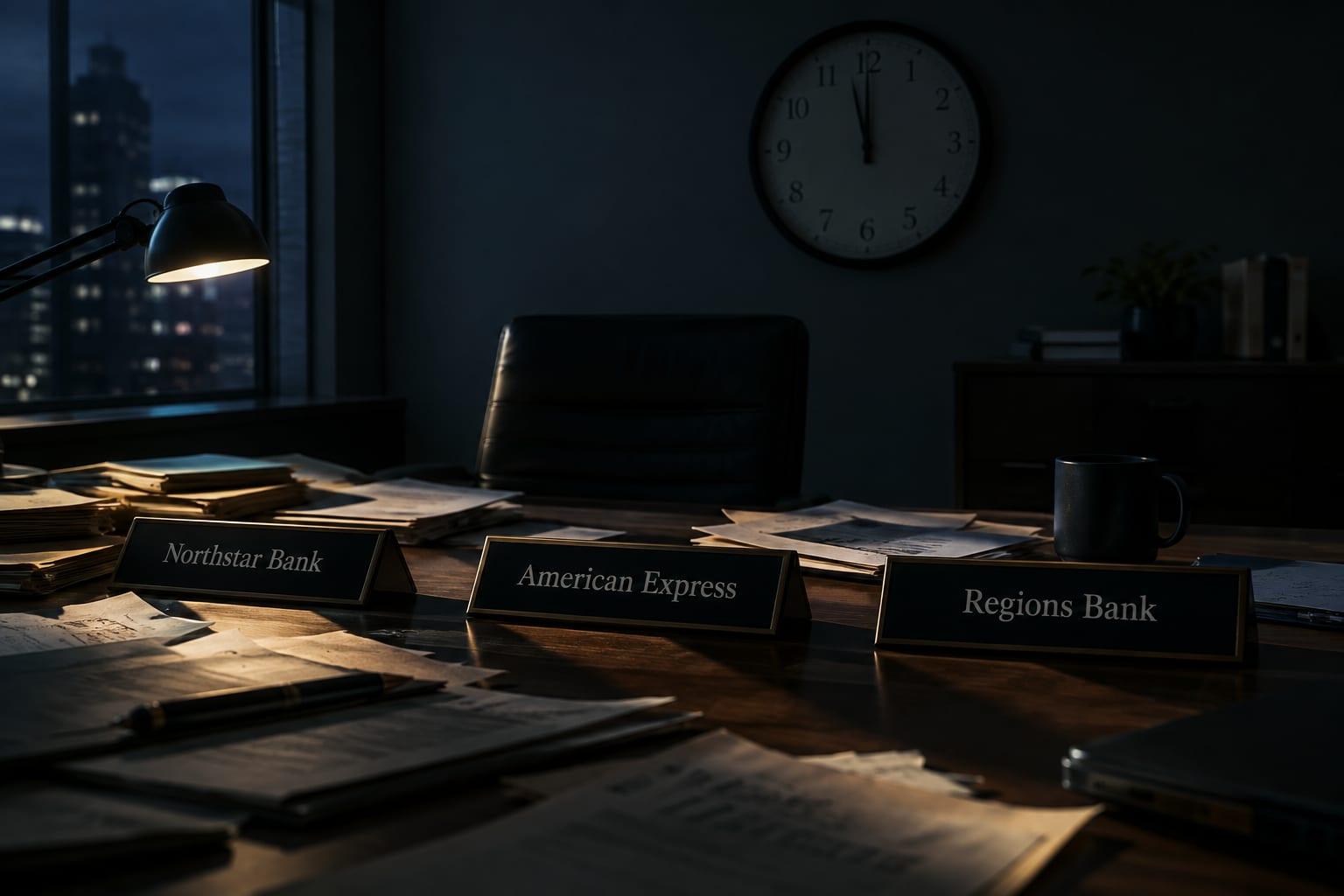
The Federal Reserve Board announced a series of enforcement actions on Friday against former employees of Northstar Bank, American Express Travel Related Services Company, Inc., and Regions Bank, marking the latest in a string of regulatory actions targeting individuals accused of misconduct at federally regulated financial institutions.
The three separate actions — each involving a former employee — were announced in a single notice published by the Board of Governors. The Fed did not immediately release detailed findings in the public announcement, but enforcement actions of this type typically stem from allegations of fraud, embezzlement, unauthorized transactions, or violations of internal banking policies and federal regulations.
The enforcement actions come as the Fed continues to face scrutiny over its own oversight of the banking system, particularly in the wake of high-profile failures like Silicon Valley Bank and Signature Bank. Critics have long argued that federal regulators are quick to punish low-level employees while turning a blind eye to systemic failures at the top.
Northstar Bank, a regional institution, has not publicly commented on the action. American Express, one of the world's largest financial services corporations, and Regions Bank, a major regional banking chain headquartered in Birmingham, Alabama, also did not issue immediate statements.
While the Fed's announcement did not specify the nature of the alleged misconduct, enforcement actions against former bank employees often involve prohibited activities such as theft, falsification of records, or violations of the Bank Secrecy Act. In many cases, the Fed's enforcement actions bar individuals from future employment in the banking industry or require them to pay civil penalties.
The timing of the announcement — released on a Friday afternoon, a traditional window for dumping less favorable news — raises questions about what exactly the Fed is trying to bury. Was this coordinated release designed to minimize media coverage? And more importantly, why are individual employees being singled out while the executives who presided over far larger failures remain unscathed?
This is not the first time the Fed has taken action against former employees at major financial institutions. In recent years, the Board has issued dozens of enforcement actions against bank employees for offenses ranging from fraud to unauthorized access of customer accounts. However, the simultaneous announcement of three actions across three separate institutions is notable.
For everyday Americans, the Fed's actions serve as a reminder that the banking system is only as strong as its weakest links. When employees at institutions like American Express and Regions Bank — names that millions of consumers trust with their money — are accused of misconduct, it erodes public confidence in the entire financial system.
The Fed's enforcement actions are typically resolved through consent agreements, in which the individual neither admits nor denies the allegations but agrees to comply with the order. In some cases, the actions can lead to criminal referrals.
It remains unclear whether any of the three former employees have retained legal counsel or plan to contest the actions. The Fed has not released the names of the individuals involved, and no criminal charges have been announced.
What is clear is that the Fed — an institution that has been criticized for its lack of transparency and accountability — is once again flexing its regulatory muscle. Whether this represents a genuine effort to clean up the banking industry or simply a bureaucratic exercise in covering its own tracks remains an open question.
Americans deserve to know who these individuals are, what they allegedly did, and why they were allowed to work in positions of trust in the first place. The Fed's decision to release this information on a Friday afternoon, with minimal detail, does little to inspire confidence.
For now, the enforcement actions stand as a warning: if you work in banking, the federal government is watching. But if you run one, you might just get a bailout.
Our Take
Here's the thing, folks: the Federal Reserve is not your friend. It is a private central bank that controls the money supply, devalues your savings through inflation, and operates with virtually no accountability to the American people. So when the Fed announces enforcement actions against three former bank employees, you should be skeptical.
Why are these individuals being singled out? Are they scapegoats for larger institutional failures? Or is this just the Fed's way of pretending to police the banking industry while the real crooks — the executives who tanked the economy in 2008 and got away scot-free — continue to collect their bonuses?
Don't get us wrong: if these individuals broke the law, they should face consequences. Fraud, theft, and misconduct have no place in banking. But let's not pretend the Fed is some white knight riding to the rescue of the American consumer. This is the same institution that facilitated the bailouts, fueled the housing bubble, and continues to debase the dollar at every turn.
If the Fed really wanted to clean up the banking system, it would start by auditing itself. It would open its books, end its cozy relationship with the big banks, and stop printing money out of thin air. Until then, these enforcement actions are little more than window dressing — a way to look tough while the real problems fester.
Patriots, stay vigilant. The Fed is not on your side. It never has been. And until we audit the Fed — and maybe end it altogether — the American people will continue to pay the price for its failures.
