
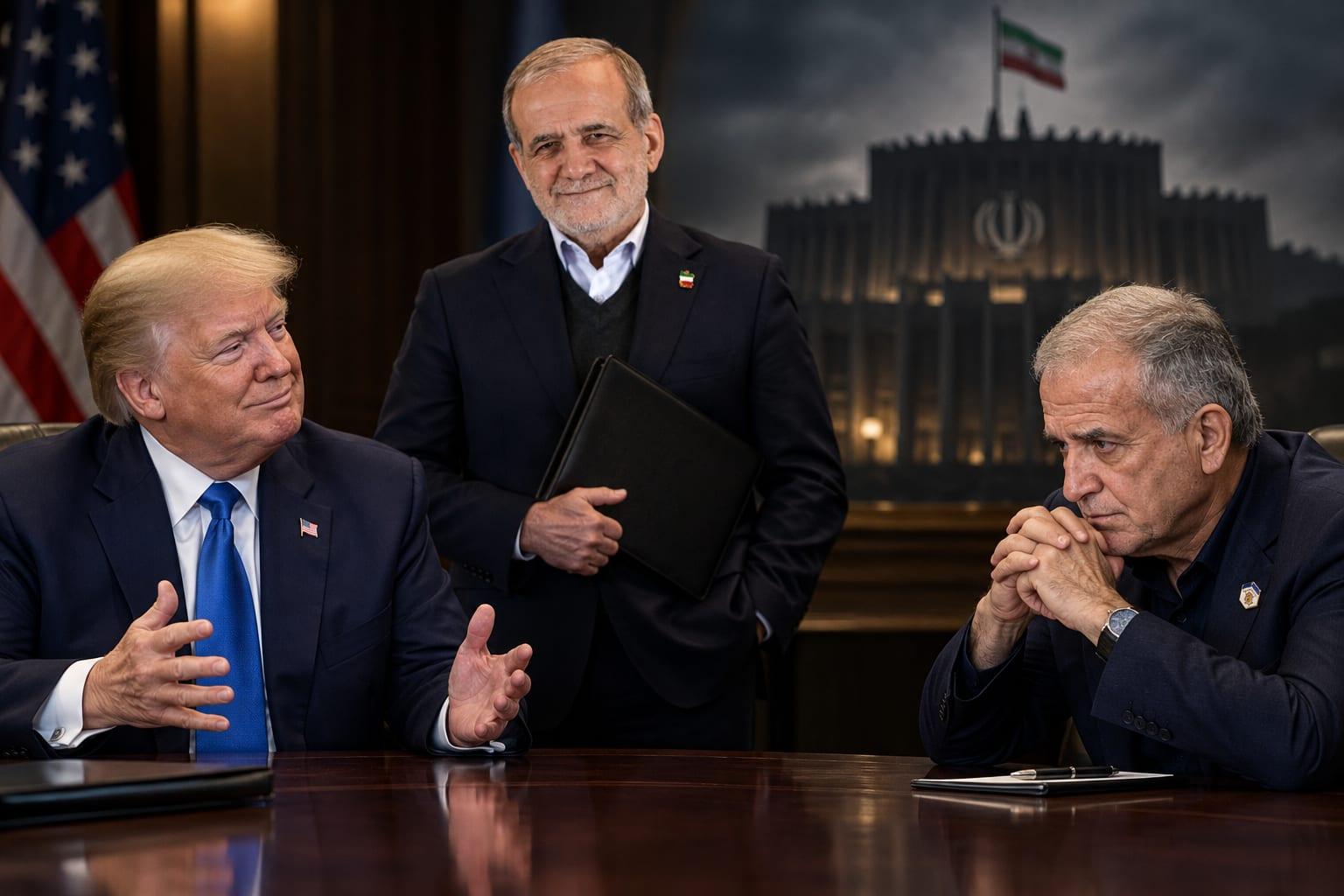
Iran's so-called "hardliners" are furious — and that is exactly how you know something real is happening.
According to Breitbart, hardliners inside the Islamic Republic reportedly flooded social media with angry posts after Iranian Foreign Minister Abbas Araghchi met with White House Special Envoy to the Middle East Steve Witkoff on Tuesday. Some of the posts went so far as to demand that Araghchi and Iranian President Masoud Pezeshkian be removed from office.
The meeting put Araghchi face-to-face with a senior official from the Trump-Vance administration — a direct engagement that the regime's most radical factions clearly did not want to see happen. And their response was not measured criticism. It was a meltdown.
They are the people who built the Islamic Republic's terror apparatus. When they scream, it is worth asking what they are afraid of losing.
What Actually Happened
Witkoff, who serves as Special Envoy to the Middle East at the White House, met with Araghchi on Tuesday. The meeting was significant enough that Iran's most extreme voices took to social media to complain — publicly, and apparently without restraint.
Some of those posts called for the removal of both Araghchi and Pezeshkian. That is not a policy disagreement. That is a faction of the regime signaling that it views any direct engagement with the Trump administration as an existential threat to its grip on power.
Breitbart's report framed the hardliners as "terrorist hardliners," and the description is not an exaggeration. Iran's Islamic Revolutionary Guard Corps and its Quds Force have been designated as Foreign Terrorist Organizations by the United States. The regime's proxies — Hezbollah, Hamas, the Houthis, and militias across Iraq and Syria — have American blood on their hands.
The social media posts from Iranian hardliners are not official government statements, and they should be treated as what they are: posts from regime-aligned figures. But they reveal something that official Tehran would rather keep quiet — that the regime is not unified, and that the prospect of direct talks with the Trump administration is splitting its most extreme elements wide open.
Why This Meeting Matters
President Trump has made his posture toward Iran unmistakable. Maximum pressure. No pallets of cash. No appeasement. No nuclear deal signed on the back of a napkin and then shredded by Tehran's cheating.
The first Trump administration withdrew from the Obama-era Joint Comprehensive Plan of Action in 2018 and reimposed sanctions that had been lifted. The mullahs' economy cratered. Their proxies felt the squeeze. And for the first time in years, Tehran had to reckon with an American president who was not interested in managing their nuclear program — he was interested in ending their ability to threaten the world with it.
Now, in Trump's second term, the administration is testing something different: direct engagement through Witkoff, a seasoned negotiator with real Middle East experience. The meeting with Araghchi is not a reward for Iranian behavior. It is a pressure tactic dressed as a diplomatic opening — and the hardliners know it.
That is why they are melting down. If a deal is going to be made, they want to be the ones making it, not watching it happen from the sidelines. If diplomacy is going to proceed, they want it to proceed on terms that keep them in power. If the Trump administration is serious about a new arrangement with Tehran, the most dangerous people in the Iranian government suddenly become irrelevant — or worse, targets of their own people's frustration.
The Real Question
Does the Islamic Republic actually want to negotiate, or is this another round of the same game Tehran has played for forty-seven years — talk, stall, cheat, and build the bomb while the West looks the other way?
The hardliners' outrage suggests the regime is not of one mind. But mixed signals from a government that has never stopped sponsoring terror should not be mistaken for an opening. Witkoff meeting with Araghchi is a development worth watching. It is not a breakthrough, and it is not a treaty. It is one meeting, and one faction's public tantrum.
What Americans should take from this is simple: the Trump administration is engaging from a position of strength, not desperation. That is the opposite of the Biden years, when the mullahs received billions in sanctions relief, watched American troops get attacked in the region, and still refused to stop enriching uranium.
Our Take
Let's be clear about who is complaining here. These are not Iranian "moderates" or "reformers" upset by a diplomatic gesture. These are the regime's most dangerous figures — the ones who fund Hezbollah, arm the Houthis, and cheer when American service members come home in caskets.
When they furiously post online that Araghchi and Pezeshkian should be thrown out, they are not defending Iranian sovereignty. They are defending their own power, their own bank accounts, and their own ability to keep using terrorism as a tool of statecraft.
The fact that they are angry is not a reason to stop. It is a reason to keep going. President Trump and Special Envoy Witkoff should keep the pressure on, keep the meetings happening, and keep Tehran's options narrow. Any deal with Iran has to be one that cannot be cheated, cannot be reversed by a future administration, and cannot be used as a cover for the regime's nuclear ambitions.
And if the hardliners want to complain on social media while their world shrinks around them? Let them. Patriots back home should understand exactly what this means: the Islamic Republic is being squeezed, and the people doing the squeezing are on our side this time.
The question is not whether Iran's hardliners are angry. The question is whether the Trump administration will use that anger as leverage — or whether it will let the same old deal-makers in Washington talk it into another bad agreement.
