
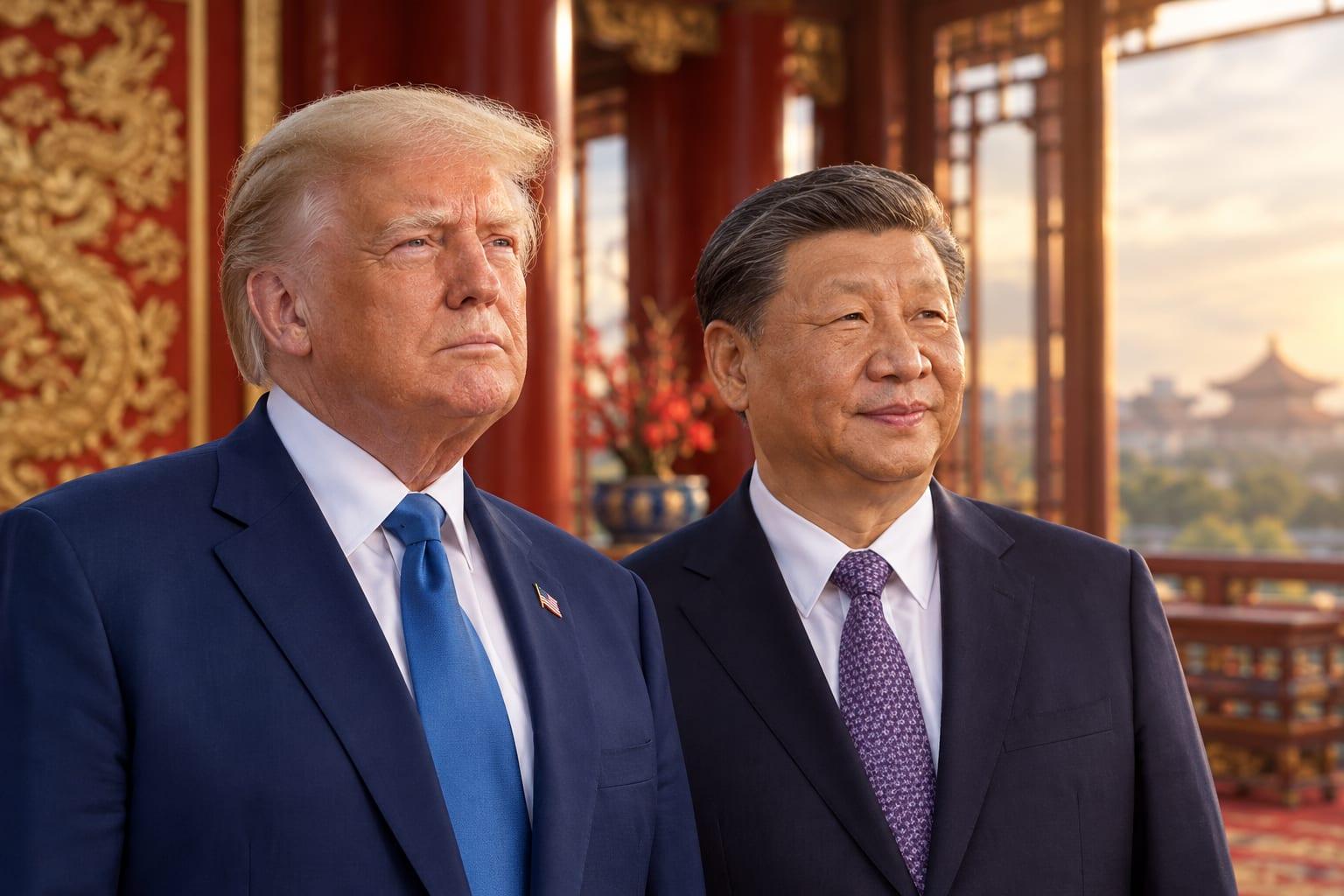
President Donald Trump said the United States and China will meet again in November, and that the next round will be held in China.
"TRUMP: WILL BE MEETING AGAIN IN NOVEMBER, IN CHINA," the account @FirstSquawk wrote in a post carrying the president's words on Friday.
The statement followed a state visit by Chinese leader Xi Jinping to Washington — his first trip to the American capital in more than a decade — that included three hours of meetings at the White House and a day of ceremonies, according to The New York Times.
Trump described the sit-down as a "great meeting," while Xi used the visit to lay out what The Guardian described as terms to avoid a United States-China military conflict.
Beyond the promise of another round, the visit appeared to leave the core disputes between the two powers where they were. "A summit that included three hours of meetings at the White House and elaborate ceremonies may produce little progress on issues dividing the United States and China," The New York Times reported.
CNN's analysis was blunter: "The Trump-Xi meeting was heavy on pomp, light on substance. China is just fine with that."
The one concrete item to emerge from the Washington talks was a reprieve on the tariff calendar. The truce that Trump and Xi agreed to in South Korea last year — the arrangement credited with keeping tariffs lower — had been due to expire in November. Treasury Secretary Scott Bessent said the truce has now been extended until February, according to The Guardian.
That extension itself is being read in some quarters as a signal about the state of the negotiations. Analysts told The Guardian they believe the extension suggests Trump remains dissatisfied with the concessions Xi has offered on trade and wants to keep the pressure on, in the hope of extracting a better deal if the two leaders meet again at the G20.
The November meeting Trump described, if it is held as stated, would effectively reset the clock on a relationship that has been managed through a series of summits rather than a settled agreement. Four months separated the Washington visit from the two leaders' previous meeting, CNN noted.
Details of the November meeting — the exact dates, the city, the agenda — were not disclosed in the post carrying Trump's remark, and it is not yet known whether Beijing has publicly confirmed the plan.
The Washington visit drew demonstrators outside the White House, including Uyghur Americans protesting the Chinese government's treatment of Uyghurs and other minorities. "President Trump must confront Xi Jinping" over those abuses, one protestor, Haider Jan, said, in an account carried in coverage of the visit, which also described demonstrators waving Uyghur flags. Another demonstrator's message, "We want him to be free," was also reported from the scene.
A photograph from the day, taken by Kent Nishimura for AFP via Getty Images, shows demonstrators with Uyghur flags outside the White House during Xi's state visit.
Xi's itinerary included tea at the White House and a tour of the National Archives, according to CNN's live coverage, which followed the Chinese leader's first Washington visit in over a decade.
The visit closed against a backdrop of unresolved questions — the tariff truce pushed only to February, no announced movement on military-to-military risks, and no announced settlement on the trade issues that both sides have now carried through multiple summits. The next round, per Trump's own statement, would come in November on Chinese soil.
Next News Network could not independently verify the claim that a November meeting in China has been scheduled.
Our Take
There is a pattern in the way this administration has handled China, and the latest summit fits it: get the leaders in a room, produce a photograph, announce another meeting, and call it progress. Trump's remark that the two sides will meet again in November in China is the kind of forward-looking sum-up that lets a president leave Washington with a headline even when the hard issues move nowhere. The truce extension to February, confirmed by Bessent, is the only measurable deliverable that has been put on the table, and its duration is short enough that it functions less as a settlement than as a placeholder. The analysts quoted in The Guardian read it the way our readers should: as evidence the president is still unsatisfied with what Xi has put on the table and is keeping tariffs in his pocket rather than trading them away for promises.
The White House has earned credit for keeping the pressure on. What it has not done is produce a durable arrangement, and the choreography of a state dinner should not be mistaken for one. Xi came to Washington, accepted the ceremony, delivered language about avoiding a military conflict and went home without conceding the trade terms this administration says it wants. That is not a defeat for the United States — but it is not the victory the pageantry was arranged to suggest, either. If the November meeting in China is real, it is another chance to convert proximity into terms. Until then, the tariff truce runs on a short fuse, the military-to-military questions remain open, and the roughly six-week gap between November and February is not much room for the kind of deal both leaders keep announcing they intend to reach.
