
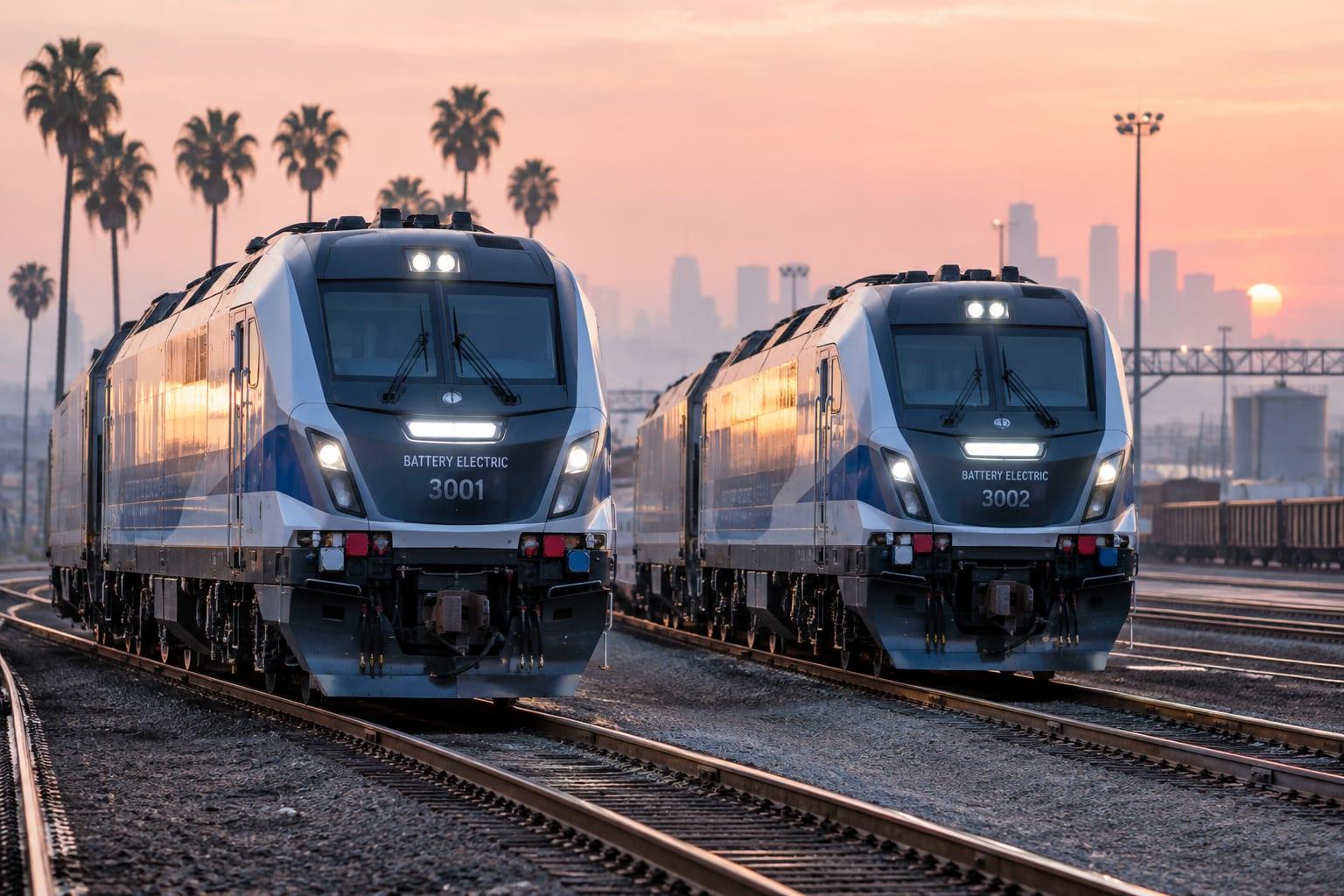
Union Pacific has deployed its first two battery-electric locomotives in Southern California, putting the Wabtec FLXdrive units to work in switching and local freight assignments. The field test is designed to generate real-world data on performance and reliability. The story was first carried by the trade outlet FreightWaves, which reported that Union Pacific is the latest railroad to test diesel-alternative power in one of the busiest U.S. rail hubs.
According to the FreightWaves post from the account @FreightWaves, the FLXdrive units are being put to work in switching and local freight assignments. "Union Pacific has deployed its first two battery-electric locomotives in Southern California," the post stated, adding that the field test is "designed to generate real-world data on performance and reliability." The post was cut off at that point, but the substance is clear: the railroad is testing whether battery power can handle the demands of yard and short-haul work.
The claim about the deployment was picked up quickly by other outlets. A Spanish-language report summarized the development this way: "California confirma a través de Union Pacific que contará con dos locomotoras eléctricas a batería para fortalecer el sistema ferroviario sin emisiones." That translates to California confirming, through Union Pacific, that it will have two battery-electric locomotives to strengthen the emissions-free rail system. The same report described the units as part of a broader effort to reduce emissions in the state.
Other coverage of the same subject took a different angle. A report from Trains magazine, published one day earlier, focused on Brazilian rail operator MRS Logística and its announcement of a two hundred fifty-two million dollar agreement to purchase fifty new ES44ACi locomotives from Wabtec, along with parts and maintenance services. That story, dated September twenty-third, described the investment as taking place in stages. It did not mention Union Pacific's California test directly, but it underscored that Wabtec, the builder of the FLXdrive units, is active in the diesel-alternative and conventional locomotive markets simultaneously.
Wabtec itself drew attention from financial analysts. According to a report from The Cerbat Gem, Wabtec (NYSE:WAB) has been given an average recommendation of "Moderate Buy" by the twelve research firms currently covering the company. Two analysts rated the stock a hold and ten gave it a buy rating, according to MarketBeat. The report listed a consensus target price of three hundred thirteen dollars and eighty-two cents. That coverage is separate from the Union Pacific test but reflects the market's interest in the company supplying the battery-electric units.
The reaction was not limited to the rail industry. A report from MyNewsLA.com noted that LA Metro's Board of Directors approved nearly three hundred thirty-eight million dollars for the manufacturing and delivery of two hundred twenty battery-powered electric buses. The board voted ten to one to authorize Metro staff to enter into the procurement, part of a transition to zero-emission vehicles and preparation for the 2028 Olympic Games in Los Angeles. While that action concerns buses rather than locomotives, it shows the same regional push toward battery power in Southern California.
The Wabtec FLXdrive is a battery-electric locomotive designed for yard and local service, where trains operate at lower speeds and can recharge via regenerative braking. Union Pacific's decision to test the units in Southern California places them in a region that has some of the most stringent air quality regulations in the country. The South Coast Air Quality Management District has long pressured railroads to reduce diesel emissions around the ports of Los Angeles and Long Beach, which handle a significant share of the nation's containerized imports.
Freight rail is already one of the most fuel-efficient ways to move goods over land, but yard operations and local switching are disproportionately diesel-intensive because locomotives idle frequently and operate at low speeds. Battery-electric units promise zero emissions at the point of use, though their overall environmental benefit depends on how the electricity that charges them is generated. Union Pacific has not released detailed data from the field test.
The accounts carrying the story span trade press, general news, and financial analysis. @FreightWaves carried the original deployment report. Trains magazine carried the MRS Logística deal, which involves the same manufacturer. The Cerbat Gem carried the analyst consensus on Wabtec. MyNewsLA.com carried the LA Metro electric bus procurement. A Spanish-language outlet carried the California emissions framing. Together they show a story that has moved from a single trade scoop into a broader conversation about battery power in American transportation.
Next News Network could not independently verify the claim that Union Pacific has deployed the locomotives or that the field test is underway as described. The information in this report comes from the posts and coverage cited above, and the underlying claim has not been confirmed by Union Pacific or by any independent source.
Our Take
Union Pacific's battery-electric locomotive test is being framed by its boosters as a clean-energy breakthrough, but the rollout is a pilot program involving two units in a single region. That is a long way from replacing the diesel fleet that moves freight across the country. The same week the test was announced, Wabtec was selling fifty conventional diesel locomotives to a Brazilian rail operator. That tells you where the actual demand is.
California's regulatory push is the real driver here. The state has spent years squeezing diesel emissions from ports and rail yards, and Union Pacific is responding to that pressure. The company is not doing this out of the goodness of its corporate heart. It is doing it because the alternative is costly mandates and litigation.
Conservatives should watch this story for what it is: a test, not a transformation. Battery-electric locomotives have real limitations in range, charging infrastructure, and cost. If the technology works, it will be because the market supports it, not because politicians in Sacramento demanded it. If it fails, taxpayers and ratepayers will be left holding the bill. The media will cheer the announcement and ignore the follow-up. We will not.
