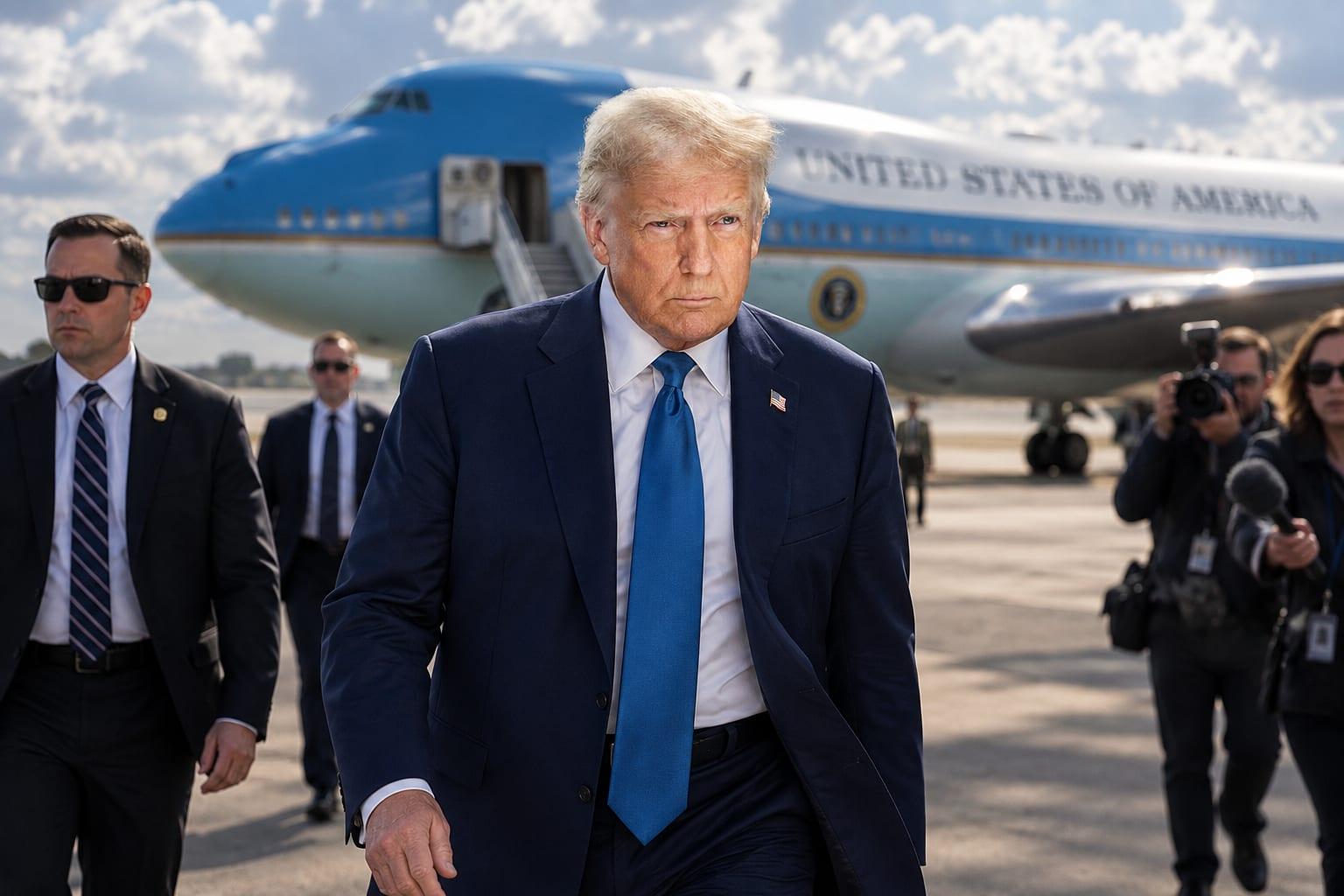
CNN says it will not be aboard Air Force One when President Donald Trump travels to Knoxville, Tennessee, on Saturday, after the network was left off the television pool rotation for the trip.
The network reported Friday that it had been scheduled to serve as the television pool representative for the president's travel to Tennessee, then was informed it would not be making the trip. The pool system — a rotating group of reporters and photographers who travel with the president and share their material with the wider press corps — is standard practice for White House coverage. On Saturday, that chair at the back of the plane is empty, and CNN is pointing at the White House.
The White House had not publicly explained the decision as of Friday, and it is not yet known whether a different network was substituted into the television slot or whether the seat went unfilled.
The move lands in the middle of a running fight between the Trump administration and the legacy press over who gets access to the president and on what terms. This is not the first time CNN has been on the outside looking in: the network was excluded from the press pool for Trump's June 2025 trip to Fort Bragg, a decision that drew loud objections from the Correspondents' Association at the time. Since returning to office, Trump has regularly bypassed the traditional press corps in favor of independent outlets, podcasters and social-media creators, and his administration has pressed for changes to how the pool itself is organized.
What is genuinely unusual about the Knoxville trip is the timing. The decision surfaced a day before departure, after the rotation had already been set — the kind of last-minute change that leaves a network with no ability to swap in alternate personnel and no recourse but to report the snub itself.
CNN framed the exclusion in familiar terms. The network has previously described pool decisions it disagrees with as an attack on press freedom, and it is likely to take the same line here. Supporters of the president see it differently, arguing that a news organization the administration regards as relentlessly hostile has no claim to automatic seats on government aircraft, and that the White House is entitled to set its own travel arrangements.
Press advocates are already making the counterargument. Pool access is not a favor to any one network, they say — it is the mechanism by which the public learns what the president is doing, and striking a network from the rotation narrows what voters can see. The practical effect either way falls on viewers: whoever is missing from the pool, the public gets fewer cameras and fewer reporters at the events where the president is most accessible.
Watch what comes next. If the White House formalizes changes to the pool rotation, the fight over who gets on the plane becomes a permanent restructuring of White House coverage rather than a one-trip snub. If it stays quiet, Saturday's exclusion may be remembered as one more skirmish in a conflict that shows no sign of winding down.
Our Take
Good. For years CNN treated pool access like a permanent entitlement — a guaranteed seat on Air Force One, paid for by the taxpayers, from which the network could manufacture hostile coverage of a president it never gave a fair shake. That arrangement was never written into the Constitution. It was a courtesy, extended to newsrooms that had long since stopped acting like one.
Ask yourself a simple question: why should any president hand a seat on his own aircraft to a network that has spent the better part of a decade spinning, framing and selectively leaking every move his administration makes? The White House press pool exists so the American people can know what their president is doing. It does not exist to subsidize the profits of a cable channel whose prime-time lineup treats half the country like a disease.
The press corps howls about "press freedom" whenever it loses a perk, but press freedom is the right to publish without government permission — not the right to a boarding pass. CNN can still report on the Tennessee trip. It just has to do what every local outlet in America does: watch from somewhere other than the president's plane.
And let's be honest about what the network's complaint really amounts to. CNN isn't worried that voters will be uninformed. It's worried that one of its cameras won't be in the room. The president's trip will happen, the events will be covered, and the public will see the footage — because the pool exists precisely so no single network's absence can hide anything. The only thing CNN loses is its reserved seat at the table.
Maybe that's what the legacy press is really angry about. Not access. Relevance.