
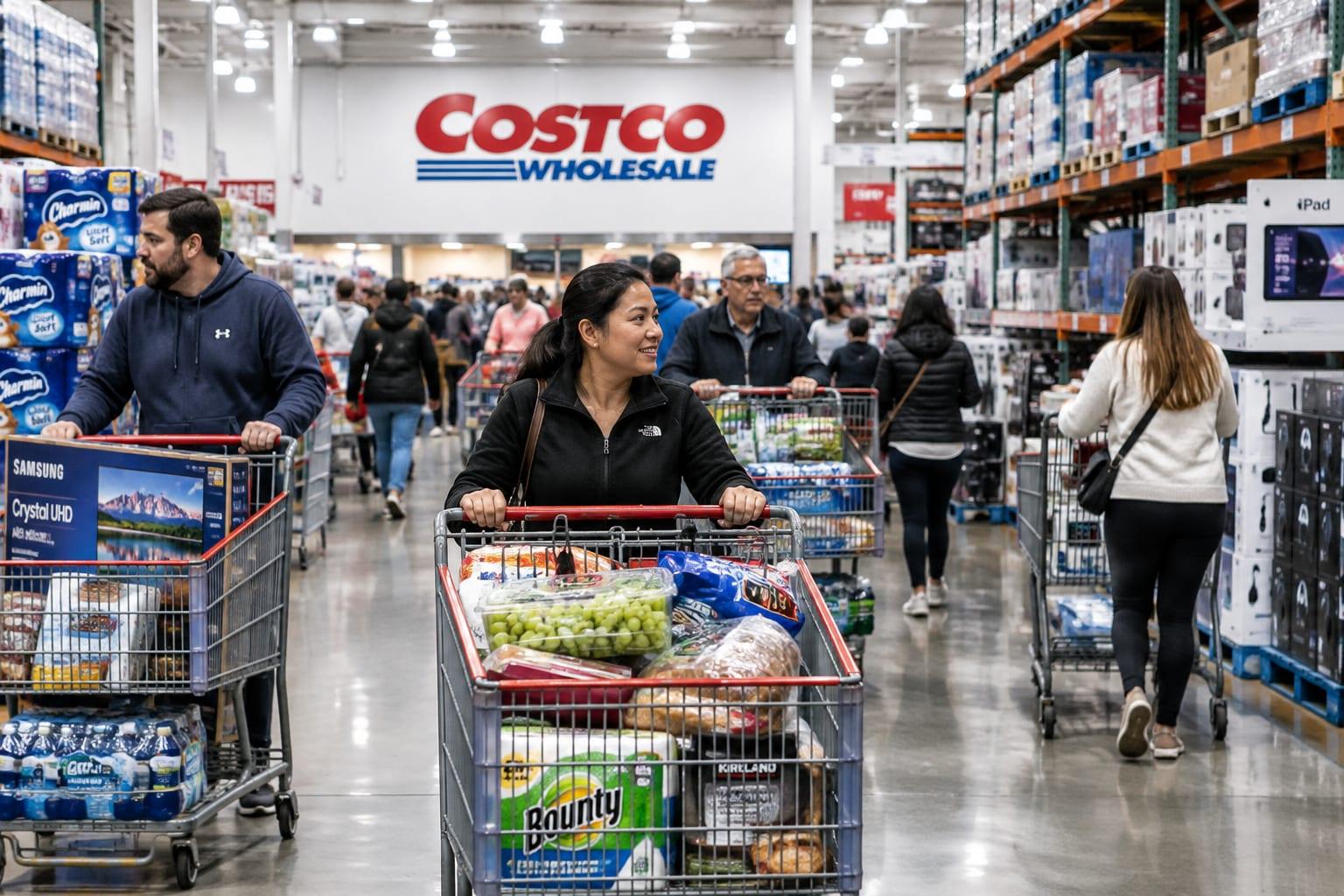
Costco has received $184 million in tariff refunds from the federal government and says most of that money is being put back into lower prices for its members, according to the company's own account of its quarterly earnings call.
Chief executive Ron Vachris said on Thursday's call that the warehouse club has passed the refunds on to customers through price reductions on food and non-food items. The company pointed to produce, meat, beverages, home furnishings and hardware as categories where the savings have gone. Costco also indicated that more refund money is expected.
The New York Post's account of the development, carried by the account @nypost, stated the company "receives $184M in tariff refunds, says most will go toward lower costs for members." That framing spread quickly, with outlets including MyNorthwest and financial commentary sites carrying variations of the same number and the same promise.
What separates the Costco announcement from a routine earnings item is the second half of the claim: not just that the refund arrived, but that it is being handed back to shoppers. Costco Stock's coverage said the $184 million "could help fund lower prices," while the company's own presentation of the earnings call said the refunds were "reinvested" in reductions across food, beverages, furniture and hardware.
The warehouse club would not be the only beneficiary of a refund process that has moved hundreds of millions of dollars back to importers who paid tariffs. But the scale of the Costco figure stands out, and so does the company's decision to describe the money as a pass-through to members rather than as a one-time boost to its balance sheet.
That distinction mattered to analysts. One review of the earnings noted that roughly fifteen cents a share of Costco's quarterly result came from the one-time tariff refund, raising the question of how strong the quarter would have looked without it. Take the refund out, the analysis said, and the underlying performance is a different story than the headline number suggests.
The reaction has not stayed inside the business press. The Costco number landed in a political environment where tariff policy is contested, and where both supporters and critics of the duties have reason to point at a refund of this size. For critics, $184 million handed back to a single retailer is evidence the tariffs cost American importers real money before any of it was returned. For supporters, the episode shows a process that works as designed: duties collected, challenges resolved, money returned.
Costco's decision to describe the refund as a price reduction rather than a windfall gives both sides something to work with. The company's statement that "most" of the money is going toward lower costs for members is a claim about internal pricing decisions, and it is one that outside observers cannot easily audit line by line. The categories named -- produce, meat, beverages, home furnishings, hardware -- are broad enough that verifying a specific price change against a specific refund dollar would require data Costco has not published.
The accounts carrying the story have largely repeated the company's framing. The @nypost post stated the refund and the intent to lower costs in its headline. MyNorthwest's version emphasized that Costco "plans to pass savings to shoppers." Costco Stock's coverage tied the refund directly to the funding of lower prices. The details vary, but the central claim -- $184 million received, most of it going back to members -- has traveled intact.
What the coverage has not settled is the question of timing. Costco received the refunds and says it has already reflected them in price reductions on food and non-food items, according to Vachris's remarks on Thursday's call. Whether those reductions are visible on shelves now, or are working through the supply chain over coming weeks and months, is not spelled out in the material the company has put forward. The earnings call summary said the refunds were passed on "so far," suggesting an ongoing process rather than a completed one.
Nor is it clear how much of the refund total is expected to arrive after the initial $184 million. Costco said more money is coming, without attaching a figure to the remainder. That leaves the total eventual refund unknown, and with it the total eventual price effect.
The broader question -- whether tariff refunds of this size are reaching consumers or being absorbed elsewhere in corporate budgets -- is one the Costco episode can illustrate but not answer. Costco says it is passing the money through. The company's earnings beat suggests the refund also helped its reported results. Both things can be true, and the coverage so far has tended to emphasize one or the other depending on the outlet.
Next News Network could not independently verify the amount of the refunds, the categories where price reductions were applied, or how much of the money has reached customers in the form of lower shelf prices.
What is not in dispute is that a major American retailer has told its investors and its members that a nine-figure sum of tariff money came back to it, and that most of it is being converted into lower prices. Whether that becomes a template for other importers, or a one-off tied to Costco's particular case, is now a live question in boardrooms and on the campaign trail alike.
Our Take
Costco's $184 million tariff refund is the clearest illustration yet of what the tariff regime actually does: it takes money from American businesses up front, holds it while challenges work through the system, and returns it later without interest or explanation. Costco is big enough to absorb that float and patient enough to wait for the refund. Smaller importers are not, and they are the ones who quietly pass the cost to consumers while the government holds their money. Costco deserves credit for telling members where the refund is going rather than burying it in an earnings footnote. But the real story is not Costco's generosity. It is that a company had to be owed $184 million in the first place, and that the ordinary shopper paid part of that tab at the register before any of it came back. If politicians want to talk about lowering costs, they should start by explaining why the money left American businesses at all.
