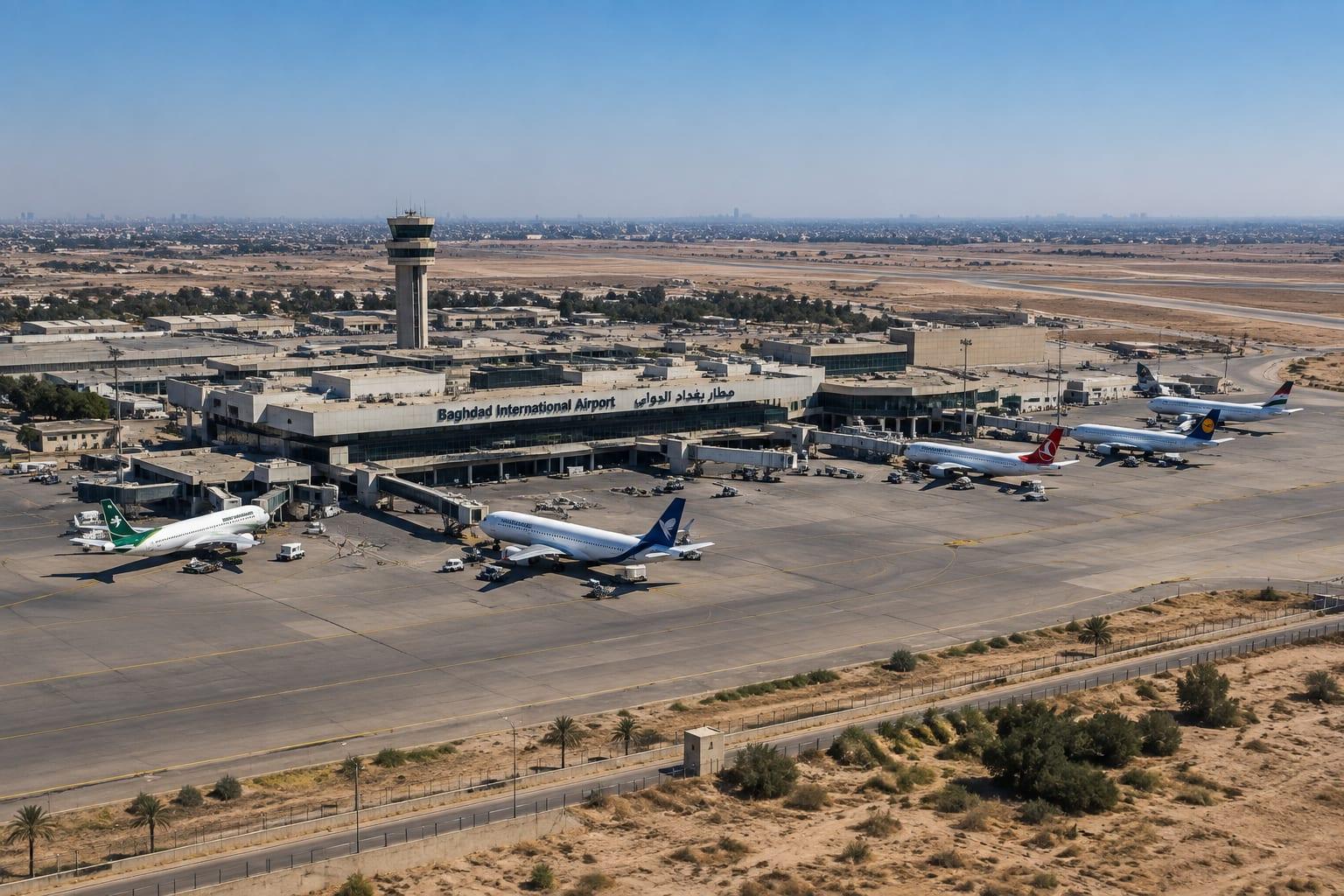
Iraq is in direct talks with the United States to exempt certain Iraqi airports from U.S. Treasury measures imposed on Iranian airlines, according to the Iraqi prime minister's media office.
The negotiations were first reported by the financial news account @FirstSquawk, which said Saturday that Baghdad is seeking to resume air travel affected by the restrictions. "Iraq is in direct talks with the United States to exempt some Iraqi airports from US Treasury measures affecting flights by Iranian airlines to regional airports, the Iraqi prime minister's media office said on Saturday," the account posted.
The same account followed with a second update later in the day: "Iraq in Talks With US Over Exemption From Iranian Airlines Ban — Iraq is in direct talks with the US to exempt certain Iraqi airports from measures imposed on Iranian airlines by the US Treasury, according to the prime minister's office. Iraq is seeking to resume air travel for" — the post cut off there.
The dispute has drawn a sharp response from Iraq's own parliament. Deputy Speaker of the Iraqi Parliament said the decision to ban Iranian civilian flights at Iraqi airports is "hasty, ill-considered, and violates the constitution," according to @FirstSquawk. The deputy speaker's statement, carried by the same account, marks the most senior Iraqi political objection to the measure reported so far.
Regional outlets have picked up the story as well. Arab News reported that the Iraqi government is negotiating with the United States to secure an exemption from a recent ban on Iranian airlines, noting that the ban is being enforced at all Iraqi airports and has caused significant disruption for pilgrims, students, and patients traveling to and from Iran. The National framed the standoff in broader terms, reporting that a prolonged flight ban could deepen Iran's isolation and worsen its economic crisis.
The Hindu reported that Iraq is seeking a U.S. exemption to resume humanitarian Iranian flights amid travel disruption caused by the ban. The accounts converge on the same core claim — that an American measure targeting Iranian carriers is being felt at Iraqi airports — but the specifics of the Treasury action itself, including its scope and duration, have not been independently detailed in the coverage reviewed.
The Iraqi government's position, as described by the prime minister's media office, is that the measures should not apply uniformly to all Iraqi airports. Baghdad is seeking what amounts to a carve-out, arguing that some airports serve civilian traffic — notably religious pilgrims, students, and medical patients — that is not connected to the Iranian state aviation apparatus the Treasury measures are aimed at.
Iraq's geography makes the issue acute. The country shares a long border with Iran and hosts major Shiite pilgrimage sites that draw hundreds of thousands of Iranian visitors annually. Flights between the two countries are a routine part of civilian life, and any interruption touches not just the aviation sector but the broader relationship between Baghdad and Tehran, which is also a major political and economic partner of Iraq.
The timing places the dispute inside a wider regional context. Iran's president has said Tehran wants a deal with the United States before November's midterm elections, contrary to President Trump's claims, according to Iran War Updates. The same outlet reported that Trump has rejected a seven-day plan to reopen the Strait of Hormuz. Those developments, while separate from the Iraqi airport dispute, form the backdrop against which Baghdad is pressing its case in Washington.
On the American side, the White House has signaled it will not ban U.S. diesel exports. The White House assured Senator Ted Cruz that the Trump administration will not ban U.S. diesel exports, according to people familiar with the matter, as officials weigh measures to lower diesel prices, @FirstSquawk reported. That post, while not directly tied to the Iraqi negotiations, underscores the broader energy and sanctions posture the administration is managing on multiple fronts.
What remains unclear is whether the talks between Baghdad and Washington have produced any movement. No timeline has been announced for a decision, and it is not yet known whether the exemption request covers all Iraqi airports or only specific facilities. It is also not known what conditions, if any, the United States has attached to the discussions.
The Iraqi deputy speaker's constitutional objection adds a domestic political dimension. By calling the ban hasty and ill-considered, the deputy speaker is signaling that Iraq's parliament may not simply accept the measure as a fait accompli, even if the government's preference is to negotiate a technical exemption rather than escalate a public fight with Washington.
Next News Network could not independently verify the claims underlying the reported ban or the status of the exemption talks.
The dispute is being carried by @FirstSquawk across multiple updates, by Arab News, The National, The Hindu, and Iran War Updates, among others, reflecting the extent to which the story has moved through regional and international outlets in a matter of hours. The accounts do not agree on every detail, but they converge on the central fact of the negotiations and the disruption the ban has caused.
For now, the Iraqi government's strategy appears to be quiet diplomacy. The prime minister's media office has confirmed the talks without announcing terms, and the deputy speaker's criticism has been left to stand on its own. Whether that combination — private negotiation paired with public objection — produces an exemption, or whether the ban tightens further, is the question Baghdad and Washington are still working through.
Our Take
This is what happens when Washington applies pressure to Tehran without accounting for the neighborhood. Iraq is not Iran, but it sits next to Iran, trades with Iran, and depends on Iranian civilian traffic for pilgrimage and medical travel that has nothing to do with the Ayatollah's military ambitions. The Iraqi deputy speaker is right that a blanket ban is a blunt instrument — and the fact that Baghdad has to go hat in hand to the Treasury Department to ask permission to move its own people is a reminder that sanctions designed in Washington land on allies too. The Trump administration should grant the exemption, and quickly. The alternative is to hand Tehran a propaganda victory at the expense of ordinary Iraqis who just want to visit a shrine or see a doctor. That is not tough diplomacy. That is sloppy statecraft.