
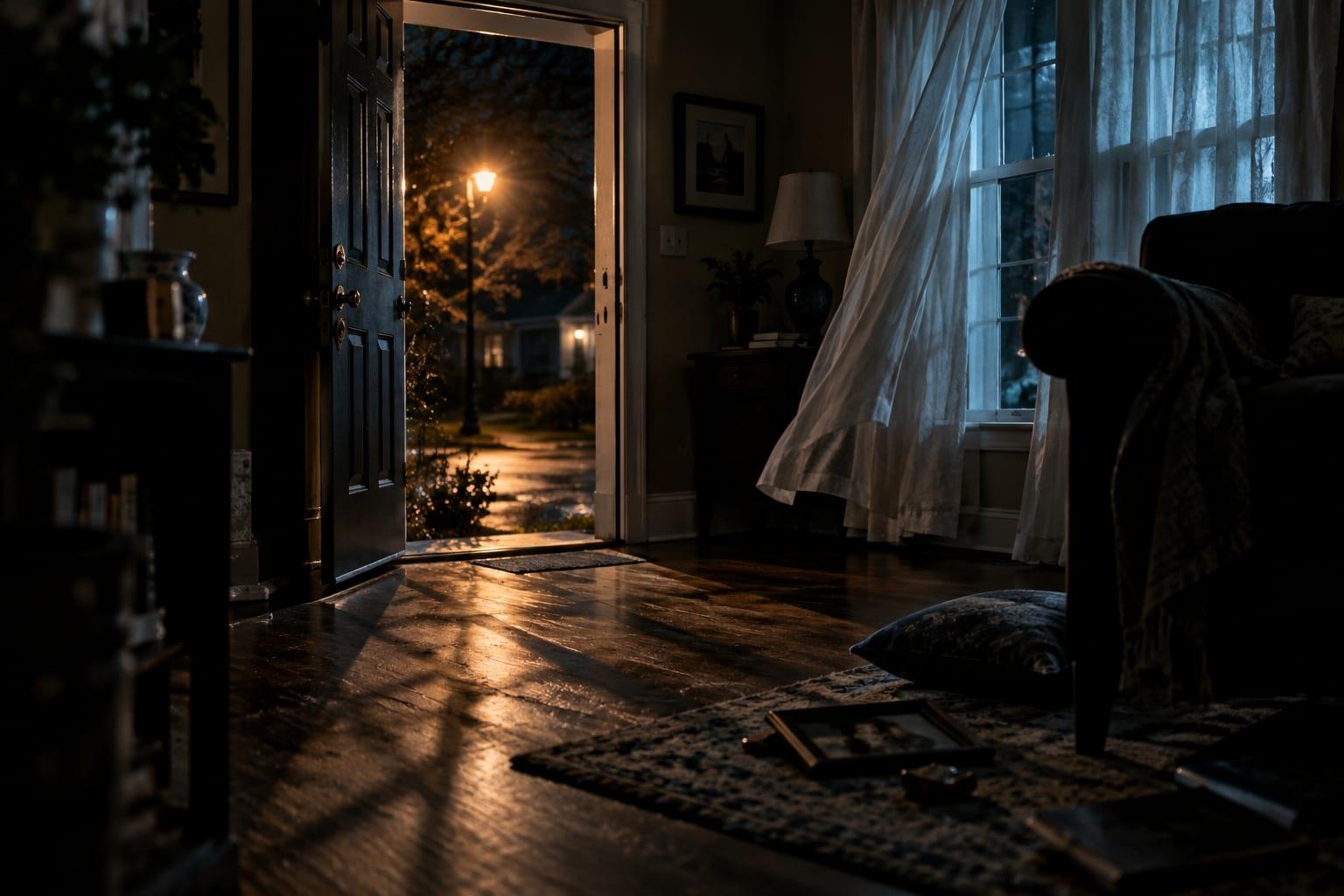
An Airbnb renter in Fort Lauderdale, Florida, fired a single gunshot at an eighteen-year-old man who allegedly forced his way into the rental property, according to police statements carried in news coverage of the incident, and the account is drawing a wave of support from conservative commentators who say it shows the value of armed self-defense. The episode, first reported by the New York Post and followed by AOL and local outlets, has spread through social media as an example of a renter turning the tables on an intruder.
According to the coverage, the shooting took place on September twenty-fourth in Fort Lauderdale. Police say the eighteen-year-old suspect and a twenty-five-year-old accomplice forced their way into the Airbnb, sparking a shootout with the person staying there. The renter shot the teenager, and both suspects now face attempted felony murder charges. The case is being investigated as self-defense.
The New York Post's account, posted from the @nypost handle, summarized the sequence plainly: "Airbnb renter turns tables on armed home invader with one gunshot: cops." The phrasing -- "turns tables" -- set the tone for much of what followed online, where the story was picked up less as a crime blotter item than as a talking point about home defense and the right to bear arms.
The details remain thin in several respects. It is not yet known what prompted the confrontation beyond the alleged forced entry, whether the suspects and the renter had any prior connection, or what the precise sequence of shots was. What is known, per police statements cited in coverage, is that the renter was staying at the property through Airbnb, that two men allegedly broke in, and that one of them was shot. The investigation is ongoing, and no charging decision has been reported against the renter.
The reaction online has been swift and largely one-directional. Commentators and accounts sharing the story have focused on the single gunshot as the decisive factor -- the idea that one armed person inside a home can end an intrusion that might otherwise have ended very differently. The phrase "turns tables" circulated widely, with users repeating it as a shorthand for the reversal of roles between intruder and occupant.
The story also landed amid a broader national conversation about short-term rentals and security. Airbnb properties are, by definition, occupied by people who may not know the neighborhood, may not know the layout of the home, and may not have established any relationship with local police. That makes the Fort Lauderdale case unusual: the renter was, in effect, a stranger in the house who still managed to defend it. Commentators seized on that angle, noting that the person least familiar with the property was the one who stopped the alleged intrusion.
Other coverage added context. AOL reported that police also arrested a twenty-five-year-old accomplice, and that the incident took place on September twenty-fourth. A separate account said the case is being investigated as self-defense, a detail that matters legally in Florida, where self-defense protections are broad but not automatic. Local coverage described the confrontation as a shootout, implying that more than one shot was fired in total, even though the Post's headline emphasized the single gunshot that struck the suspect.
Attempted felony murder charges against the suspects are notable. Under Florida law, a person can be charged with felony murder if a death occurs during the commission of certain felonies, even if the person did not intend the death. In this case, the charge appears to rest on the allegation that the two men broke into the home in the course of a crime that led to a shooting. The eighteen-year-old was shot but survived, according to the coverage, which describes him as a suspect who was struck by the renter's gunfire.
Conservative accounts carrying the story have emphasized the self-defense framing and the fact that the renter was not immediately charged. The absence of charges against the renter, combined with the charges against the alleged intruders, has been read by those accounts as a signal that the shooting is being treated as justified. That reading is consistent with how the case has been described in coverage, though the investigation is not complete.
Next News Network could not independently verify the details of the incident as described in the coverage and social media posts.
The story's spread has been driven less by new developments than by the resonance of its central image: a renter, a stranger in someone else's home, confronting armed intruders and prevailing. Accounts across the conservative media ecosystem have repeated the Post's headline and the underlying police account, often with commentary about what it says about crime, policing, and the value of being armed. The volume of that repetition -- the same headline, the same phrase, the same framing -- is itself the story's second act.
It is not yet known whether the renter has retained counsel, whether the suspects have entered pleas, or what the next steps in the investigation will be. What is known is that a break-in at a short-term rental in Fort Lauderdale ended with one suspect shot, two men charged, and a renter who, for now, faces no charges. The rest is argument.
Our Take
This is what self-defense looks like when it works, and it is why the Second Amendment matters. A man or woman staying in an Airbnb -- a stranger in a house that was not theirs, in a city that was not theirs -- was allegedly confronted by two armed intruders who forced their way inside. One gunshot ended the threat. The suspects are now facing attempted felony murder charges, and the renter is not facing charges at all. That is the system functioning as it should: the aggressors held accountable, the defender protected.
The left will tell you that defensive gun uses are rare, that homeowners are more likely to be hurt by their own firearms than to stop a crime. Fort Lauderdale is the counterexample. Two men allegedly broke into an occupied home and were met with force. The result was not a tragedy for the renter. It was a warning to anyone who thinks a short-term rental is an easy target. The story spread because Americans understand instinctively what too many politicians pretend not to: the police cannot be everywhere, and the first line of defense is the person inside the home.
Note, too, what is not happening. There are no calls from the left for the renter's arrest. There is no national conversation about restricting the rights of renters in short-term stays. The silence is telling. When the facts fit the narrative, the narrative bends. When they do not, the story disappears. This one has not disappeared -- it has spread -- and that is because it is a clean case: intruders broke in, a defender fired, and the law is on the defender's side.
The investigation is ongoing, and the facts should be allowed to develop. But the early reporting points in one direction: an armed renter stopped an alleged home invasion, and the men accused of breaking in are the ones facing charges. That is not a controversy. That is common sense.
