
Strikes across Ukraine killed at least six people overnight and on Sunday, according to officials, hours after Moscow rejected German calls to ease its escalation toward NATO.
The Washington Times reported the death toll, while ABC News said at least two people were killed overnight into Sunday. The two accounts differ on the number, and neither has been confirmed by this outlet. What is not in dispute is the timing: the strikes came after Berlin publicly urged the Kremlin to pull back from what it describes as a dangerous escalation toward NATO countries.
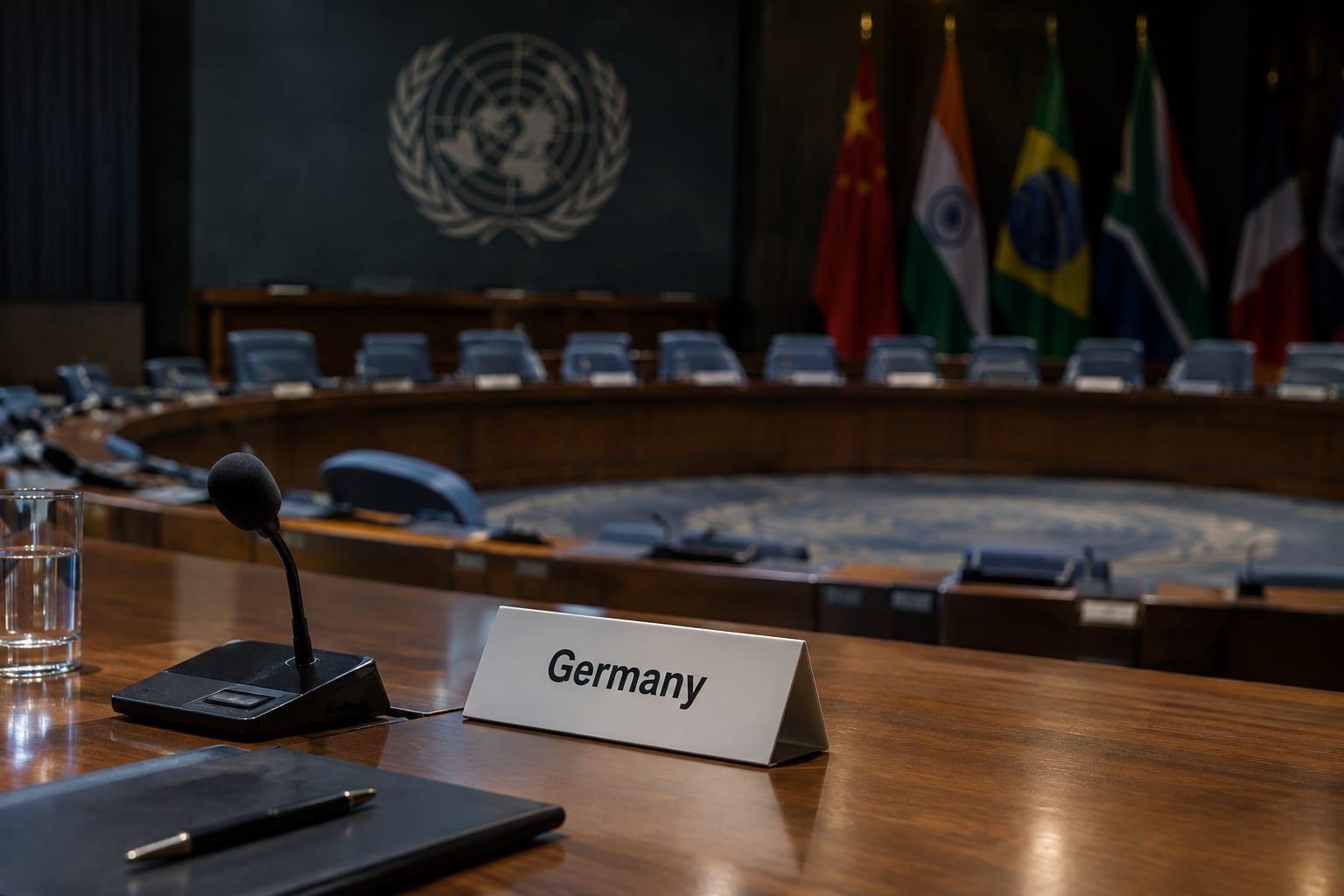
The United Nations General Assembly, where the two sides met for the first time since 2022, became the stage for that confrontation. According to the account @MarioNawfal, German Foreign Minister Wadephul met Russian Foreign Minister Sergei Lavrov face to face and accused Moscow of the recent drone attack on Leipzig airport, demanding an immediate end to Russian actions. The post describes the exchange as an icy face-off.
What exactly was said in that room has not been confirmed by this outlet.
The Ukrainian president used the strikes as a lever on capitals that have so far refused to take sides. According to @MarioNawfal, Volodymyr Zelensky demanded that the Global South stop sitting on the fence while Russian strikes terrorize Ukraine.
"We lack a consistently strong stance from China, India, Brazil, and South Africa," Zelensky said, according to the post. "Each of these countries has influence over Russia and can help make peace a reality."
That list is the substance of the pressure campaign. China, India, Brazil and South Africa have all declined to join Western sanctions on Moscow, and all four have continued buying Russian energy or maintaining diplomatic channels with the Kremlin. Zelensky's appeal, as carried by @MarioNawfal, is aimed at converting that influence into leverage over Moscow.
Other outlets put the strikes in a wider frame. The Independent reported that Zelensky said the overnight strikes show an urgent need for the international community to rein in Moscow. That framing matches the pressure campaign described above: the strikes are being presented not just as a battlefield event but as evidence that restraint has failed.
The war does not appear to be slowing. According to reporting from one day ago, Russian attacks killed four people in Ukraine, and the aerial exchanges between Moscow and Kyiv have intensified. President Trump, in that same reporting, called on Zelensky to settle with Putin, a position that sits uneasily beside the German demand for de-escalation and Zelensky's appeal to the Global South.
Beyond the front lines, The Atlantic's account points to something harder to see. Citing @Max_Beznosiuk and @ThomReillyNV, the magazine wrote that the world has watched Russia's war against Ukraine largely through the movement of its front lines, but that behind those lines Moscow is building something more durable: a hidden state inside Ukraine.
That claim -- that Russia is constructing administrative structures inside occupied territory -- is an allegation made by The Atlantic's contributors. It has not been independently verified by this outlet, and it is presented here as what has been claimed, not as an established fact.
The coverage of the meeting between Wadephul and Lavrov is the first direct contact between the two governments at that level since 2022. According to the account carried by @MarioNawfal, Wadephul confronted Lavrov directly and accused Moscow of the Leipzig airport drone attack, demanding an immediate end to Russian actions. The post does not contain Lavrov's response, and it is not yet known what he said in reply.
What is known is that Moscow had already rejected the German calls to de-escalate before the strikes and before the meeting. That rejection is what the weekend's violence is being measured against.
Next News Network could not independently verify the claims of strikes, the accounts of the UN exchange, or the assertion about a hidden Russian state inside Ukraine. This article reports what has been claimed by officials, outlets and accounts carrying the story.
Our Take
The story here is not the number of dead, which is disputed between two outlets and unconfirmed by anyone else. The story is that the diplomatic track has visibly split into three lanes that do not connect. Germany wants de-escalation and says so publicly. Zelensky wants the Global South to apply pressure that China, India, Brazil and South Africa have shown no sign of applying. Trump wants Zelensky to settle with Putin. None of those positions reinforces the others.
The UN meeting between Wadephul and Lavrov is the first such contact in years, but a meeting is not a negotiation, and the German demand for an immediate end to Russian actions was met, according to the reporting we have, with no answer at all. Meanwhile, the strikes continue on the same weekend the appeals were made, which tells you which lane has the momentum.
The claim about a hidden Russian state inside Ukraine deserves attention precisely because it is the kind of thing that does not show up on a front-line map. If Moscow is building durable administrative structures in occupied territory, then a ceasefire that freezes the lines freezes the structures with them. That is an argument for treating territory as the whole story, and it is an argument nobody at the UN this weekend made out loud.
The proper place for the Global South pressure campaign is a negotiating table with leverage behind it. Right now it is a speech, delivered while the bombs fall, and the only party treating it as anything more than that is the man making it.
