
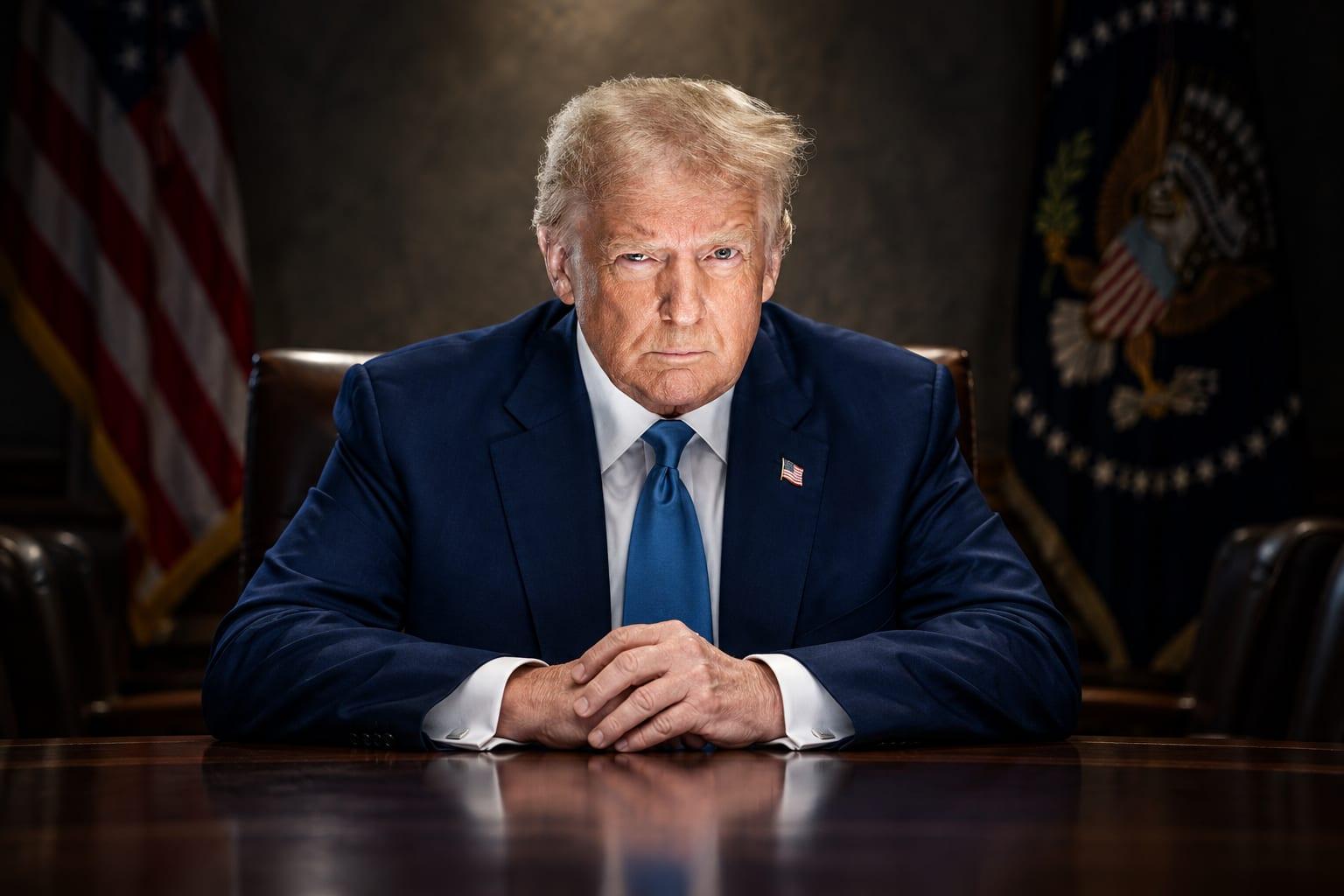
Iran insisted Sunday that only diplomacy can solve its conflict with the United States and Israel, after President Donald Trump rejected an Iranian proposal to reopen the Strait of Hormuz, according to wire reports and social media accounts carrying the statement.
The proposal, delivered to U.S. officials through mediators, would have reopened the Strait of Hormuz and restarted peace talks within seven days, according to The Washington Post, which first reported the arrangement. The Guardian, citing officials familiar with the discussions, reported that Trump is said to expect renewed strikes after the midterm elections.
Reuters reported the Iranian position in dispatches carried by multiple outlets Sunday. The account @Reuters, in a post timestamped September 27, wrote: "Iran insists on diplomatic solution after Trump rejects peace plan." A second Reuters post, timestamped the evening of September 26, carried the identical headline, indicating the wire story moved twice as the position was restated to reporters.
The account @FirstSquawk amplified the same Reuters line shortly after: "Iran maintains diplomatic approach after Trump rejects proposed peace plan - RTRS." The attribution to RTRS, the Reuters ticker symbol, shows the headline circulated through the financial newswire before being picked up more widely.
MarketScreener, in a report carried five hours ago, said Iran on Sunday insisted that only diplomacy can solve its conflict with the United States and Israel after Trump said he rejected an Iranian proposal to reopen the Strait of Hormuz. The WTVB newsroom in Branch County, Michigan, carried the same Reuters dispatch, bylined to Trevor Hunnicutt, Yomna Ehab, Parisa Hafezi and Menna AlaaElDin, datelined Washington, United Nations and Cairo.
The Strait of Hormuz is the narrow waterway at the mouth of the Persian Gulf through which roughly a fifth of the world's oil passes. Its closure or reopening is not a symbolic matter. Any interruption there moves energy prices worldwide, which is why a seven-day timeline attached to a reopening proposal drew attention well beyond the region.
What is not established is the substance of the proposal itself. The Washington Post reported that Tehran delivered the plan to U.S. officials through mediators. The Guardian reported that Trump is said to expect renewed strikes after the midterms. Neither account has been confirmed by the White House or by the Iranian government in the material available. It is not yet known who the mediators were, what precisely the seven-day period would cover, or whether any American official has responded to the proposal beyond the president's rejection.
The Iranian statement carried Sunday by Reuters does not introduce new terms. It restates a position Iranian officials have taken repeatedly during the current conflict: that military pressure will not produce a settlement and that negotiations are the only path. That position was restated, according to the wire, in direct response to Trump's rejection.
The coverage lists no new Iranian proposal in the Sunday statement. Iran is described as insisting on a diplomatic solution, not as offering fresh concessions or revising the earlier plan. The seven-day framework reported by the Post and the Guardian appears to be the same one Trump rejected, not a subsequent offer.
The reaction spread through the accounts carrying the wire. @Reuters posted the headline twice, the second time a little over four hours after the first. @FirstSquawk posted its version of the same line at 3:24 a.m. Coordinated Universal Time, minutes after the second Reuters post. The market-facing outlets and the local radio affiliates carried the identical language, which is standard for a wire dispatch but also means the reader should understand this is one story circulating in many places, not many independent confirmations.
Next News Network could not independently verify the details of the proposal, the identity of the mediators, or the reporting that Trump expects renewed strikes after the midterms.
What can be said is what the wire accounts say: Iran says diplomacy is the only solution. What can also be said is what the president has said, as reported: he rejected the plan. The gap between those two statements is where the story sits.
Background on the broader conflict is necessary to read the exchange. The United States and Israel have been engaged in hostilities with Iran, and the Strait of Hormuz has been a central pressure point throughout. A proposal to reopen it within seven days would, if genuine and accepted, represent a significant de-escalation. Trump's rejection, as reported, means that de-escalation is not imminent on those terms.
The Guardian's report that Trump expects renewed strikes after the midterms adds a timeline to the rejection. If accurate, it suggests the administration views the current period as a pause rather than a settlement. That reporting is attributed to people said to be familiar with the discussions and has not been confirmed on the record.
Iran's response, as carried by Reuters, does not close the door. It restates the preference for diplomacy. Whether that preference translates into a revised proposal, or whether the seven-day framework is now dead, is not answered in the material available.
The accounts carrying the story are the ones to watch for the next move. If Tehran submits a new proposal, it will move through the same wire channels. If Washington responds, it will appear the same way. For now, the sequence is: a proposal, a rejection, and a restated Iranian position.
Our Take
The left will read this as Trump torching a peace deal out of political convenience. The reporting in The Guardian — that he expects renewed strikes after the midterms — gives them their talking point, and they will run with it. But the proposal as described gave Iran a seven-day window and the reopening of the world's most important oil chokepoint, and the reporting does not say what Tehran was putting on the table in return. A deal that asks for everything up front and promises talks later is not a peace plan. It is a delay tactic with a deadline attached.
What Iran is doing now is what it always does when it is caught out: talking about diplomacy while its proxies and partners keep the pressure on. The Sunday statement carried by Reuters contains no new offer. It is a restatement of a position, released to shape coverage after a rejection. That is not a concession. It is a public relations move, and the wire services dutifully carried it to every market terminal and small-town radio station in the country.
The real question is not whether Trump rejected the plan. It is whether anything short of a genuine Iranian retreat on the Strait of Hormuz and on its regional posture would have been worth accepting. Nothing in the reporting suggests that was on offer. Until it is, diplomacy is a word Iran uses, not a policy it pursues.
