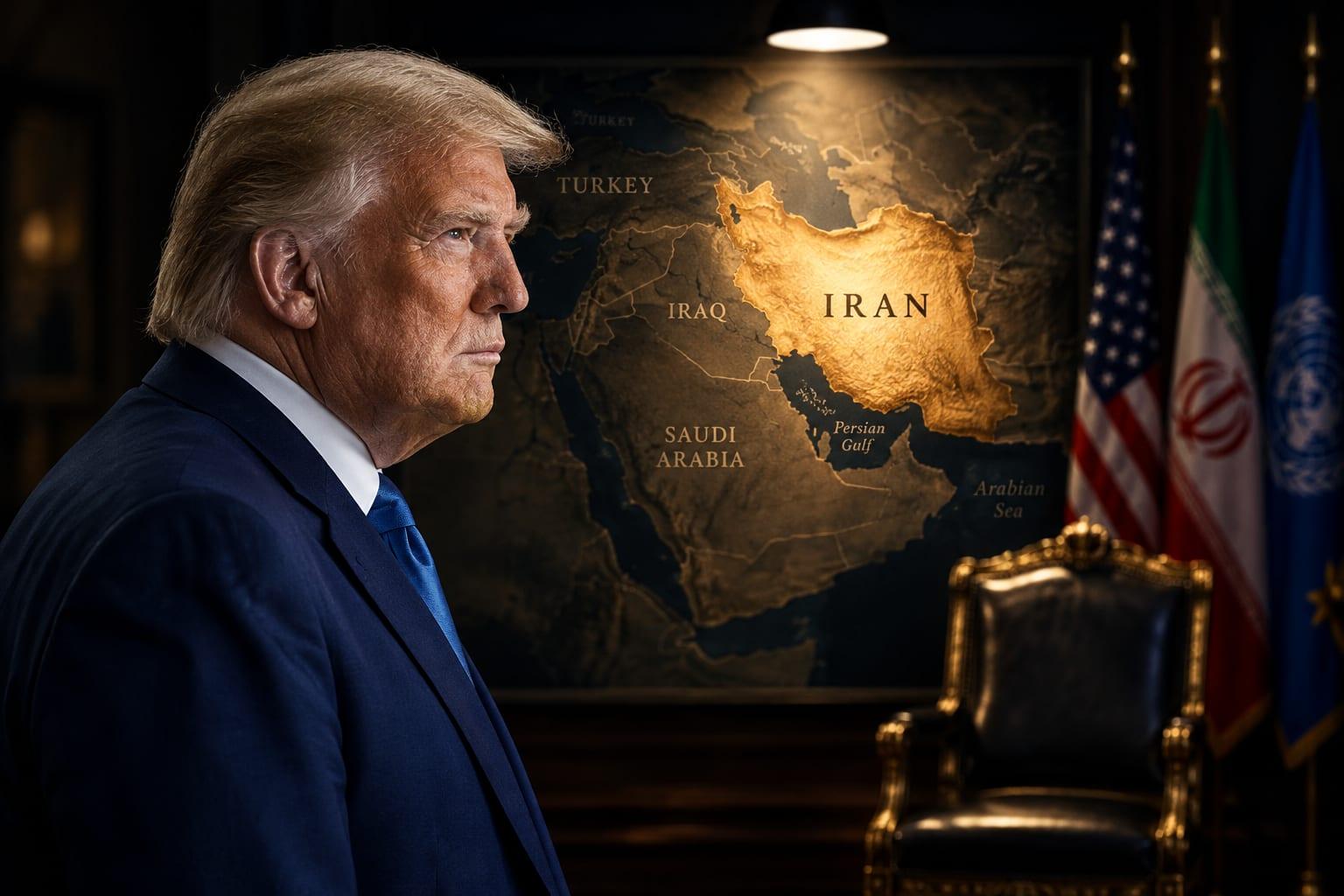
Iranian officials said Sunday that Tehran will not soften the terms of its cease-fire offer to the United States, warning that it is prepared to fight what they described as a "doomsday war" if Washington rejects the proposal.
"We stand firm in the face of any new aggression, even if it comes to a doomsday war," Iranian Foreign Minister Abbas Araghchi said, according to @atrupar. Araghchi added that Tehran remains "ready for diplomacy" but said the decision now rests with President Trump.
President Masoud Pezeshkian struck a similar note, telling CBS News' "Face the Nation with Margaret Brennan" that Iran would hold to its position "even if it comes to a doomsday war," a remark circulated by @WashTimes. In a separate interview excerpt shared by @atrupar, Pezeshkian said Iran had "learned our lesson from the two previous wars" and had "corrected our tactics, we have changed our tactics, and we are fully prepared" for a resumption of hostilities. He also said Trump sought an "unconditional surrender in the previous war in two days" and that "now it's eight months that they are fighting with no result."
The Iranian president also addressed the health of Supreme Leader Ayatollah Mojtaba Khamenei, telling CBS News that Khamenei is "completely healthy" and has recovered from injuries sustained during an airstrike, according to @WashTimes. Pezeshkian, who is also a physician, said he had visited the supreme leader twice and discussed his condition with Brennan.
The exchange follows President Trump's rejection of an Iranian plan to reopen the Strait of Hormuz. Trump called the proposal not "acceptable," according to Fox News Digital, which reported the president said the Iranian regime is "losing so badly" during Operation Epic Fury as he touted U.S. Central Command's blockade of Iranian ports. The Iranian proposal was similar to a memorandum of understanding signed by the two countries in June, which traded easing sanctions and lifting the naval blockade for the opening of the Strait of Hormuz and nuclear talks.
The New York Post reported that Tehran is "ready for 'doomsday war' after Trump rejects cease-fire proposal — but still wants peace," citing a Tehran negotiator. The Wall Street Journal has reported that President Trump expects to resume bombing Iran after the midterms, a report referenced in the questions put to Araghchi.
In a Sunday interview on CNN, Mike Waltz, the ambassador tapped to explain the administration's position, declined to say what deal the president would accept. "I'm not going to negotiate in public for the president," Waltz said, according to @atrupar. Pressed on why the administration would not give a cease-fire a chance, Waltz said the Iranian offer was "a pretty cynical attempt to put something on the table that they knew was unacceptable," arguing that Tehran was asking "for the release of the blockade, the sanctions, international sanctions, and access to billions in assets just to talk" months after the June memorandum was "immediately violated by attacking international shipping."
Waltz added that the administration still has questions about who speaks for Iran. "We have to know, number one, the people coming to the table can actually speak for the Ayatollah," he said. "That has been a consistent issue that have frustrated our negotiators. Who's calling the shots in Iran right now? Is it the IRGC? Is it the president? Is it the foreign minister? Ultimately, we know it's the Ayatollah." He said the president "wants a deal" and will "leave all options on the table to get there."
The standoff has widened beyond the two capitals. @EndTimeHeadline reported that the Trump administration is warning more than fifty countries to slash economic ties with Tehran or risk losing access to the U.S. financial system. According to that account, the United Arab Emirates, Oman and Turkey have already blocked Iranian flights, while China remains Tehran's largest remaining economic partner. It is not yet known how many of the warned countries have responded to the administration.
The positions staked out Sunday were carried by a range of accounts, including @WashTimes, @nypost, @atrupar and @EndTimeHeadline, each circulating portions of the interviews and the warnings that followed.
Next News Network could not independently verify the claims described in this report, including the state of Ayatollah Khamenei's health, the details of the Iranian cease-fire proposal, the extent of the administration's warnings to foreign governments, or the claim that the president plans to resume bombing after the midterms.
What is not in dispute is the public posture coming out of Tehran. Araghchi said Iran is "fully prepared for the time, for the war to be resumed" and repeated, "We stand firm in the face of any new aggression, even it comes to a doomsday war." He said the choice belongs to President Trump. Waltz, for his part, said the administration believes Iran's proposal was designed to fail and that the president's confidence in Iranian negotiators is low after the June memorandum collapsed.
Both sides now describe the other as the obstacle. Tehran says it is ready to talk and calls the American position unrealistic. Washington says it is ready for a deal but will not pay sanctions relief and asset access for talks that it believes Tehran will abandon. The Strait of Hormuz, the memorandum of understanding, the naval blockade and Iran's nuclear program remain the terms of the dispute. Whether either side moves off its public position is not yet known.
Our Take
There is a reason the Iranians keep reaching for the phrase "doomsday war." It is not a battle plan; it is a bargaining chip dressed up as prophecy. Tehran knows it cannot win a conventional fight with the United States, and it knows the American public has little appetite for another Middle East war in the middle of a midterm year. So it shouts the loudest words it has and hopes Washington blinks.
President Trump is right to treat the Iranian offer with suspicion. The June memorandum was signed in good faith and violated within weeks, according to Ambassador Waltz, and Tehran's latest proposal asks for the same sanctions relief and the same unfrozen assets before a single nuclear centrifuge stops spinning. That is not a cease-fire; that is a down payment on a stronger Iran. The president's instinct to walk away from a bad deal is the correct one.
But the administration should be honest about the road ahead. If the plan is to resume strikes after the midterms, the White House owes the country a clearer case than it has made so far. Bombing alone will not remove the regime's nuclear knowledge, and it will not open the Strait of Hormuz. The warning to more than fifty countries to pick a side is a serious economic weapon, and the fact that the UAE, Oman and Turkey have already blocked Iranian flights shows it has teeth. But China's continued partnership with Tehran shows the limits of that pressure.
The ayatollah's health matters for the same reason: a regime with a wounded, opaque succession is a regime more likely to gamble. The American people deserve a strategy that is more than a choice between a bad deal and an open-ended war. So far, Tehran is the only side that has stated plainly what it will do next. That is not a comfortable place for the world's leading power to be.