
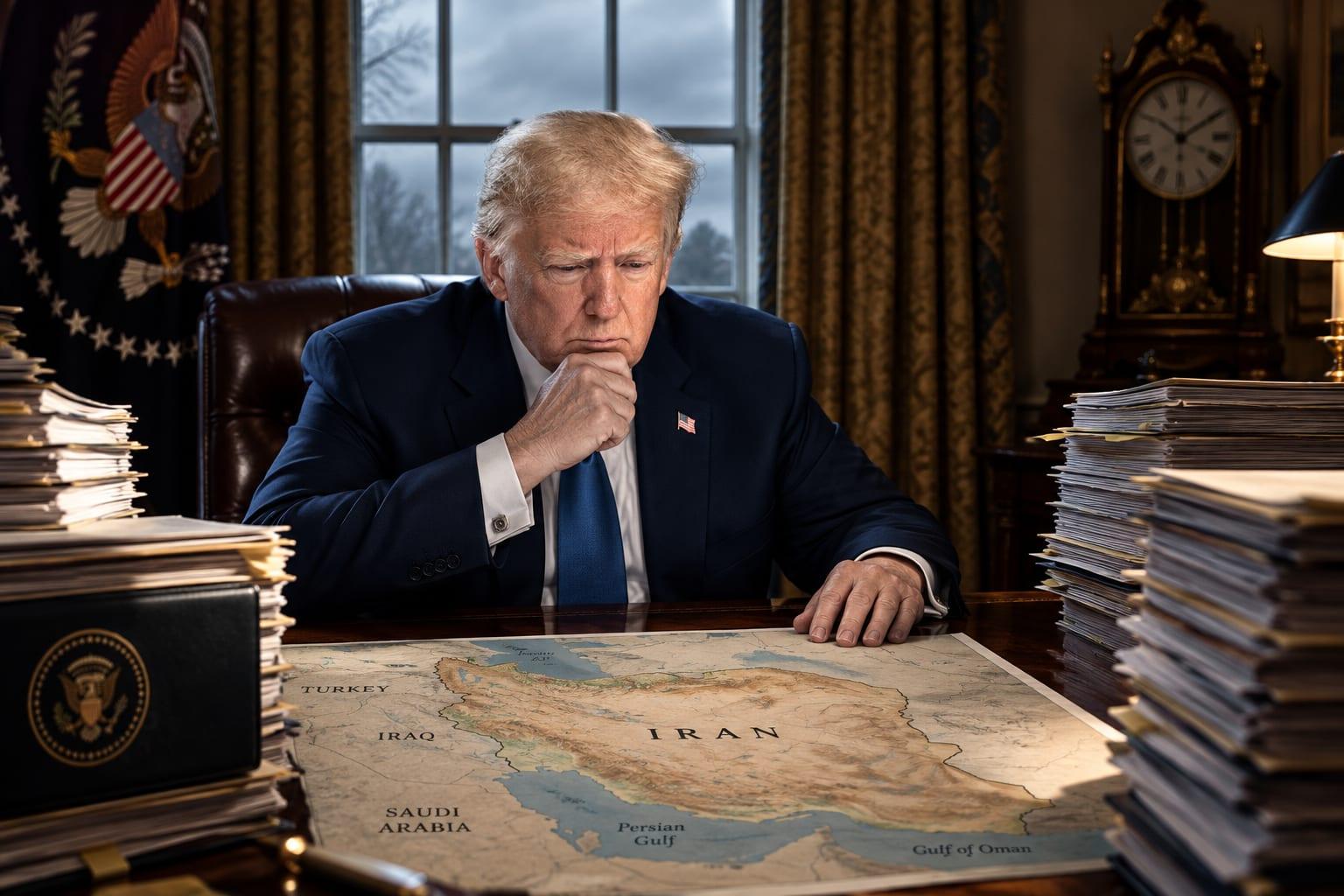
President Trump said the Iranians want to make a deal, but it is not the one he wants, and that the United States probably would have agreed to it a year ago, according to remarks he gave to Axios that were carried by the account @FirstSquawk on Sunday. The comment came as Qatari mediators worked to keep negotiations alive and as regional officials described the gaps between the two sides as still very wide.
The president rejected the latest Iranian proposal, a seven-day cease-fire plan that would have reopened the Strait of Hormuz, according to multiple outlets including The New York Times and The Guardian. Trump described that proposal as not acceptable, and he declined to say whether he would restart military strikes after the midterm elections. The Guardian, citing people familiar with the discussions, reported that the president is said to expect renewed strikes once the midterms are over, while The New York Times noted that he demurred on the question of a military restart. None of those characterizations have been independently confirmed by Next News Network.
The sequence of events runs from the rejection through the resumption of talks. One day before the Axios remarks, Trump rejected the latest Iranian proposal as mediators, including Qatar, tried to revive negotiations. The gaps on the key issues remained wide, according to coverage of those discussions. On the same day, The New York Times reported that the president called the cease-fire proposal not acceptable and would not commit to a pause in hostilities after the midterms. The Guardian, nine hours before the Axios remarks were carried, reported that the president rejected Iran's seven-day plan and expected bombing to resume after the midterms. Then, thirty-eight minutes before the Axios quote was posted by @FirstSquawk, another report said negotiations with Iran were expected to take place this week despite the rejection, with Qatar doing shuttle diplomacy between the two sides.
The details of the Iranian proposal, as described in the coverage, center on a seven-day window. Under that plan, the Strait of Hormuz would have been reopened for a week as a gesture toward de-escalation. The Strait of Hormuz is a narrow waterway at the mouth of the Persian Gulf through which a substantial share of the world's seaborne oil passes. Reopening it for even a short period would have been a tangible confidence-building step, and the rejection of that step is what prompted the reaction that followed. The president's comment to Axios added a layer: he said the Iranians want a deal, but not the one he wants, and that the United States probably would have agreed to an earlier version a year ago.
Qatar's role has become central. According to the report thirty-eight minutes before the Axios post, Qatar is doing shuttle diplomacy between the two sides, and negotiations are expected this week despite the rejection of the seven-day plan. That account described the talks as ongoing rather than collapsed. The same coverage noted that regional mediators are trying to revive negotiations while the gaps on the key issues remain very wide. The account @FirstSquawk carried the president's Axios remarks as a direct statement, without additional context, which is how the quote reached a broader audience on social media.
The reaction to the president's position has spread across outlets and accounts. The New York Times, The Guardian, and the account @FirstSquawk are among those carrying the claim, along with the report that negotiations are expected this week. The coverage has focused on two elements: the rejection itself and the expectation, attributed to people familiar with the discussions, that military strikes could resume after the midterms. The president's own words to Axios did not confirm a military timeline; he left the question open. The Guardian's sourcing described an expectation of renewed strikes, while The New York Times described the president as demurring on whether he would restart strikes after the midterms.
What is known at this point is the public position: the president rejected the seven-day proposal, called it not acceptable, and said the Iranians want a deal that is not the one he wants. What is not known is whether the negotiations expected this week will produce a different framework, what specific terms Qatar is carrying between the parties, or whether the military option will be exercised after the midterms. The reports describing an expectation of renewed strikes rely on unnamed people familiar with the discussions, and those accounts have not been independently verified.
Next News Network could not independently verify the claims described in this report.
The broader context is a negotiation that has moved back and forth between rejection and revival. A year ago, according to the president's own remarks to Axios, the United States probably would have agreed to a deal along the lines of what Iran is now offering. That comment suggests the terms on the table have shifted, though the president did not specify how. The seven-day cease-fire and the reopening of the Strait of Hormuz were the concrete elements of the latest proposal, and their rejection is what set off the round of reporting and commentary that followed. Qatar's shuttle diplomacy is the mechanism through which the two sides are still communicating, according to the coverage, and negotiations are expected this week.
For readers tracking the story, the key markers are the president's public statements, the Qatari mediation effort, and the question of what happens after the midterms. The president has not said he will restart strikes; he has declined to answer that question directly. The expectation of renewed strikes comes from unnamed sourcing in The Guardian and has been described as what the president is said to expect. The New York Times reported that he demurred. Those are the attributed accounts, and they remain the basis for the current reporting.
Our Take
The president's comment to Axios is the tell. He said the Iranians want a deal, but not the one he wants, and that we probably would have agreed to it a year ago. That is not a description of a collapsed negotiation. It is a description of a negotiation that has moved in America's favor, and the president is in no hurry to settle on terms that were acceptable twelve months ago. The seven-day cease-fire and the reopening of the Strait of Hormuz were a test balloon, and the president popped it. Qatar can shuttle all it wants, but the shuttle only matters if one side is willing to move, and the president has made clear which side that is not. The midterms are the clock here. The president declined to say whether strikes resume after them, and the unnamed sourcing saying he expects them to resume is the kind of leak that often precedes a decision already made. Conservatives should read the sequence plainly: rejection, shuttle diplomacy, talks expected this week, military option left open. That is leverage, not drift. The president is not walking away from a deal; he is waiting for a better one, and the Iranians know it.
