
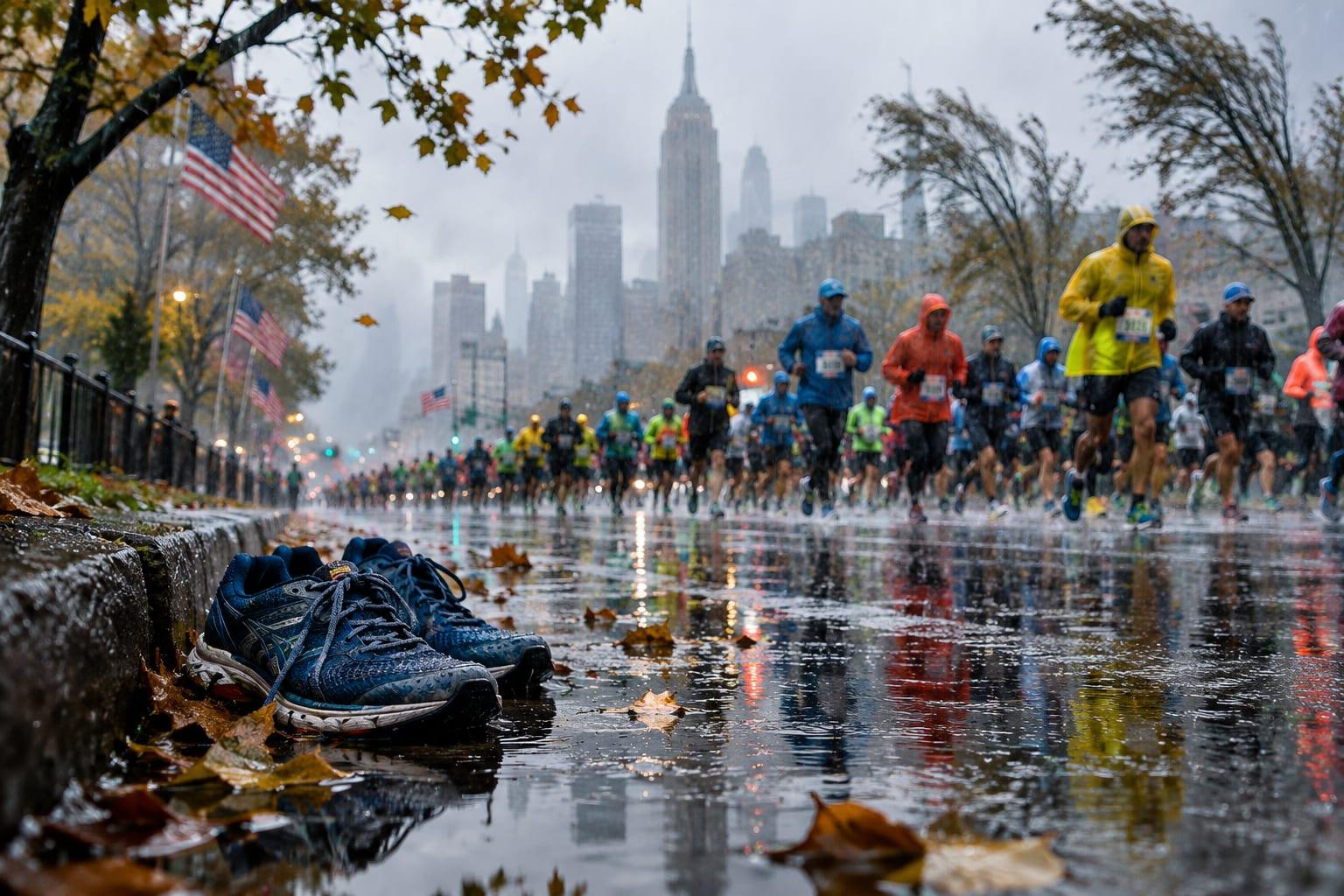
More than forty thousand runners and walkers turned out Sunday for the sold-out 25th annual Tunnel to Towers 5K Run & Walk in New York City, an event honoring the heroes of the September 11, 2001 terror attacks, according to a New York Post report on the event.
The foundation behind the race had spent the days leading up to Sunday watching the forecast. A message posted to the Tunnel to Towers Foundation's account on X one day before the event read: "We can't wait to see you this Sunday as we mark 25 years of honoring Stephen Siller and all of our heroes. We know many of you are watching the weather."
They had reason to watch. By Sunday morning, a nor'easter was bearing down on the Tri-State Area, a separate report on the storm said, bringing down trees and causing flooding across New York and New Jersey even as the race was set to step off.
That same day, the organization's X account posted what it called a "25th Annual Tunnel to Towers 5K Run & Walk Sunday weather update," a signal to participants that the event would proceed as scheduled despite conditions that had prompted concern across the region.
They proceeded. The New York Post reported that the race drew over forty thousand participants despite the storm, a turnout that filled the field to capacity for the twenty-fifth running of the event.
Coverage of the race aired live Sunday morning. FOX 26 Houston carried what it billed as full coverage of the 2026 Tunnel to Towers 5K Run & Walk, framing the broadcast around the milestone the event marked: twenty-five years since September 11, 2001.
The race itself traces its origins to that morning. The event is built around the memory of Stephen Siller, a firefighter who ran through the Brooklyn Battery Tunnel toward the World Trade Center in lower Manhattan after the attacks, carrying his gear on foot after the tunnels had been closed to traffic. The route of the annual 5K follows in that direction, and the race has become one of the largest recurring 9/11 commemorations in the country.
Sunday's edition was scheduled for a full quarter century after the attacks. The Tunnel to Towers Foundation described it as marking "25 years of honoring Stephen Siller and all of our heroes," a framing echoed in early coverage of the event.
The weather posed a logistical challenge that organizers and participants appeared to absorb without the race being called off. The separate storm report said the nor'easter was "bringing more serious concerns to the Tri-State Area Sunday" as trees came down and floodwaters rose. Organizers had signaled in advance, in their weather update, that they were tracking conditions and intended for the race to go forward.
By the time the event concluded, the New York Post's account described a field of more than forty thousand — a sold-out event — with the storm conditions as backdrop rather than cancellation. Broadcast coverage, including the FOX 26 Houston livestream, carried the event to viewers outside the New York market.
What the published accounts do not provide is a detailed breakdown of how many of the registered participants ultimately crossed the line, how the storm affected the race's timing or course, or what organizers said afterward about the conditions on the ground. Those specifics were not addressed in the coverage reviewed.
For the families and participants, though, the through-line across the day's reporting was the same one the foundation had pressed in its advance message: the anniversary and the names attached to it. The event, per the coverage, was hosted "to honor the heroes of the Sept. 11th terror attacks," with Stephen Siller at the center of the observance.
Next News Network could not independently verify the reported participation figures or the conditions described by the organizations and outlets above.
Our Take
Twenty-five years after the towers fell, the country is told that the way to honor September 11 is to move on from it — that the wars it triggered were mistakes, that the security measures it produced were excesses, that the memory itself should be folded quietly into a museum case and left there. And then a nor'easter rolls into New York, trees come down across the Tri-State Area, the forecast tells every sane person to stay indoors, and more than forty thousand Americans pull on their running shoes and line up anyway, in the rain, to run the route a firefighter ran in full gear toward a building that was coming down.
That is the response the establishment cannot manufacture and cannot explain away. Tunnel to Towers was not built by a government commission or a federally funded commemorative body. It was built around one man's decision — Stephen Siller, off duty, geared up, running through a closed tunnel — and it has been sustained for a quarter century by Americans who give their own time and their own money to keep it going. The foundation's own advance message said it plainly: twenty-five years of honoring Stephen Siller and all of our heroes. No federal grant wrote that sentence. No media campaign sold it. Forty thousand people decided it was worth getting soaked for.
Notice, too, what the event represents that the political class has spent two decades trying to avoid. It is not a panel discussion. It is not an academic symposium on the roots of extremism. It is a physical act of remembrance on the exact ground where the day unfolded, run by people who were not asked to explain themselves, apologize for their country, or frame the attacks as anything other than what they were. In an era when the loudest voices in our institutions treat patriotism as a suspicion to be managed, the Tunnel to Towers run remains stubbornly, unapologetically patriotic — and it keeps selling out.
The nor'easter is almost beside the point, and yet it is not. The same forecasts that emptied offices and canceled flights did not empty the starting corral. If the commitment were merely ceremonial, weather would be enough to break it. It did not break. The sold-out field, the live broadcasts, the twenty-fifth consecutive year — those are not nostalgia. They are a standing answer to everyone who has spent a generation insisting that the country has moved on. The country keeps showing up to say otherwise.
Twenty-five years on, the question worth asking is not whether America still remembers. Forty thousand soaked runners already answered that. The question is whether the institutions that claim to speak for the country still understand what those runners are remembering — and why, in the rain, they keep coming back.
