
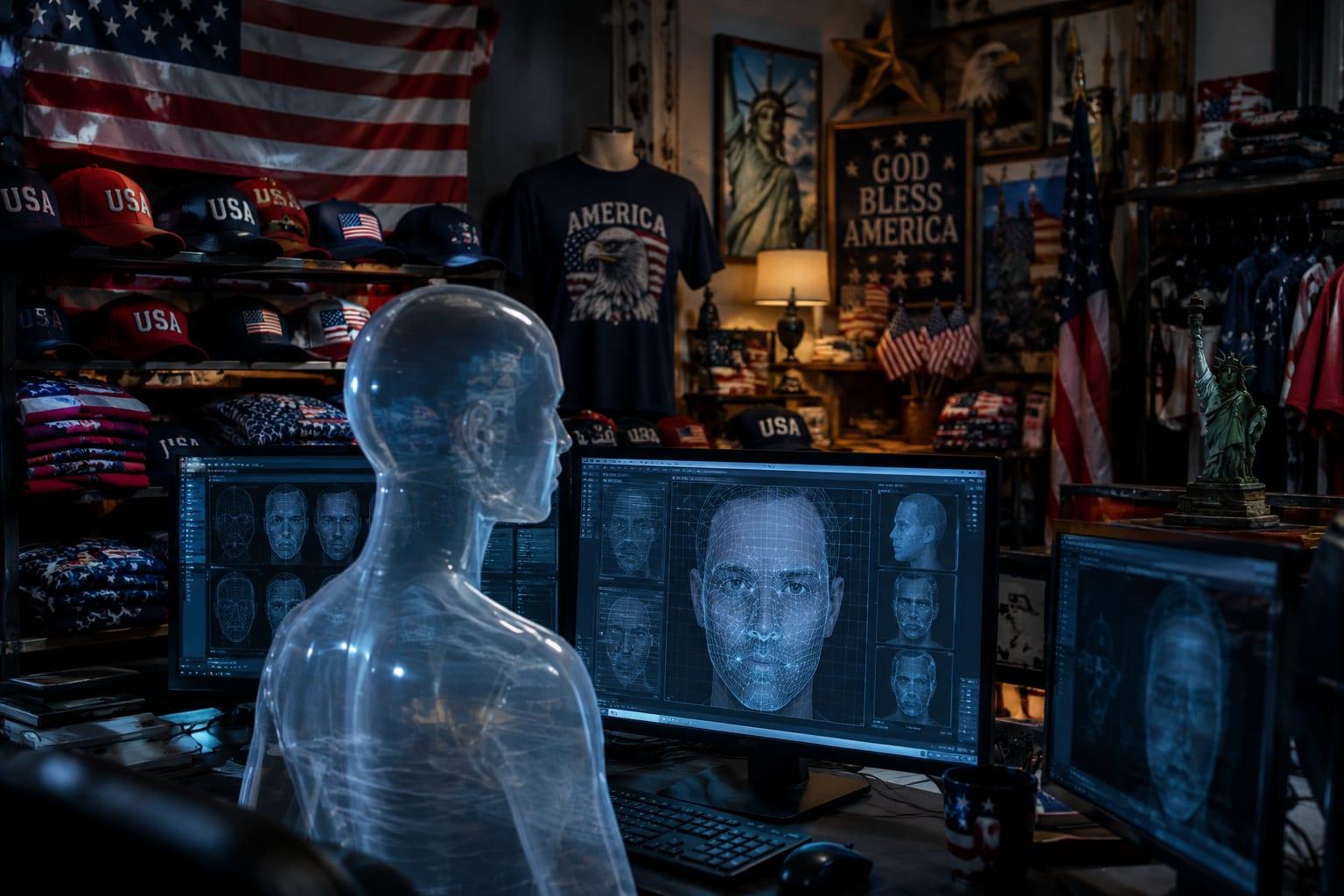
War-wounded military veterans peddling cheap patriotic merchandise are actually AI-generated fakes originating from China, according to a report that has drawn a wave of outrage from conservative commentators, veterans' advocates and ordinary Americans who say the alleged scheme exploits the sacrifices of real service members.
The claim, first surfaced by the New York Post via its official @nypost account, alleges that a network of online storefronts and social media profiles depicting injured veterans hawking patriotic apparel and trinkets is not what it appears. Instead, the report asserts, the images are synthetic, generated by artificial intelligence, and the operations behind them trace back to China rather than to American veterans as they claim.
The allegation lands amid growing alarm over AI's role in conflict, commerce and deception. Reports in recent days have examined allied nations planning robot soldiers for frontline tasks, and analysts have warned that artificial intelligence is transforming the future of warfare in ways that could prove catastrophic if left unguarded. That broader anxiety has given the veterans-merchandise claim a ready audience.
Reaction across X, the platform formerly known as Twitter, was swift and sharply worded. "It's just deplorable for them to try to take advantage of it," one widely shared @nypost reply read, echoing a sentiment that appeared repeatedly beneath the original post. The remark, originally aimed at a separate controversy involving AI-generated pet memorial portraits sold as fine art, was quickly repurposed by users to describe the veterans merchandise story as well.
The @nypost account, which has long served as a primary amplifier of conservative-leaning breaking news, carried the story to its followers with a terse summary that left little room for ambiguity about the outlet's framing. Within hours, the claim had migrated from the Post's feed into group chats, family text threads and private Facebook groups where veterans and their relatives trade news.
Veterans' organizations and individual service members responded with a mixture of anger and weariness. Multiple accounts identifying themselves as veterans or as family members of wounded warriors described the alleged scheme as a betrayal not only of consumers but of the men and women whose images were, according to the claim, fabricated without their knowledge or consent.
The mechanics described in the Post's report follow a pattern that consumer-protection researchers have documented with increasing frequency over the past two years. An online storefront uses AI to generate a photorealistic portrait of a person, typically one designed to evoke sympathy or trust, and attaches that face to a sob story. The story travels through paid ads and organic posts until a customer purchases a product, at which point the money moves through payment processors that obscure its final destination.
What distinguishes this alleged operation, according to the claim, is its specific appropriation of military sacrifice. The portraits, if they are indeed synthetic, would represent a particularly cynical deployment of the technology: not a generic handsome model or smiling grandmother, but a wounded warrior in uniform, a figure designed to trigger an almost reflexive American instinct to support the troops.
That instinct is powerful, and it is precisely why the alleged scheme, if confirmed, would constitute a serious breach of trust. Americans donate billions of dollars annually to veterans' causes, often in small increments, often at kitchen tables late at night after seeing a poignant image on a phone screen. The generosity is real even when the beneficiary is not.
The story also arrives at a moment when the White House has found itself at the center of a separate controversy over taxpayer-funded video production. The White House released another government-produced spot ahead of the midterms, drawing fresh questions about election-year spending from critics who say the administration is using public resources for political messaging. The conjunction of the two stories, though unrelated in substance, has fed a broader narrative among conservatives that official institutions and foreign actors alike are manipulating the information environment.
Meanwhile, the AI-in-warfare debate continued to unfold on its own track. An American ally reportedly plans to deploy robot soldiers to handle dangerous frontline tasks ranging from ammunition delivery and reconnaissance to mine clearance, evacuation and combat. Commentators reflecting on the BBC's harrowing 1984 nuclear war drama, "Threads," drew parallels between its depiction of ordinary life amid approaching catastrophe and the present moment's AI anxieties.
Next News Network could not independently verify the claim that the veterans merchandise operations are AI-generated or that they originate from China.
What is clear is that the reaction has been widespread and bipartisan in its anger, even if the underlying facts remain unconfirmed. Users on X pointed to the alleged scheme as evidence of a need for stronger regulation of AI-generated commerce. Others said it demonstrated the futility of such regulation. Still others simply expressed disgust.
The Post's report has become a rallying point for those who argue that the technology industry has moved too fast and that the safeguards meant to prevent fraud have not kept pace. It has also become a case study in how quickly a single claim, however explosive, can become a fixture of the national conversation, with or without the verification that traditional journalism once demanded.
For now, the veterans themselves, the real ones, remain in the position they have occupied throughout: watching as their image and their sacrifice are used, by turns, as a marketing tool, a political football and a moral lesson. The anger directed at those who would exploit them appears genuine. Whether the exploiters exist in the form described remains, for the moment, a matter of allegation rather than established fact.
Our Take
If the Post's reporting holds up, this is not simply a consumer-protection story or a tech-policy story. It is a story about a country that has allowed its most sacred symbols, the wounded warrior, the flag, the sacrifice of the few for the many, to be repackaged by foreign operators and sold back to grieving and grateful Americans as a cheap trinket. That the operators are allegedly Chinese AI merchants rather than domestic grifters does not change the fundamental offense. It deepens it. For years, conservatives have warned that America's dependence on foreign supply chains, foreign manufacturing and foreign technology would eventually reach the point where even our patriotism would be outsourced. That point has arrived, according to this report, and the response from many corners has been a shrug and a hashtag. Where is the accountability? Where is the regulation? Where is the shame? The men and women who actually bled for this country deserve better than to have their likenesses fabricated by a generative model and their legacies monetized by a server farm on the other side of the world. If the claim is true, every dollar sent to one of these storefronts is a dollar stolen from the trust between the American people and the warriors who earned it.
