
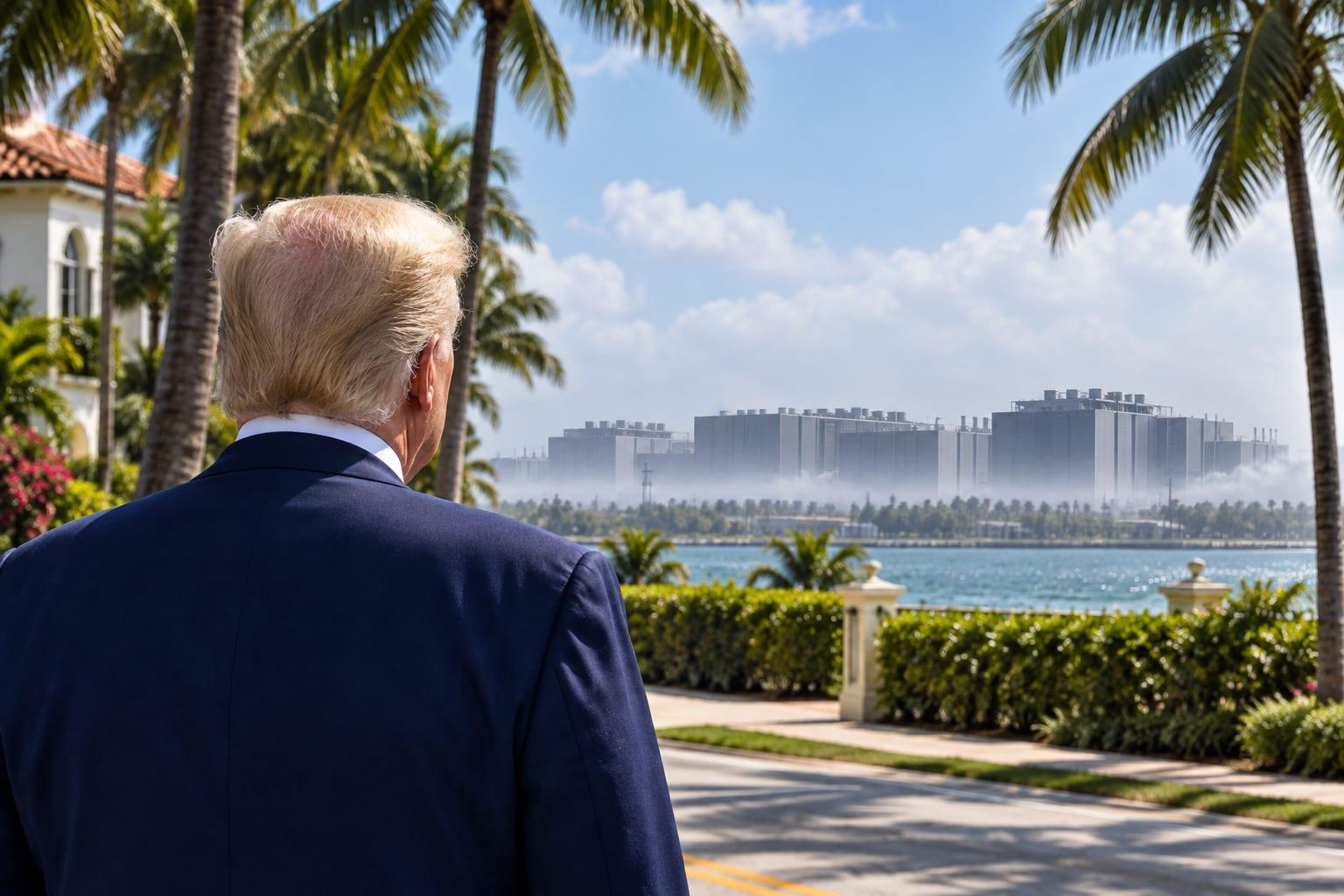
Palm Beach County — the home of President Donald Trump's Mar-a-Lago estate — has passed a one-year moratorium on new data centers, putting the brakes on the server farms that have been sprouting up across the country. The county commission vote came after residents raised alarms about environmental damage, noise pollution, and rising electric bills, according to Fox News Politics.
The moratorium, first reported by Fox News Politics, followed weeks of mounting pressure from local homeowners who say the massive facilities are changing the character of their communities and straining the power grid. The vote also came weeks after President Trump warned against local resistance to data centers, arguing that every American should want one in their town.
The Neighbors Have Spoken
Residents of Palm Beach County — including those in the immediate vicinity of Mar-a-Lago — apparently disagree with the President's assessment. According to Alternet.org, Trump's Mar-a-Lago neighbors voted for the ban, defying the White House's push for rapid data center expansion.
"Maybe Trump's neighbors know something he doesn't," Crooks and Liars wrote in its coverage of the vote, a sentiment echoed by locals who have watched the data center debate unfold in their backyards.
The concerns are not unique to Florida. In northern Virginia, residents have been living with data centers for years and have seen firsthand the impact on their communities. NPR's Scott Neuman recently reported from Virginia and Maryland on how opposition to new data centers is bringing together people who rarely agree on politics — a rare bipartisan coalition of homeowners, environmentalists, and fiscal conservatives.
What the Moratorium Means
The one-year pause halts new data center construction and gives county officials time to study the environmental and infrastructure impacts. The moratorium does not affect existing facilities or those already approved.
Data centers — the backbone of the artificial intelligence boom — consume enormous amounts of electricity and water for cooling. They also generate constant noise from cooling systems, which has become a flashpoint in communities near the facilities. In Palm Beach County, residents told commissioners the noise was unbearable and the strain on the electric grid was driving up rates for everyone.
The vote marks a rare instance of a local government pushing back against the tech industry's rapid expansion, even as federal officials — including President Trump — have championed data centers as essential to winning the AI race against China.
A National Fight Goes Local
The fight over data centers is playing out in communities across the country. In Virginia, where data centers are concentrated, local officials have struggled to balance the tax revenue they bring against the quality-of-life costs. In some areas, residents have successfully blocked new projects, citing similar concerns about noise, water usage, and electric bills.
The Palm Beach County vote is a reminder that even in deep-red territory, voters are not willing to blindly accept industrial development — even when it is framed as a national security imperative.
"The people of northern Virginia have been living with data centers for many years," WLRN reported, noting that opposition is cutting across party lines. "The fight is bringing together people who rarely agree on politics."
The White House has not yet commented on the Palm Beach County vote. It is not known whether the administration will take any action in response.
Our Take
This is a win for the little guy. For too long, big tech and their allies in government have assumed that rural and suburban communities would roll over and accept massive server farms in their backyards in the name of "progress" or "national security." The people of Palm Beach County just proved them wrong.
President Trump has said every American should want a data center in their town. But the folks who actually live near these facilities know the truth: they bring noise, they strain the grid, and they drive up electric bills for families who can barely afford to keep the lights on. The AI boom is real, and America needs to win it — but not by trampling on the rights of homeowners. If the tech billionaires want to build, they should do it somewhere that actually wants them, or they should pay to fix the infrastructure they break.
The real story here isn't just about data centers. It's about who gets to decide what happens in your community. A year-long pause is a reasonable first step. The question now is whether other counties will follow Palm Beach's lead — and whether the White House will listen.
